
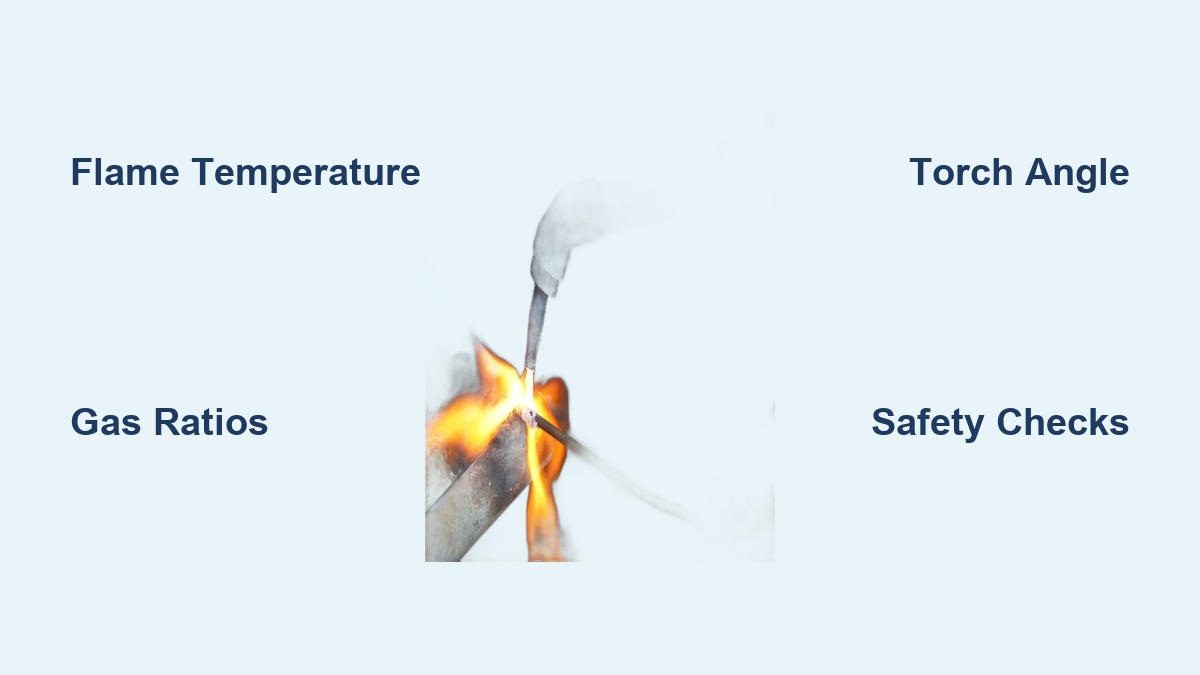
Ever wonder how metalworkers join steel pipes or repair automotive frames without electricity? The answer lies in gas welding—a portable, versatile technique that creates strong metal bonds using nothing more than controlled combustion. Understanding how does gas welding work reveals why this century-old method remains indispensable for field repairs, artistic metalwork, and situations where electrical power isn’t available. When French engineers Edmond Fouché and Charles Picard developed the first oxygen-acetylene welding process in 1903, they launched a technology that continues to deliver reliable results today. The core principle is surprisingly straightforward: combusting fuel gases with pure oxygen generates extreme heat that melts base metals and filler material, creating fusion bonds as the molten pool cools. Unlike arc welding methods requiring electricity, gas welding relies entirely on chemical combustion, making it uniquely portable and adaptable to remote locations.
The magic happens when you ignite the precise mixture of oxygen and fuel gas through a specialized torch. This controlled explosion creates temperatures up to 6,000°F at the inner cone tip—sufficient to liquefy steel while remaining manageable for skilled operators. As the welder directs this flame along the joint seam, a molten pool forms where atomic structures of the base metals intermingle with filler material. Proper technique ensures this pool cools gradually through air cooling rather than water quenching, which would make the weld brittle. Mastering how does gas welding work requires controlling four critical factors simultaneously: flame temperature through gas ratios, pressure settings for stable combustion, travel speed matching material thickness, and torch angle for optimal heat distribution. Get these elements right, and you’ll create joints that match or exceed the strength of the original base metal.
How Gas Welding Generates 6,000°F Heat for Metal Fusion
Gas welding works by feeding oxygen and fuel gas through a specialized torch where they mix and ignite to produce an intensely hot, concentrated flame. The welder directs this flame at the joint between two metal pieces, heating them until a molten pool forms at the seam. This weld pool represents the fusion point where the two pieces will bond together as the metal cools. The process relies on chemical oxidation—the fuel gas combines with oxygen to release thermal energy as the molecules transition to a lower energy state.
Oxygen’s Critical Role in Combustion Chemistry
Oxygen serves as the oxidizing agent rather than the fuel in gas welding, chemically combining with the fuel gas to produce necessary heat. Pure oxygen (typically 99.5% purity) is used instead of atmospheric air to dramatically increase flame temperature. This high-purity oxygen comes from industrial suppliers in high-pressure cylinders at approximately 3,000 psi. Some operations use 93% purity oxygen from zeolite sieve systems, which works for brazing but may not produce clean cuts for welding applications.
Visual cue: When adjusting your torch, watch for the inner cone tip—this is where maximum heat (around 6,000°F for acetylene) concentrates. If the cone disappears or becomes fuzzy, your oxygen-to-fuel ratio needs adjustment.
Four Parameters Every Gas Welder Must Control
Achieving quality welds requires precise management of four interconnected factors:
- Flame temperature: Adjusted by changing the oxygen-to-fuel ratio. More fuel creates a cooler flame; more oxygen increases heat until reaching the oxidizing point
- Gas pressure: Typically 1-5 psi for oxygen and 4-7 psi for acetylene. Incorrect pressures cause unstable flames or poor penetration
- Welding speed: Too fast = weak welds from insufficient heat; too slow = warping from excessive heat buildup
- Torch position: Held at 45-degree angle to workpiece for even heat distribution. Thicker materials require steeper angles
Pro tip: For thin materials (under 1/8 inch), use smaller tips and faster travel speeds to prevent burn-through. Always test on scrap metal first to dial in your settings.
Essential Gas Welding Equipment Setup Guide
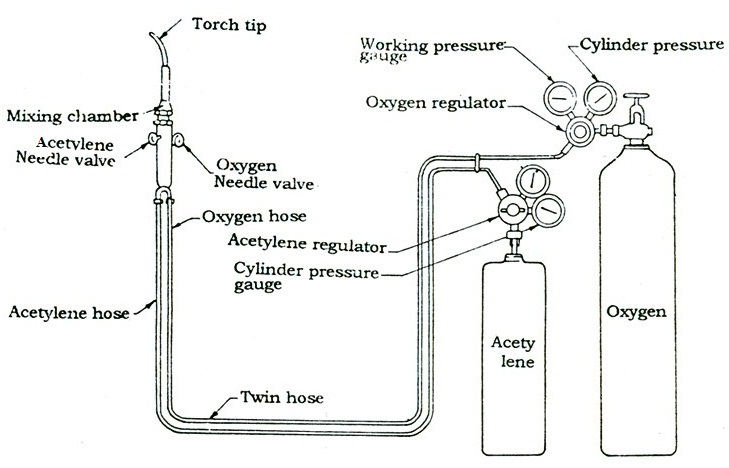
Gas welding requires specific components working in harmony to produce clean, strong joints. Setting up correctly prevents dangerous situations while ensuring optimal performance. The complete system includes gas cylinders, regulators, hoses, torch, and accessories—all designed for safe, efficient operation.
Acetylene and Oxygen Cylinder Safety Protocol
Acetylene cylinders contain acetone-soaked porous material that safely stores acetylene gas under pressure. Never store or use acetylene cylinders horizontally—this can cause acetone leakage and unstable combustion. Oxygen cylinders present their own hazards: a damaged valve can turn the cylinder into a dangerous projectile. Always:
- Secure cylinders upright with chains or straps
- Keep valve caps in place when moving
- Store away from heat sources and direct sunlight
- Maintain at least 20 feet distance from flammables
Warning: Never use oil or grease on oxygen fittings—this can cause spontaneous combustion. Use only oxygen-compatible lubricants.
Regulator and Hose Connection Checklist
Quality regulators feature dual gauges showing both cylinder pressure and working pressure. Connect hoses correctly using the handed-thread system:
- Green hose = oxygen (standard right-handed threads)
- Red hose = fuel gas (left-handed threads with groove)
Before lighting, check for leaks with soapy water. Bubbles indicate leaks requiring immediate attention. Replace any damaged hoses showing cracks, burns, or excessive wear.
Flame Types and When to Use Them
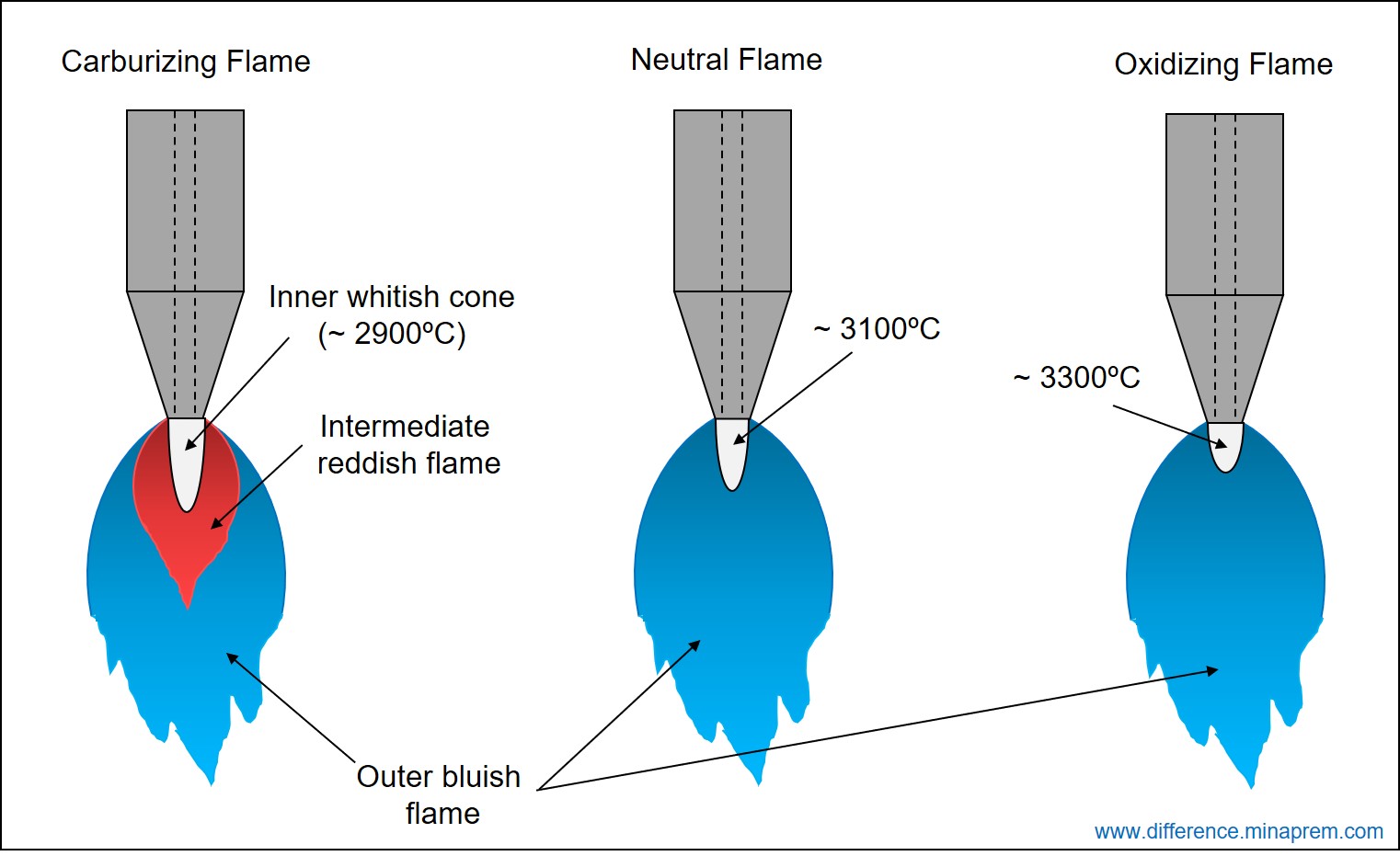
The flame’s appearance reveals its chemical composition and suitability for specific metals. By adjusting the oxygen-to-fuel ratio, you create three distinct flame types, each with unique properties.
Neutral Flame: The Gold Standard for Most Metals
Achieved with balanced oxygen and fuel gas, the neutral flame features a light blue inner cone surrounded by a darker blue outer envelope. This is your go-to flame for welding mild steel, stainless steel, and cast iron. Look for:
- Sharp, well-defined inner cone
- Quiet, steady hiss
- No feather extending beyond the cone
Time estimate: Allow 30 seconds to properly adjust from an oxidizing to neutral flame when starting a new weld.
Carburizing and Oxidizing Flames for Special Applications
A carburizing flame shows a white acetylene feather extending 1-2 cone lengths beyond the inner cone. Use this for welding nickel, steel alloys, and aluminum where carbon addition benefits the weld. An oxidizing flame has a short, pointed inner cone with a purplish tint and harsh sound—ideal for brass and bronze welding but generally avoided for most applications.
Expert note: Aluminum requires special preparation—remove the oxide layer with a stainless steel brush before welding, as it melts at a much higher temperature than the base metal.
Gas Welding Steel vs. Aluminum: Technique Differences
Different metals demand specific approaches to achieve strong, crack-free welds. Understanding these differences prevents costly mistakes and rework.
Steel Welding Protocol for Strong Joints
For mild steel up to 1/4 inch thick, use the rightward technique:
- Position torch at 45-degree angle to workpiece
- Move torch from left to right along the joint
- Feed filler rod at 30-40 degree angle ahead of the flame
- Maintain consistent travel speed matching material thickness
Common mistake: Overheating cast iron causes cracking. Use an oxidizing flame and preheat to 500°F before welding.
Aluminum Welding Without Cracks
Aluminum’s low melting point (1,220°F) but high oxide layer melting point requires special handling:
- Use carburizing flame with hydrogen fuel if possible
- Remove oxide layer thoroughly with stainless steel brush
- Work quickly to prevent excessive heat buildup
- Keep torch moving to avoid burning through thin sections
Visual cue: Properly welded aluminum shows a shiny, fluid puddle that solidifies with a silvery appearance—not dull or grainy.
Gas Welding Safety Checklist Before Ignition
Gas welding combines extreme heat with high-pressure gases—safety must be your top priority. Before striking the first flame:
- Ensure proper ventilation to prevent fume accumulation
- Clear all flammables within 35-foot radius
- Verify flashback arrestors are installed on both lines
- Wear flame-resistant clothing, gloves, and proper eye protection
- Confirm fire extinguisher is accessible and charged
Critical step: Test your flashback arrestors monthly by attempting to light the torch with oxygen first—properly functioning arrestors will prevent ignition.
When Gas Welding Outperforms Modern Alternatives
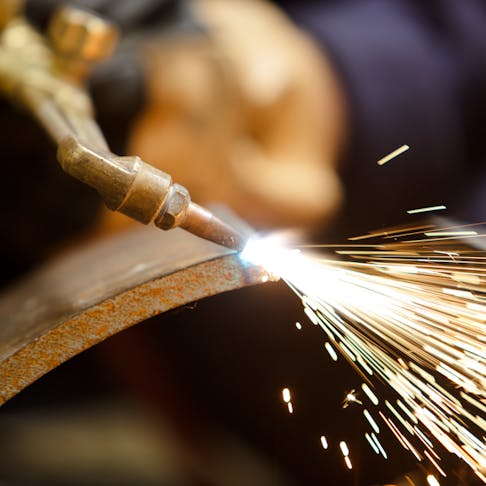
Despite arc welding’s popularity, gas welding remains superior for specific applications:
- Field repairs where electricity isn’t available
- Thin materials requiring precise heat control
- Brazing and heating applications beyond just welding
- Artistic metalwork needing fine flame adjustment
- Cast iron repair where controlled heating prevents cracking
Cost comparison: Oxy-gasoline systems cost 75-90% less per hour than acetylene for cutting operations, making them ideal for heavy industrial work.
Gas Welding Troubleshooting: Fixing Common Issues
Encountering problems? These solutions address frequent gas welding challenges:
Problem: Unstable flame with popping sounds
Solution: Check for leaks, clean torch tip, verify proper gas pressures
Problem: Excessive spatter and rough weld bead
Solution: Adjust to neutral flame, maintain proper torch angle, use cleaner filler rod
Problem: Porosity (bubbles in cooled weld)
Solution: Thoroughly clean base metal, ensure adequate gas flow, avoid drafts
Problem: Poor penetration on thicker materials
Solution: Increase tip size, slow travel speed, verify adequate heat input
Why Gas Welding Still Matters in the Modern Workshop
Understanding how does gas welding work reveals why this century-old technique remains relevant despite newer technologies. Its portability, versatility across multiple applications (welding, cutting, brazing, heating), and relatively low learning curve make it indispensable for professionals and hobbyists alike. While arc welding dominates industrial production, gas welding excels in field repairs, artistic applications, and situations requiring precise heat control on thin materials. Mastering this fundamental process gives you a reliable tool when electricity isn’t available and provides the foundation for understanding more complex welding methods. Whether you’re repairing a trailer hitch, creating metal sculpture, or maintaining farm equipment, knowing how does gas welding work adds a valuable skill to your repertoire that continues to deliver strong, reliable results over 120 years after its invention.
Leave a Reply