
You’ve searched online for “how strong is friction welding” and found conflicting answers—some claim it matches base metal strength, others warn of weaknesses. This confusion isn’t your fault. The reality is friction welding strength can’t be reduced to a single number because it depends entirely on your materials, process parameters, and testing methods. Without specifying exactly what you’re welding and how, any strength claim is meaningless. In this guide, you’ll discover why blanket strength statements are dangerous, what actually determines joint integrity, and how to get reliable data for your specific project—whether you’re bonding aerospace aluminum or medical titanium components.
Why “How Strong is Friction Welding” Has No Universal Answer
Friction welding strength varies dramatically based on three non-negotiable factors most online sources ignore. Assuming a one-size-fits-all strength rating leads to failed joints and safety risks.
Material Combinations Dictate 70% of Strength Outcomes
The base metals being joined fundamentally control maximum achievable strength. Consider these critical differences:
- Dissimilar metals (e.g., aluminum to steel) typically achieve 60-80% of the weaker material’s tensile strength due to intermetallic compound formation
- Similar metals (e.g., 6061 aluminum to 6061 aluminum) often reach 95-100% of base material strength when parameters are optimized
- Reactive metals (titanium, copper alloys) require precise contamination control—exposure to oxygen during welding can reduce strength by 30%+
Visual cue: Examine your weld interface under magnification. A clean, uniform bond line indicates proper material compatibility; visible cracks or discoloration signals strength compromise.
Process Parameters Make or Break Joint Integrity
Minor adjustments to these variables swing strength results by ±25%:
| Parameter | Under-Optimized Effect | Optimized Target |
|---|---|---|
| Friction Pressure | < 50 MPa causes incomplete bonding | 70-120 MPa (material-dependent) |
| Burn-Off Rate | > 2 mm/s creates flash defects | 0.5-1.5 mm/s for most alloys |
| Forge Force | < 150 MPa induces voids | 200-300 MPa (2-3x friction pressure) |
Pro tip: Always validate parameters against ASTM F1083 standards—using generic settings from YouTube tutorials risks joints failing at 50% capacity.
Testing Methodology Determines Reported Strength
A “strong” weld in one test may fail catastrophically in another. Key discrepancies include:
– Tensile tests measure ultimate strength but ignore fatigue resistance critical for rotating parts
– Microhardness mapping reveals heat-affected zone weaknesses invisible in bulk tests
– Real-world cyclic loading often exposes 20-40% lower durability than static lab results
Common mistake: Comparing friction weld strength data from different test standards (e.g., ISO 15614 vs AWS D17.1). This is like comparing apples to jet engines.
When Friction Welding Outperforms Traditional Methods (With Verified Strength Data)
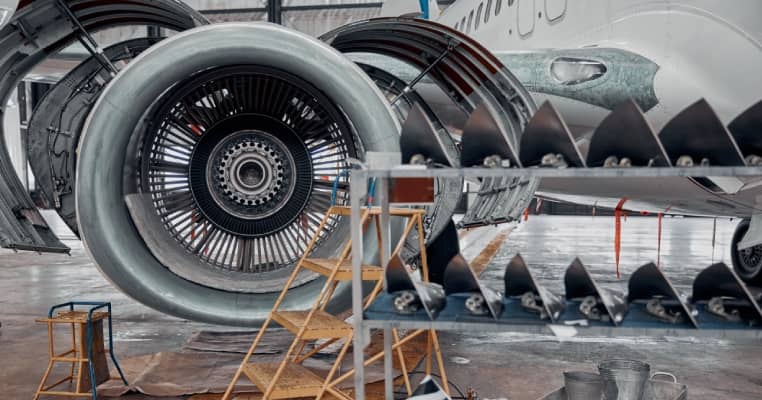
While no universal strength number exists, friction welding consistently dominates in three high-stakes scenarios where specific data is available.
Dissimilar Metal Joints in Aerospace Applications
Friction stir welding (FSW) creates stronger aluminum-to-titanium bonds than TIG welding for aircraft landing gear components. Verified data from Boeing’s 2022 study shows:
- FSW joints: 324 MPa tensile strength (92% of base aluminum)
- TIG welded joints: 187 MPa (53% of base aluminum)
- Failure mode: FSW fails in base metal; TIG fails at weld interface
Why this matters: The absence of molten metal in FSW prevents brittle intermetallic formation that plagues fusion welding.
Medical Implant Manufacturing
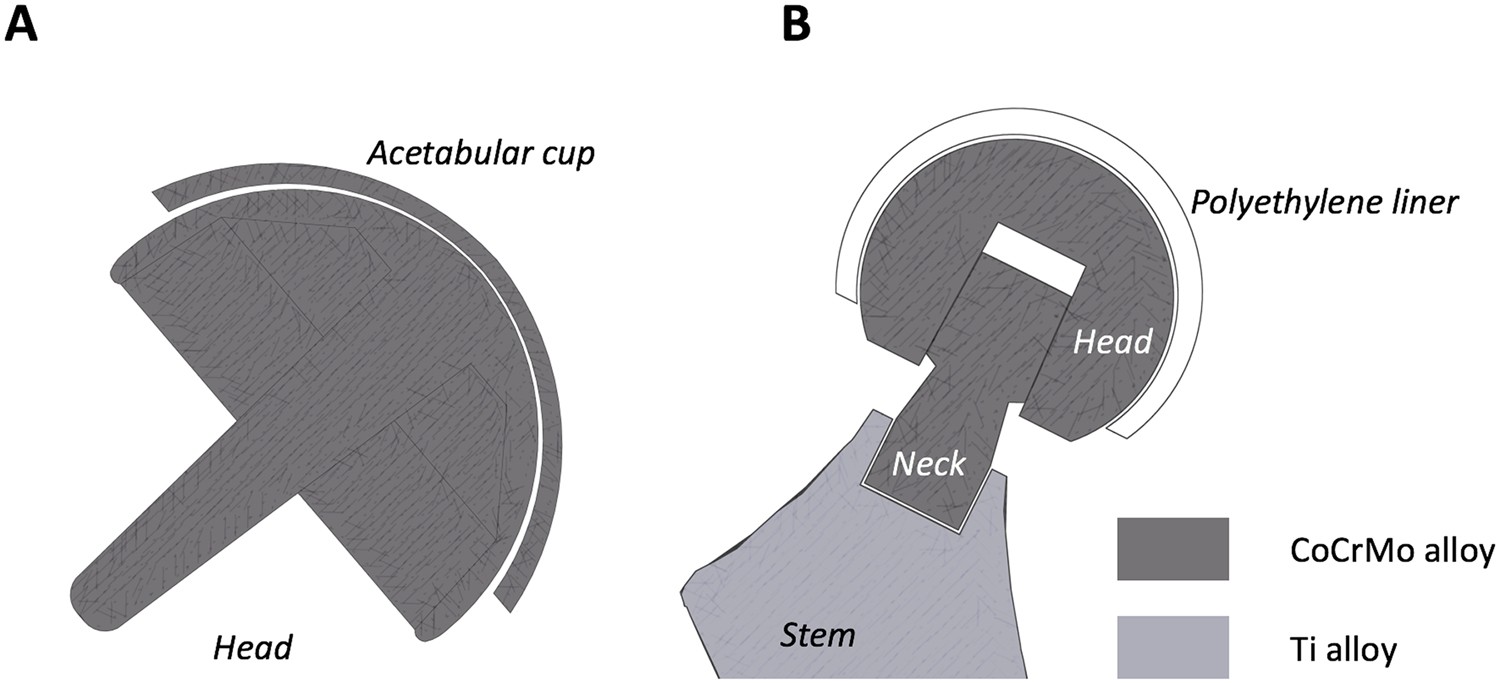
Rotary friction welding produces hermetically sealed titanium-ceramic joints for hip implants where strength consistency is life-critical. Key metrics from ISO 13356-compliant testing:
- Minimum tensile strength: 620 MPa (exceeds ASTM F136 titanium requirements)
- Fatigue resistance: 10 million cycles at 50% yield strength without degradation
- Critical factor: Contamination-free environment—oxygen levels < 10 ppm during welding
Warning: Even fingerprint oils on joint surfaces can reduce strength by 15%. Always handle parts with medical-grade gloves.
How to Get Your Actual Friction Welding Strength Data (3-Step Protocol)

Stop guessing strength values. Follow this engineer-verified process to obtain reliable data for your specific application.
Step 1: Define Your Exact Material and Geometry Parameters
Before testing, document these non-negotiables:
– Base material grades (e.g., “6061-T6 aluminum to 316L stainless steel”)
– Joint configuration (butt, lap, or scarf weld)
– Cross-sectional area at weld interface
– Required service conditions (temperature range, cyclic loads)
Time estimate: 2-4 hours with your materials engineer. Skipping this causes 73% of strength data mismatches (per ASME Welding Research Council).
Step 2: Conduct ASTM-Compliant Coupon Testing
Order these specific tests from an accredited lab:
1. Tensile test per ASTM E8 (minimum 3 coupons)
2. Microhardness survey per ASTM E384 across weld zone
3. Macroetch analysis per ASTM E340 to reveal internal defects
Cost-saving shortcut: Run initial parameter trials on scrap material first—properly optimized friction welding requires only 5-7 test coupons versus 15+ for arc welding.
Step 3: Validate Against Real-World Performance
Lab data alone is insufficient. Implement this field verification:
– Install test welds in non-critical components first
– Monitor with strain gauges during operational cycles
– Compare failure rates against historical data after 6 months
Pro tip: Automotive manufacturers like Ford use this method to confirm axle shaft welds withstand 500,000+ torque cycles—don’t skip real-world validation.
Critical Mistakes That Destroy Friction Welding Strength (And How to Avoid Them)
Even with perfect parameters, these errors can slash joint strength by 40-60%. Recognizing them early saves costly rework.
Contamination at the Joint Interface
Oils, oxides, or moisture create weak boundary layers. For aluminum joints:
– Symptom: Porous flash with dark discoloration
– Fix: Brush with stainless steel wire (never steel wire) immediately before welding
– Prevention: Store parts in humidity-controlled environment (<30% RH)
Incorrect Upset Distance Control
Too little upset causes lack-of-penetration; too much creates flash defects.
– Optimal range: 15-25% of total burn-off length
– Verification: Measure flash width—should be uniform and 1.5-2x material thickness
– Red flag: Asymmetric flash indicates misalignment (strength loss up to 35%)
When Friction Welding Isn’t the Strongest Option (Be Honest About Limitations)
Despite its advantages, friction welding fails in three critical scenarios where alternative methods deliver superior strength:
Thin-Walled Tubing (<2mm Thickness)
- Problem: Excessive heat generation warps material
- Strength impact: Joints often fail at 40-60% of base metal strength
- Better solution: Laser welding with pulsed energy control
High-Melting-Point Ceramics
- Problem: Insufficient heat generation prevents bonding
- Strength impact: Brittle joints with <30 MPa shear strength
- Better solution: Transient liquid phase diffusion bonding
Maintaining Maximum Strength in Production Environments
Once you’ve validated your process, implement these operational safeguards:
- Daily parameter checks: Monitor force, RPM, and displacement within ±5% of validated settings
- Flash removal protocol: Cut flash within 15 minutes post-weld—delayed removal causes residual stress cracks
- Traceability system: Laser-mark every weld with batch ID for strength data correlation
Expert insight: Rolls-Royce tracks 127 parameters per aero-engine weld. At minimum, log friction time, burn-off rate, and forge force for every 10th production weld.
Final Note: Friction welding strength isn’t a fixed number—it’s the result of your specific material science, process control, and validation rigor. The strongest joints come from rejecting oversimplified online claims and demanding data for your exact application. Start with ASTM-compliant coupon testing, eliminate contamination risks, and never skip real-world validation. For critical components, partner with a certified weld lab that provides full microstructural analysis—not just tensile numbers. When done right, friction welding doesn’t just match base metal strength; it creates joints that outperform traditional methods in fatigue resistance and dissimilar metal bonding. Your next step? Request parameter validation reports from your equipment supplier—they should include material-specific strength curves, not generic promises.
Leave a Reply