
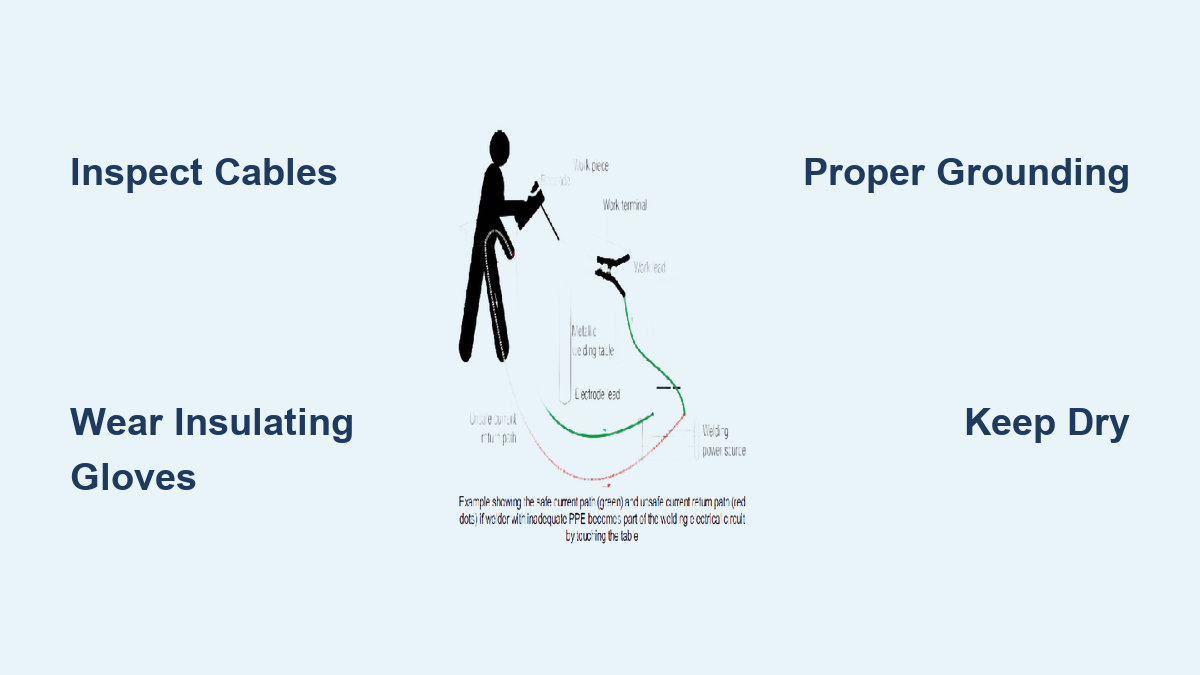
Welding involves working with high electrical currents, making electric shock one of the most serious hazards in any welding operation. Whether you’re a hobbyist in a home workshop or a professional fabricator in an industrial setting, understanding how to prevent electrical shock could save your life. The welding circuit operates at voltages capable of causing severe injury or death, yet many accidents occur simply because welders don’t recognize the specific conditions that create danger. This comprehensive guide breaks down the science behind welding electrical hazards, distinguishes between different types of shock risks, and provides actionable strategies to keep yourself safe every time you strike an arc.
The reality is that electricity used in welding ranges from 120 volts to 575 volts or more, and even 50 volts can cause fatal damage under the right conditions. Your body conducts electricity, which means completing an electrical circuit through your tissues can result in muscle spasms, burns, cardiac arrest, or electrocution. The good news is that every electric shock incident is preventable with proper knowledge, equipment maintenance, and safe work practices. By understanding how shock occurs and implementing the prevention strategies outlined in this guide, you can weld with confidence while minimizing your risk exposure.
Why Electric Shock Happens in Welding
Electric shock in welding occurs when your body becomes part of an electrical circuit. For a shock to happen, you must simultaneously touch two different conductive points that have a voltage difference between them—typically the electrode and a grounded piece of metal. When this occurs, electrons flow through your body tissues, potentially causing everything from mild tingling to fatal cardiac arrest.
Welding machines transform electrical power from the grid or generator into welding power that creates the arc used for joining metals. This transformation process results in multiple voltage configurations that welders encounter. Single-phase power comes in 120V or 240V, while three-phase power delivers 575V in Canada and 480V in the USA. Hobby welders typically work with 120V input, but the voltage inside welding equipment often exceeds these levels significantly. Understanding that the voltage inside your welder can be much higher than the input voltage is crucial for appreciating why shock prevention matters.
The severity of electrical shock injuries depends on several interconnected factors. Voltage determines the electrical potential that drives current through your body, while current measured in amperes is what actually causes physiological damage. Duration of exposure plays a critical role—longer contact means more current passes through your tissues. The path the current takes through your body matters enormously; current passing through your heart or chest is far more dangerous than current flowing through an extremity. Finally, your body’s resistance at the moment of contact dramatically affects outcomes. Dry skin might have 100,000 ohms of resistance, reducing current flow to barely noticeable levels, while wet skin can drop to just 500-1,000 ohms, allowing lethal currents to flow from the same voltage source.
Primary vs Secondary Voltage Shock
Understanding the distinction between primary and secondary voltage shock is essential because each type requires different prevention strategies and presents different danger levels.
Primary Voltage Shock Dangers
Primary voltage shock occurs when a welder contacts the primary or input voltage of the welding machine. This happens when touching a damaged lead or electrically hot component inside the welder while your body is in contact with the welder case or other grounded metal. The shock ranges from 115 to 600 volts depending on the input power configuration, making this an extremely dangerous condition.
The danger is amplified because electricity can remain present in welding equipment even after the machine is turned off. Components stay “live” until the input power cord is unplugged or the power disconnect switch is completely turned off. This is why blown fuses should never be ignored—they indicate problems with connections and current flow that could lead to dangerous conditions. Most modern welding equipment includes safety grounding that causes fuses to blow rather than electrocuting operators when faults occur, but this doesn’t eliminate the hazard entirely.
Secondary Voltage Shock Risks
Secondary voltage shock occurs at lower voltages, typically ranging from 20 to 100 volts, and happens when you complete a circuit between the electrode, welder, and grounded metal. This type of shock is much more common, especially among beginning welders, because the open circuit voltage present during Stick welding creates constant potential for accidental contact.
While secondary shock is generally less dangerous than primary voltage shock, it can still cause serious problems. Even relatively mild shocks can cause involuntary muscle reactions that make you drop tools or lose balance, creating fall hazards especially when working at heights. Many welders experience secondary shock when changing electrodes or accidentally touching both the electrode and grounded metal simultaneously. The lower voltages involved mean this type of shock is survivable more often, but the consequences of falling or dropping equipment can be severe.
Understanding Voltage, Current, and Resistance

Grasping the relationship between voltage, current, and resistance helps you understand why certain conditions create lethal situations and how to avoid them. These three parameters interact to determine whether an electrical encounter is a minor tingle or a fatal event.
Voltage represents the electrical potential difference that pushes current through conductors, including your body. Higher voltage means greater potential to force current through resistance, which is why high-voltage equipment requires more respect and caution. Current measured in amperes is what actually causes harm—it flows through your tissues and disrupts normal electrical processes in cells and organs. Resistance measured in ohms determines how much current will flow for a given voltage; higher resistance blocks current flow, while lower resistance allows more current to pass.
Your skin’s resistance varies dramatically based on conditions. Dry, calloused skin might have 100,000 ohms of resistance, making it difficult for current to flow even at higher voltages. However, skin resistance depends on numerous factors including contact location, recent sunburn, skin oil levels, diet, stress, and hydration. Moisture dramatically lowers skin resistance—on wet skin, resistance can drop to 500-1,000 ohms. This is why welding in wet conditions or wearing damp gloves creates extremely dangerous situations where voltages as low as 50 volts can become lethal.
The National Institute for Occupational Safety and Health provides clear data on current effects: 1 milliampere (mA) is barely noticeable, 16 mA represents the maximum current most people can grasp and release, 20 mA causes paralysis of respiratory muscles, 100 mA triggers ventricular fibrillation, 2 amperes causes cardiac standstill and internal organ damage, and 15-20 amperes typically opens circuit breakers or fuses. Contact with just 20 milliamps of current can be fatal, which is remarkably small compared to the 15-20 ampere capacity of typical household circuit breakers.
AC vs DC: Current Type Matters
Both alternating current (AC) and direct current (DC) can cause electric shock, but they present different physiological effects and danger levels that every welder should understand.
Alternating current is considered three to five times more dangerous than DC at the same voltage level. The danger stems from AC’s nature of alternating from positive to negative side of the cycle at a specific frequency rate. Frequencies of 50-60 Hz, common in household and industrial power systems, are particularly dangerous because they cause tetany—involuntary muscle cramps or spasms that make it extremely difficult to release the current source. When AC passes through the heart, it interferes with the natural pacemaker and causes atrial fibrillation, a condition that can result in stroke or death.
Direct current flows in a single direction and causes a single convulsive contraction that typically pushes the victim away from the source. While this contraction can cause severe injuries, being pushed away breaks the electrical connection and reduces exposure duration. However, if DC current passes through the heart, it causes cardiac standstill. The key difference is that AC locks you into the circuit through muscle spasms, while DC throws you clear of the circuit.
This physiological difference explains why Stick welding with AC is generally considered more hazardous than DC welding from an electrical shock perspective. The tetanic muscle response from AC makes it harder to release contact with live parts, prolonging current flow through the body. Understanding this difference helps you appreciate why certain welding processes and current types require additional safety precautions.
Essential Equipment Inspection Steps
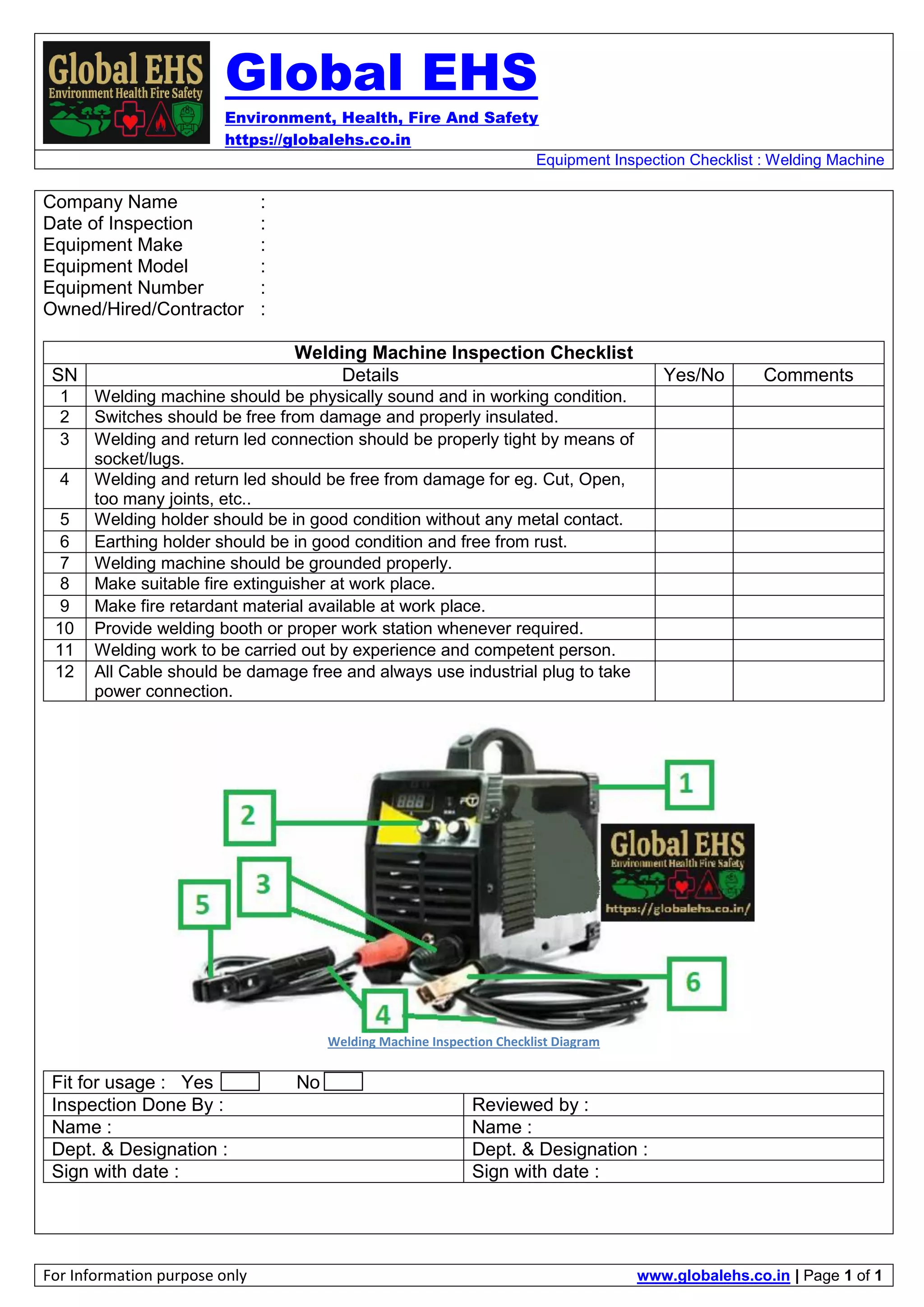
Proper equipment inspection and maintenance form the foundation of electrical safety in welding. Before every welding session, take time to verify your equipment is in safe operating condition.
Check the welder capacity to ensure compatibility with your outlet’s input power. Verify voltage specifications match (110V or 220V), confirm frequency is correct (50-60 Hz), and ensure current type matches your intended welding process. Using equipment with mismatched power specifications creates electrical hazards and can damage both the machine and surrounding equipment.
Inspect all welding cables for damage before each use. Look for bare insulation, frayed wires, cracked casings, or damaged connectors. Worn, damaged, undersized, or poorly spliced cables should never be used—replace them immediately. Pay particular attention to areas where cables bend near connection points, as these high-stress locations commonly develop failures. Input power cords require especially frequent inspection since damage here can expose you to full mains voltage.
Verify that electrode holders are fully insulated and that all connections are tight, clean, and dry. Loose or corroded connections increase electrical resistance, generating heat and creating shock hazards. Never lay electrode holders on conductive surfaces, dip them in water to cool them, or rest them on work surfaces where they could contact grounded metal. Before performing any maintenance or repairs, follow lockout/tagout procedures to prevent accidental power-up, and disconnect the input power completely.
Proper Personal Protective Equipment
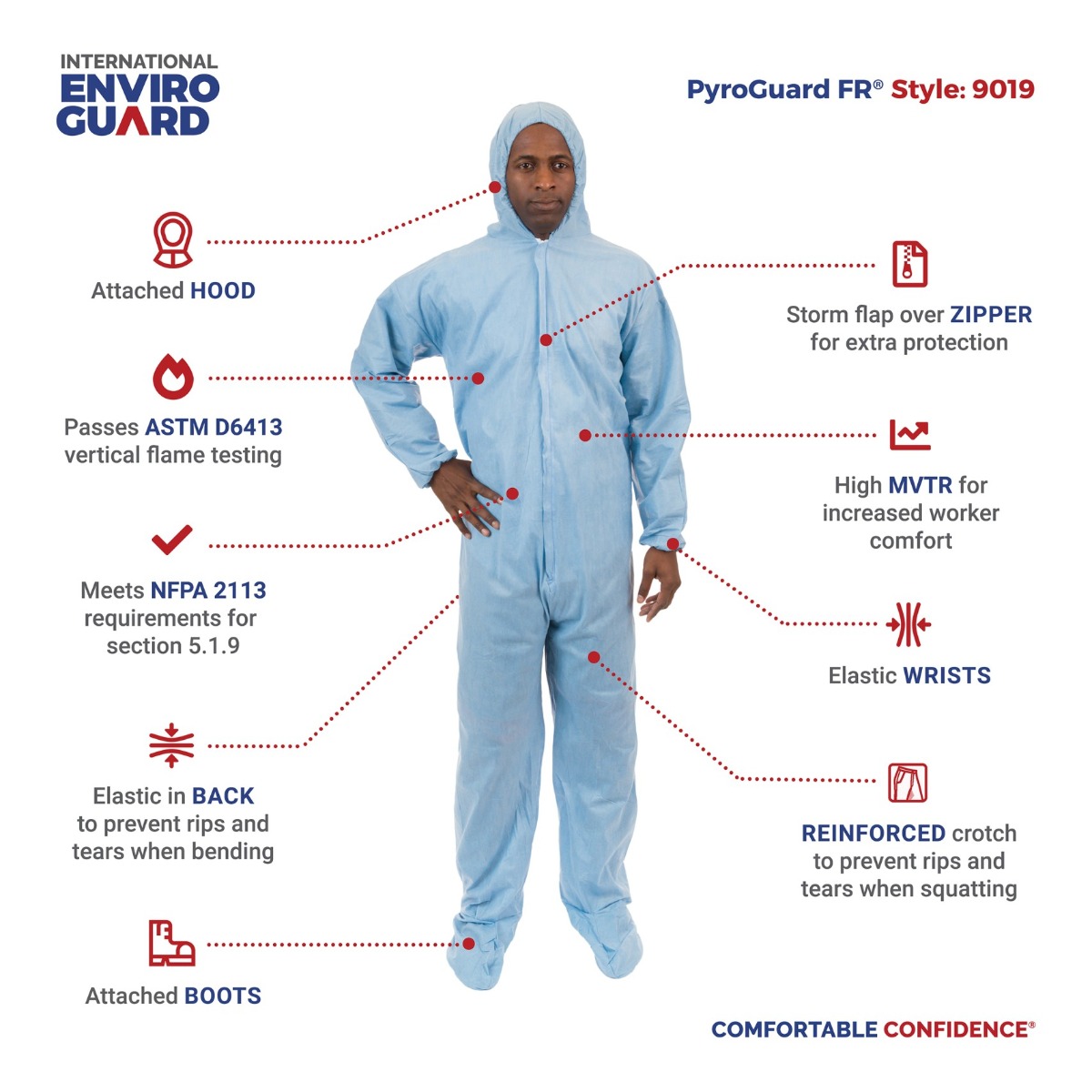
Wearing appropriate personal protective equipment provides a critical barrier between your body and electrical hazards during welding operations.
Dry, hole-free, insulating gloves in good condition are essential at all times during welding. These gloves protect against electrical current while also providing thermal protection from sparks and hot metal. In wet conditions, wear rubber gloves underneath your welding gloves—rubber provides excellent insulation when dry and dramatically reduces current flow through your body. Inspect gloves before each use for holes, tears, or worn areas that could compromise protection.
Proper footwear is equally important. Wear rubber-soled boots in good condition that provide insulation from grounded surfaces. Leather-soled or metal-tread boots can conduct electricity, especially when wet, and should be avoided in welding environments. For particularly hazardous conditions, use dry insulating mats or covers large enough to prevent any physical contact with the work or ground.
Wear flame-resistant clothing free of holes or tears that could expose skin to electrical current or thermal hazards. Regular cotton or synthetic clothing can catch fire or melt against skin, creating additional hazards. Flame retardant treatments on protective clothing become less effective over time, especially with repeated laundering, so inspect garments regularly and replace them when protection degrades. Your clothing should cover your entire body—long sleeves, pants without cuffs, and high-collar jackets provide maximum protection.
Critical Safe Work Practices
Following proper work practices dramatically reduces your risk of electrical shock. These habits should become automatic every time you weld.
Proper grounding is fundamental to welding safety. When required by safety codes, ground your workpiece to a good electrical earth using a separate connection—the work lead is not a ground lead and should never be used as such. Attach the grounding clamp securely to the workpiece near the welding area to ensure solid electrical connection. If the grounding clamp becomes disconnected, welding cannot occur because the circuit would be broken, but this also means you lose the protection the ground provides.
Stay away from the electrical circuit at all times. The welding arc starts when the circuit closes between electrode, welder, and base metal. Direct contact with live parts draws your body into the electrical path and causes shocks. Keep one hand in your pocket or behind your back when possible to prevent current from passing through your chest—this simple technique protects your heart from potentially fatal current paths.
Turn off equipment when not actively welding, particularly for Stick welders that become electrically hot as soon as they’re powered. When finished or taking breaks, power down the machine, remove the remaining electrode, and keep the electrode holder away from others’ work areas. Before installing or servicing any equipment, disconnect input power completely and lock the disconnect switch in the open position or remove fuses to prevent accidental power-up.
Handle electrodes with extreme care. Most Stick welder electric shocks occur when changing electrodes with bare hands or wet welding gloves. Never touch the electrode with a bare hand while the machine is powered. Keep electrode holders away from other people and grounded objects, and never connect a single holder to two welding machines simultaneously, as double open-circuit voltage can be present.
Emergency Response for Electrical Accidents
Despite all precautions, electrical accidents can still occur. Knowing how to respond quickly and appropriately can save a life or prevent long-term damage.
If someone experiences electric shock, immediately call for emergency medical help. Even if the shock seems minor and the person appears fine, internal injuries may not be immediately apparent. All electrical shock victims should receive medical evaluation. While waiting for emergency services, don’t touch the victim if they’re still in contact with the electrical source—use a non-conductive material like dry wood or your insulating gloves to disconnect them from the power source.
For burns resulting from electrical shock or arc exposure, cool the affected area with clean water never ice, apply a sterile dressing, and seek medical attention for anything beyond a very minor injury. Watch for symptoms requiring urgent medical care including blurred vision, metallic taste, irregular heartbeat, confusion, or difficulty breathing after electrical exposure. These symptoms can indicate serious internal damage that isn’t visible.
Have appropriate emergency equipment available at all welding locations. Keep a suitable fire extinguisher nearby—check the gauge before beginning work to ensure it’s fully charged. If an extinguisher isn’t available, have fire hoses, sand buckets, or other containment measures ready. After completing welding, remain in the area for at least 30 minutes to ensure no smoldering fires have developed from flying sparks, and mark any hot metal to warn other workers.
Prevent Electric Shock in Every Welding Session
Electric shock in welding is a serious hazard that can result in severe injuries or death, yet it’s entirely preventable with proper knowledge and consistent safety practices. Understanding that shock occurs when your body completes an electrical circuit—and knowing how to avoid creating that circuit—is the foundation of electrical safety in welding.
The key prevention strategies work together as a comprehensive safety system. Proper equipment inspection catches hazards before they cause harm. Appropriate personal protective equipment provides a barrier between you and electrical current. Maintaining dry work environments preserves your body’s natural resistance to current flow. Following safe work practices prevents accidental contact with live parts. Obtaining proper training ensures you understand both the hazards and the procedures for avoiding them.
Never become complacent, even with properly functioning equipment. Accidents can occur under certain conditions—wet gloves, damaged cables, or simple mistakes during electrode changes. Treat all electrical equipment as potentially live, use proper protective gear, and never work alone under hazardous conditions. When in doubt, stop and assess the situation before continuing. Your life is worth more than any welding project.
By applying the principles in this guide every time you weld, you significantly reduce your risk of electrical shock while maintaining the ability to produce quality welds. Electrical safety isn’t just about following rules—it’s about understanding why those rules exist and making them part of your welding practice. Stay safe, stay informed, and never take electrical hazards for granted.
Leave a Reply