
Imagine standing on a remote worksite, the sound of your welding torch filling the air as you join sections of pipe that will soon transport vital energy resources across the country. This isn’t just any welding job—it’s pipeline welding, one of the most specialized and financially rewarding paths in the trades. With over 190,000 miles of liquid petroleum pipelines crisscrossing the United States alone, the demand for skilled pipeline welders remains strong. If you’re ready to build a career that combines technical skill with outdoor work and offers competitive pay, learning how to become a pipeline welder could be your ticket to a stable, well-compensated future.
Pipeline welding stands apart from general welding due to the extreme precision required and the serious consequences of failure. Since pipelines often transport materials under high pressure, weld integrity is non-negotiable—defective welds can lead to environmental damage, explosions, or human injury. The work takes place across multiple industries including oil refineries, mineral processing facilities, cross-country pipeline construction, chemical plants, and power generation facilities. This guide cuts through the confusion and delivers the specific steps you need to launch your pipeline welding career.
Start Your Pipeline Welder Journey with These Essential Skills
Before investing in training, assess whether you possess the physical and mental attributes pipeline welding demands. You need exceptional physical strength and endurance to stand for extended periods, bend into uncomfortable positions, and handle heavy equipment in extreme weather conditions from desert heat to freezing temperatures. Steady hands are non-negotiable—minor tremors can compromise weld quality and create safety hazards.
Problem-solving skills separate successful pipeline welders from the rest. Each job presents unique challenges related to pipe materials, joint configurations, and environmental conditions. You must quickly assess situations, select appropriate techniques, and adapt when initial methods fail. Pair this with excellent hand-eye coordination, which becomes critical when welding in challenging positions like 5G and 6G pipe orientations where you navigate around pipes while maintaining consistent bead placement.
Pass the Physical and Mental Requirements Test
Pipeline welding isn’t for everyone—be honest with yourself about these requirements:
– Physical endurance: Can you work 10-12 hour days, 6-7 days a week in harsh conditions?
– Hand steadiness: Can you maintain precise control of a welding torch for extended periods?
– Attention to detail: Will you meticulously follow specifications and recognize potential defects?
– Weather tolerance: Can you work effectively in extreme heat, cold, wind, and rain?
Many aspiring welders underestimate these demands. Complete a self-assessment before investing in training to avoid wasting time and money on a career that isn’t the right fit for your physical capabilities and temperament.
Complete Your High School Education and Foundational Training
Your pipeline welding journey officially begins with a high school diploma or GED—this baseline requirement appears consistently across employer expectations and vocational program admissions. While in high school, prioritize math and science courses that support the precise measurements and calculations involved in pipe fitting. Vocational or technical classes provide valuable preparation for hands-on work.
After high school, choose between these training pathways:
- Vocational/technical schools: Offer structured 9-10 month programs teaching fundamental welding concepts, safety procedures, and hands-on skills
- Community colleges: Provide welding programs at lower cost with flexible scheduling including evening/weekend options
- Trade schools: Like Universal Technical Institute with programs created in collaboration with industry leaders
When evaluating programs, verify institutional accreditations (like the Accrediting Commission of Career Schools and Colleges) and look for schools with established relationships with manufacturers. These connections provide exposure to current equipment and professional networks that facilitate employment after graduation.
Master the Critical SMAW and TIG Welding Processes
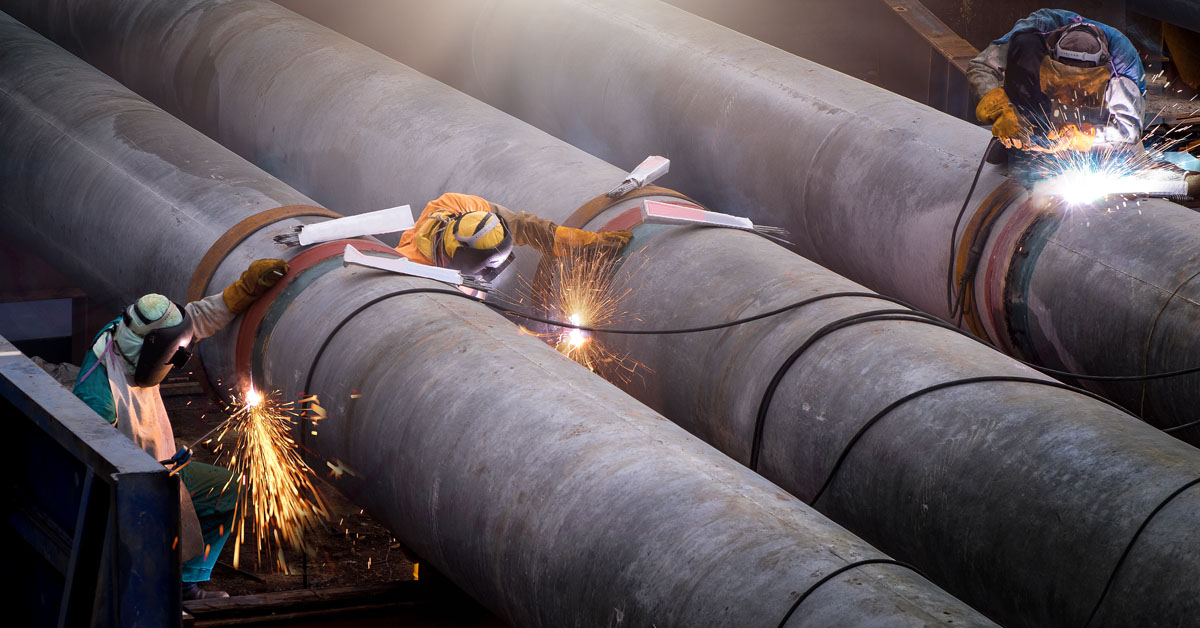
Pipeline welding requires proficiency in specific processes, with Shielded Metal Arc Welding (SMAW or “stick welding”) and Gas Tungsten Arc Welding (TIG) being most essential. SMAW dominates pipeline applications due to its versatility, portability, and simplicity—it performs effectively outdoors and on materials with surface contamination common in pipeline construction.
Why Pipeline Welders Rely on SMAW
- Works effectively in windy conditions without gas shielding
- Handles dirty or rusty surfaces frequently encountered in field work
- Requires relatively simple, portable equipment
- Functions without compressed gas supplies needed for other processes
TIG welding provides exceptional control and produces high-quality welds with minimal defects, making it preferred for critical applications where joint integrity is paramount. While TIG requires greater skill and protection from wind, it’s essential for nuclear, chemical, oil, and gas industries where failure isn’t an option.
Get Certified with API 1104 and AWS Pipeline Welding Credentials
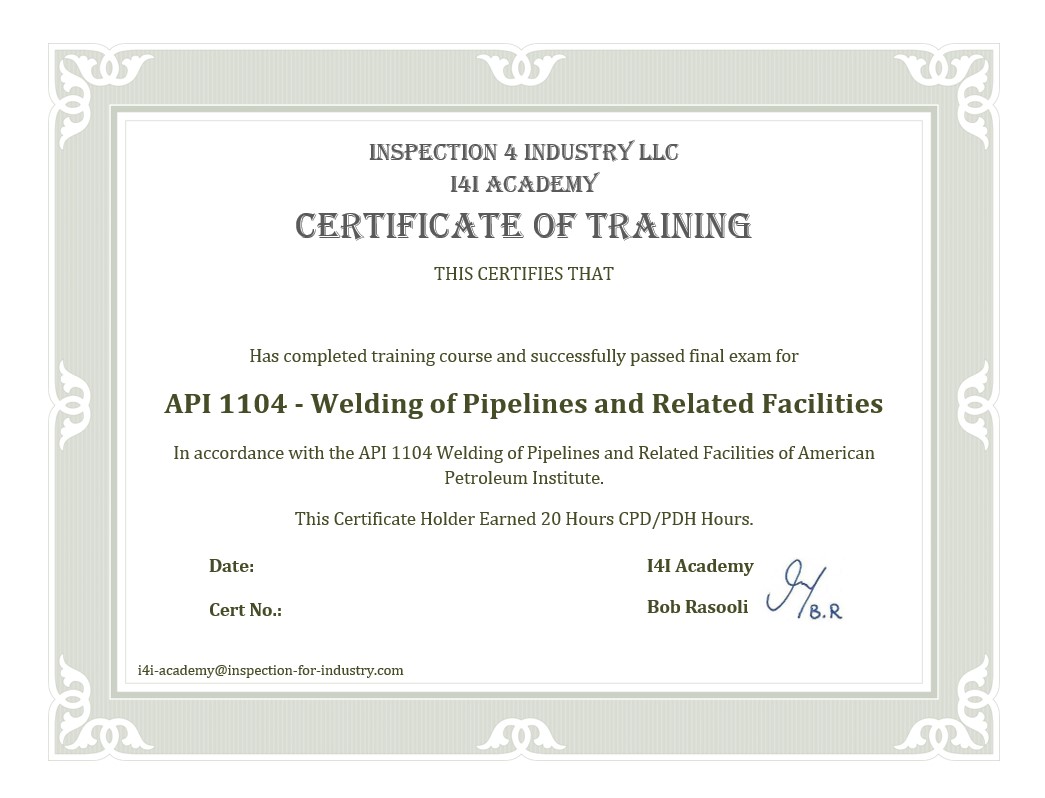
Certification is your golden ticket to pipeline welding jobs. While not always legally required, it significantly improves employment prospects and is often mandatory for hiring. The American Petroleum Institute’s API 1104 certification is specifically designed for pipeline welding and demonstrates competency in the codes governing pipeline construction.
Essential Certifications for Pipeline Welders
- API 1104: The industry standard for pipeline welding certification
- AWS D1.1 Structural Welding: Addresses structural applications
- OSHA 10/30: Safety certifications required for most construction sites
AWS pipeline welding certification requires recertification every six months to remain valid. Renewal involves demonstrating continued competence through practical welding tests. Maintain current safety certifications alongside welding credentials to show employers your commitment to safe work practices.
Complete an Apprenticeship for Real Pipeline Welding Experience
Apprenticeships bridge the gap between classroom learning and professional work, typically lasting three to four years while combining on-the-job training with classroom education. During this period, you’ll accumulate at least 2,000 hours of practical training under experienced pipeline welders’ guidance.
Why Apprenticeships Outperform Classroom-Only Training
- Develop tool and machinery operation skills specific to pipeline work
- Learn to read and interpret blueprints for physical construction
- Build communication skills through interaction with supervisors and clients
- Gain relationships with experienced professionals for future job opportunities
The apprenticeship model recognizes that classroom instruction alone cannot prepare you for pipeline welding’s complexities. Working alongside veterans exposes you to situations and solutions not covered in standard curricula, providing irreplaceable preparation for independent work.
Learn Pipe Welding Positions from 1G to 6G
Pipeline welders must qualify in specific positions to work on joints configured in those orientations. The position system uses a numbering convention where the first digit indicates pipe axis orientation and the second digit shows welding direction relative to that axis.
The 1G position (horizontal pipe that rotates) serves as an entry point for developing skills. The 2G position (horizontal stationary pipe) introduces welding in multiple orientations without rotation. The 5G position (horizontal fixed pipe) encompasses flat, vertical, and overhead welding in a single joint. Finally, the 6G position (pipe fixed at 45-degree angle) combines all welding elements and is widely considered the most difficult to master.
Why 6G Certification Matters Most
Earning 6G certification demonstrates your ability to handle virtually any pipe welding situation. Many employers prioritize 6G-certified welders for pipeline projects because this qualification proves versatility across all fundamental positions. While challenging, mastering 6G significantly increases your job opportunities and earning potential.
Earn Competitive Pipeline Welder Salaries and Benefits
Pipeline welding offers compensation that reflects the specialized skills and demanding conditions. While the median annual salary for general welders is $51,000, pipeline welders earn approximately $64,000 annually. Entry-level pipeline welders start at $50,000-$60,000, with experienced professionals commonly earning $80,000-$100,000 or more.
Maximize Your Earnings Potential
- Overtime: Time-and-a-half or double-time rates for extended hours
- Per diem: Daily allowances of $50-$100+ for travel and lodging
- Specialized certifications: Higher pay for 6G-certified welders
- Remote projects: Premium rates for work in challenging locations
The combination of base wages, per diem payments, and overtime explains how experienced pipeline welders achieve six-figure incomes despite modest base salaries. Geographic mobility further enhances earning potential, as welders willing to travel access more opportunities.
Secure Your Future in High-Demand Pipeline Welding Jobs
Bureau of Labor Statistics projections indicate welder employment will exceed 463,000 positions by 2033, with pipeline welding demand particularly strong. The extensive existing pipeline infrastructure requires ongoing maintenance and eventual replacement, while new construction projects continue to support energy distribution.
The retirement of experienced pipeline welders creates openings for new workers with proper training. Demand extends beyond oil and gas to water pipeline installation, chemical processing facilities, and power generation infrastructure. Geographic mobility significantly enhances employment prospects—welders willing to travel find work more readily than those restricted to specific locations.
Your Path Forward: Start by completing your high school education, then pursue vocational training focused on SMAW and TIG processes. Earn API 1104 certification and complete an apprenticeship to gain real-world experience. Master the 6G welding position to maximize job opportunities. Pipeline welding offers competitive pay, strong demand, and meaningful work contributing to critical infrastructure—if you’re ready to develop the required skills and embrace the lifestyle, this career provides a clear path to stability and success.
Leave a Reply