
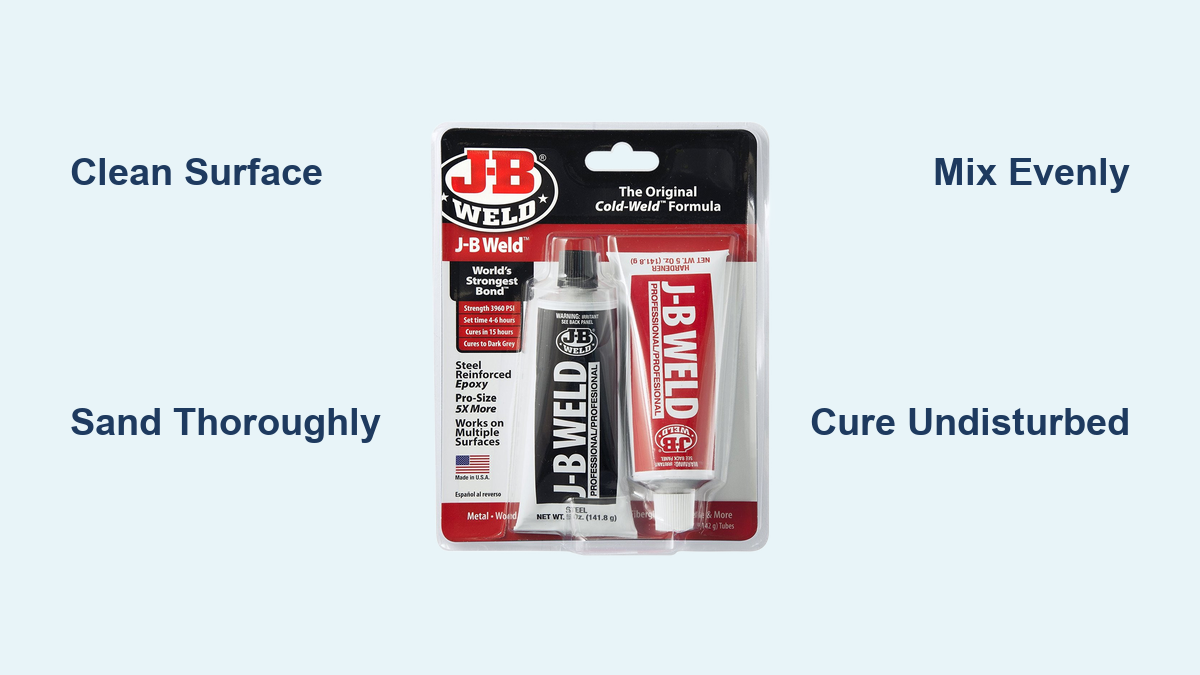
A cracked wheel rim can turn a smooth drive into a nerve-wracking experience. Whether you noticed a visible fracture after hitting a pothole or discovered damage during routine maintenance, the question on your mind is likely the same: can you fix it yourself, and will JB Weld actually hold? The good news is that for certain types of rim damage, JB Weld provides a surprisingly durable temporary or even semi-permanent solution—when applied correctly. This guide walks you through everything you need to know about using JB Weld to repair a cracked rim, from assessing whether your damage is suitable for this fix to executing a repair that will keep you safe on the road.
Before we dive into the step-by-step process, it’s crucial to understand that not all rim cracks are created equal. The type of damage, where it’s located, and what your rim is made of all determine whether JB Weld is the right solution. Aluminum alloy rims, which are the most common on passenger vehicles, respond well to epoxy repairs when the crack is small and accessible. Steel rims can also be repaired with JB Weld, though they require slightly different preparation. However, structural damage near the bead seat (where the tire seals to the rim) or cracks that have caused the rim to bend are generally beyond what any DIY epoxy repair can safely address.
Why Your Cracked Rim Can Be Fixed with JB Weld
JB Weld has earned a reputation as the go-to solution for automotive repairs precisely because it creates a bond stronger than many materials themselves. When fully cured, the original JB Weld formulation achieves a tensile strength of 3,960 PSI, which exceeds the tensile strength of many plastics and approaches that of some metals. This remarkable strength makes it capable of holding together cracked rim material, provided the crack isn’t the result of structural failure or excessive stress.
The key distinction you need to understand is between a cosmetic crack and a structural one. A hairline fracture along the outer lip of the rim, where no significant stress is placed during driving, is an ideal candidate for JB Weld repair. Similarly, small cracks on the inner barrel of the wheel, away from critical stress points, can be successfully stabilized with proper application. What JB Weld cannot fix is a crack that has caused the rim to warp, a fracture that extends through the mounting surface, or any damage that has already resulted in air loss from the tire. These situations require wheel replacement—not repair.
Must-Have Supplies for Rim Repair Success
Gathering the right materials before you begin is half the battle with any repair. For a cracked rim repair with JB Weld, you’ll need the epoxy itself (either the original formula or SteelStik depending on your rim material), along with several supporting supplies that ensure proper adhesion and curing. The epoxy kit typically includes both the resin and hardener, which you’ll mix in equal parts immediately before application.
Beyond the JB Weld itself, you’ll need fine-grit sandpaper (around 220 to 400 grit) to clean and roughen the surface around the crack. This step is absolutely critical—JB Weld cannot bond to smooth, clean metal; it needs a slightly roughened surface to mechanically grip the material. You’ll also need acetone or brake cleaner to degrease the area, as any oil or contamination will prevent proper adhesion. A mixing stick for combining the resin and hardener, a putty knife or similar tool for application, and clamps or weights to hold the repair in place during curing round out the essential supplies.
Timing Your Repair for Maximum Strength
Timing matters significantly with JB Weld applications. The working time—meaning the window during which the mixed epoxy remains workable—is approximately 25 to 30 minutes for the original formula. You’ll want to have everything prepared and within arm’s reach before you mix your first batch. Once applied, the epoxy requires 4 to 6 hours to achieve initial set, though full curing strength doesn’t develop for 15 to 24 hours. Plan your repair for a time when the rim can remain undisturbed overnight.
Proper Surface Preparation for Lasting Adhesion

The success or failure of your rim repair hinges almost entirely on how well you prepare the surface. Any oil, dirt, brake dust, or existing coating will create a barrier between the JB Weld and the bare metal, resulting in a weak bond that will eventually fail. Begin by removing the tire from the rim if possible—this gives you full access to both the inner and outer surfaces and prevents the tire from getting accidentally coated with epoxy.
Complete Cleaning Process for Rim Repair
With the tire removed, inspect the crack carefully to determine its full extent. Sometimes what appears to be a small surface crack actually extends further into the metal. Use a wire brush or abrasive pad to remove any loose material or corrosion around the crack zone. Then, working in a well-ventilated area, clean the entire surrounding area with acetone or brake cleaner. Wipe it dry with a clean lint-free cloth, and allow any residual solvent to evaporate completely before proceeding.
Sanding Techniques That Ensure Strong Bonding
Once the surface is clean, sand the area immediately surrounding the crack. Your goal is to remove any clear coat, paint, or oxidation while creating a texture that the JB Weld can grip. Sand in multiple directions rather than just one, and extend your sanding about an inch beyond the visible crack in all directions. After sanding, wipe away all residue with a clean, dry cloth. The surface should appear dull and slightly roughened, with no shiny spots remaining.
Correct JB Weld Mixing and Application Methods
Mixing JB Weld requires precision, as an improper ratio results in incomplete curing and weak bonds. Squeeze equal amounts of the resin and hardener onto a clean mixing surface—a piece of cardboard, a plastic lid, or the included mixing tray work well. Using your mixing stick, thoroughly combine the two compounds, scraping the sides and bottom of your mixing surface as you go. The properly mixed epoxy should appear a uniform gray color with no streaks or swirls of unmixed material.
Step-by-Step Crack Filling Technique
Work quickly but deliberately, as you have approximately 25 minutes before the epoxy begins to set. Using your putty knife or a similar tool, force the mixed JB Weld directly into the crack, pressing firmly to ensure it penetrates the full depth of the fracture. The goal is to not just cover the crack but to fill it completely from within. Once the crack is filled, build up a thin layer of epoxy over the top of the repair, extending about a quarter inch beyond the crack in all directions. This overlapping application creates a stronger, more stable repair.
Layered Application for Deep Cracks
For best results, apply the epoxy in thin layers rather than attempting to fill the entire crack at once. If the crack is deep or wide, apply one layer and allow it to partially set for about an hour before adding another. This layered approach reduces the likelihood of air pockets and ensures complete penetration. Some experienced repairers also recommend warming the rim slightly with a hair dryer before application—the warmth opens the pores of the metal slightly and can improve adhesion, though this step is optional.
Securing the Repair During Critical Curing Time

After application, your repair needs to remain completely undisturbed while it cures. This is where clamps, weights, or strategic positioning come into play. If the crack is on a flat or accessible surface, place a piece of plastic wrap over the wet epoxy (this prevents it from sticking to your clamp pads), then apply a clamp with moderate pressure. For cracks on surfaces that can’t be easily clamped, heavy objects placed on top of the epoxy-covered area work well—just be sure to use something clean that won’t bond to the epoxy.
Temperature Control for Optimal Curing
Temperature affects curing time significantly. JB Weld cures fastest in warm conditions, with optimum results between 70°F and 90°F (21°C to 32°C). If you’re working in a cold garage, consider using a heat lamp positioned about 18 inches above the repair to maintain warm temperatures. Avoid direct flame or extreme heat, which can cause the epoxy to cure too quickly and become brittle. Conversely, cold temperatures slow curing dramatically—below 50°F, the cure time can extend to 48 hours or more.
Post-Repair Testing and Safety Validation
Once the full curing period has elapsed, carefully remove any clamps or weights and inspect your repair. The cured JB Weld should appear hard and slightly glossy, with no soft or sticky spots. If you notice any areas that haven’t fully cured, leave the rim undisturbed for an additional 12 hours and check again. When you’re satisfied with the cure, reinstall the tire using either your original tire mounting equipment or by taking it to a shop—just be sure to inform them that the wheel has been repaired so they can use caution during mounting.
Critical Leak Test Before Driving
Before driving on the repaired rim, conduct a thorough visual inspection and an air pressure test. Inflate the tire to its recommended pressure and spray a solution of dish soap and water around the repaired area and bead seat. Watch for bubbles that would indicate an air leak. Also examine the JB Weld repair itself for any signs of separation or cracking. If everything appears sound, you’re ready for a test drive—but take it easy at first.
What JB Weld Can’t Fix: Safety Limitations
Honesty about limitations is essential when discussing DIY rim repairs. JB Weld can provide an effective, durable repair—but it remains a repair, not a replacement. The epoxy bond, while strong, will eventually degrade under the constant stress of driving, especially exposure to heat from braking, road chemicals, and temperature cycling. Most JB Weld rim repairs last anywhere from several months to a few years, depending on driving conditions and the severity of the original damage.
Critical Areas That Require Professional Attention
Certain types of damage should never be attempted with JB Weld, regardless of how small the crack appears. Any damage to the bead seat area, which is critical for maintaining the tire seal, is beyond DIY repair. Cracks that have caused the wheel to bend or lose its roundness cannot be fixed with epoxy, as the structural integrity is already compromised. Similarly, damage near the lug nut holes or mounting surface represents a safety-critical area that requires professional assessment and likely wheel replacement.
Maintenance Tips to Maximize Your JB Weld Repair
Once your JB Weld repair is complete, a few simple habits can help extend its useful lifespan. Avoid automatic car washes with high-pressure water jets, as the force can stress the repair edge. When possible, park in shaded areas or garages to minimize the repair’s exposure to UV radiation and extreme temperatures, both of which accelerate epoxy degradation. Clean your wheels regularly with mild soap rather than harsh chemical wheel cleaners, which can degrade epoxy over time.
Routine Inspection Protocol for Repaired Rims
Periodic inspection becomes part of your maintenance routine after a rim repair. Every few weeks, take a few minutes to visually examine the repair area and check your tire pressure. Early detection of a failing repair gives you time to arrange for proper replacement rather than being stranded with a flat tire. If you notice the epoxy beginning to crack, lift, or separate from the metal, start budgeting for a replacement wheel immediately.
Fixing a cracked rim with JB Weld is a practical, cost-effective solution when applied to appropriate damage. Success requires careful surface preparation, proper mixing, adequate curing time, and realistic expectations about the repair’s longevity. Your safety depends on honest assessment of the damage and the willingness to seek professional help when the situation demands it. When done correctly, a JB Weld repair can keep your wheel functional for months or even years, giving you time to plan and budget for a permanent solution.
Leave a Reply