
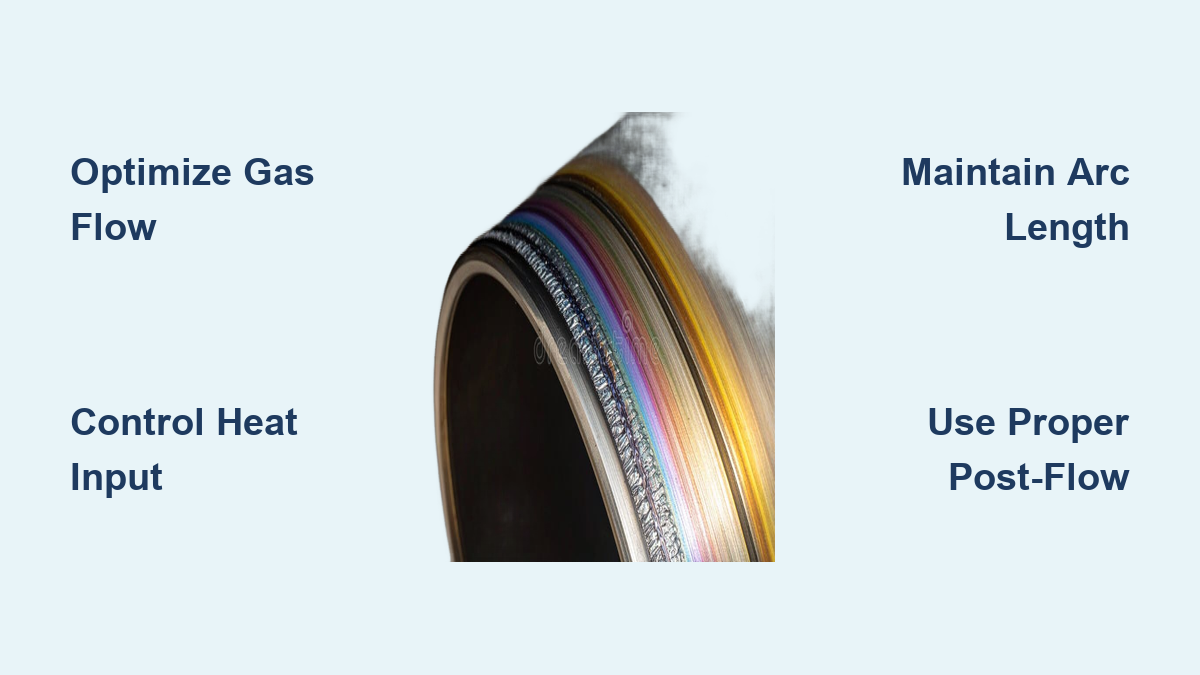
That stunning gold, blue, or purple temper coloring on TIG welds isn’t just visually impressive—it’s a direct indicator of your precise control over heat input, shielding gas coverage, and torch manipulation. When you learn how to get color in TIG welds consistently, you’re not just creating beautiful work; you’re demonstrating mastery of the fundamental principles that separate competent welders from true artisans. Whether you’re fabricating stainless steel components for motorsport applications, building kitchen equipment, or creating artistic metalwork, understanding these coloration principles puts you ahead of 90% of welders who struggle with inconsistent results.
The good news is that achieving professional-level color in your TIG welds follows predictable scientific principles that any dedicated welder can master with the right knowledge and practice. This guide breaks down exactly how to get color in TIG welds through specific, actionable techniques rather than vague suggestions. You’ll discover why certain colors form, how to control them deliberately, and which precise adjustments produce the results you want—no guesswork required.
Optimize Shielding Gas Setup for Perfect Coloration
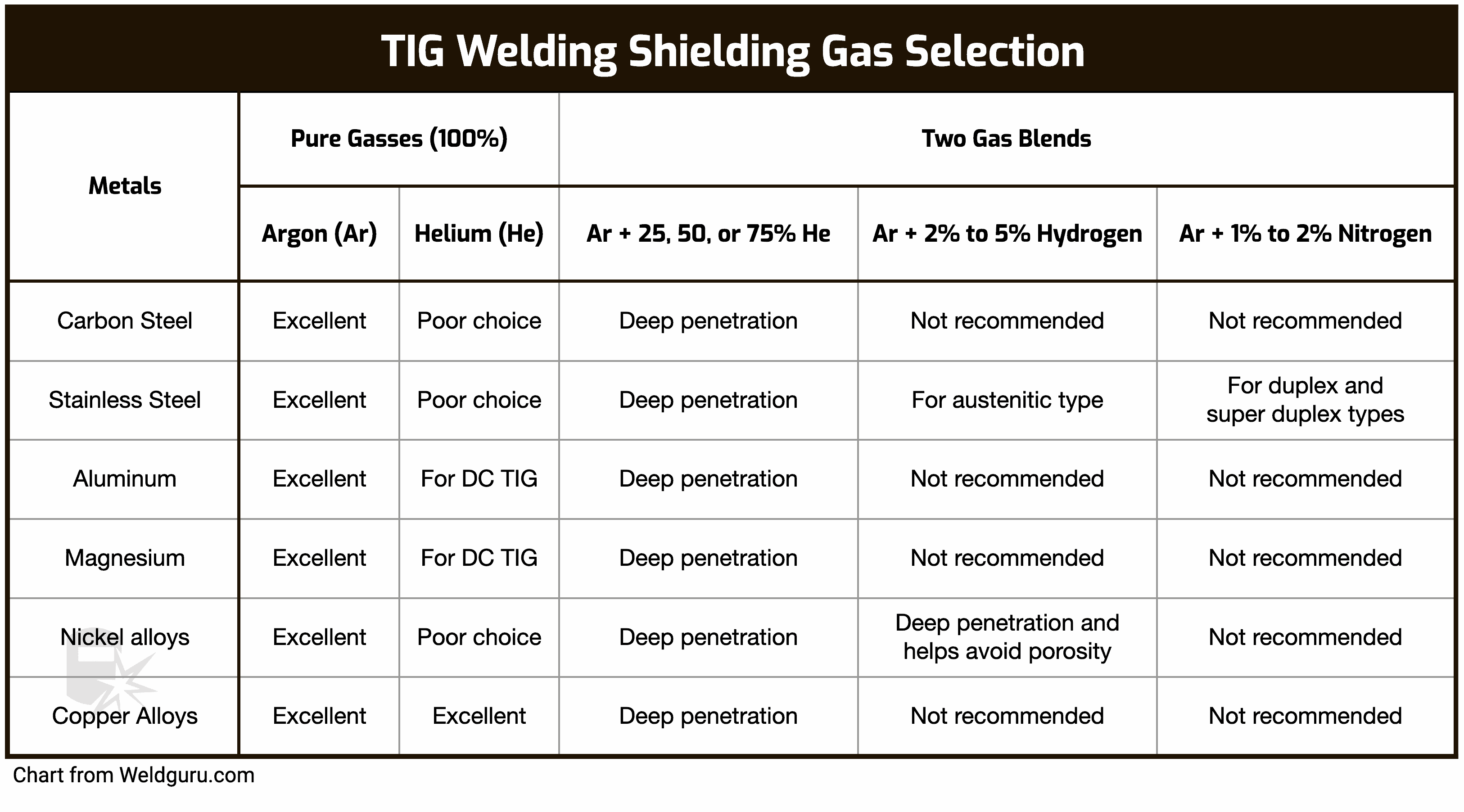
Insufficient shielding gas coverage is the #1 reason welders fail to achieve consistent color in TIG welds. For stainless steel applications where color matters, 100% argon at 18 CFH (cubic feet per hour) with a #7 cup creates the ideal protective atmosphere. Too little flow (below 15 CFH) allows atmospheric contamination that turns welds gray or black, while excessive flow (above 25 CFH) creates turbulence that draws air into your shielding stream.
Gas Lens Technology: Your Secret Weapon
Install a gas lens collet body immediately if you’re serious about how to get color in TIG welds. This simple upgrade transforms your gas coverage by smoothing the flow pattern and extending protection further from the torch tip. With a gas lens, you’ll notice dramatically improved color consistency, especially on thicker materials or in drafty environments where standard setups fail. The investment pays for itself in reduced rework and higher-quality results.
Post-Flow Time Critical for Stainless Steel
Set your post-flow time to 10-12 seconds when welding stainless steel with a #7 cup. This is non-negotiable for proper color development—the metal remains hot enough to oxidize for several seconds after you lift the torch. Shorter post-flow times cause gray discoloration at the weld termination point as atmospheric oxygen contaminates the cooling metal. Thicker materials may require even longer post-flow times to achieve uniform coloration throughout the weld.
Master Heat Input Control for Desired Color Results

The relationship between heat input and travel speed directly determines your weld coloration. Higher heat with slower travel creates darker blues and purples, while lower heat with faster travel produces the gold and straw colors most professionals consider ideal. Understanding this principle is essential when learning how to get color in TIG welds consistently.
Implement the “Hot and Fast” Technique
Use sufficient amperage to establish a fluid weld pool quickly, then move at the fastest speed that still allows proper filler metal addition. For thin stainless steel (around 0.083 inches), 85-90 amps with foot pedal control creates the concentrated heat input needed while minimizing time in the oxidation temperature range. This technique produces the narrow heat-affected zone with minimal tint that separates professional work from amateur attempts.
Material Thickness Requires Different Approaches
Thin materials (1.5mm and below) require lower amperage and faster travel because they can’t dissipate heat effectively, causing excessive discoloration. Thicker materials (3mm+) tolerate higher amperage (100-110 amps) while still producing good color due to their heat sink properties. Adjust your settings based on the specific material you’re welding—what works for 18-gauge won’t work for 1/4 inch.
Perfect Your Torch Technique for Consistent Color
Maintaining a tight arc length of approximately 1/8 inch (equal to your tungsten diameter) is critical for consistent color results. This shorter distance provides more concentrated heat, better gas coverage efficiency, and precise control over the weld pool. Most beginners hold the torch too far from the workpiece, creating wider heat-affected zones and inconsistent coloration.
Tungsten Extension and Cup Size Matter
Use 1/4 to 5/16 inch tungsten extension past the cup for optimal gas coverage and visibility balance. Less extension improves gas protection but reduces visibility, while more extension requires higher gas flow to maintain adequate shielding. Pair this with a #7 gas lens cup for most applications—larger cups provide better coverage but reduce visibility in tight spaces.
Develop Consistent Travel Speed
Variations in travel speed create bands of different colors along your weld. Practice moving the torch at a steady pace that allows proper filler addition while minimizing time in the oxidation temperature range. Many professionals use these techniques:
– Place light scratch marks on the workpiece as speed guides
– Count rhythmically (1-2-3-4) to maintain consistent pace
– Use hand rests or jigs to stabilize movement
– Start with short practice welds before attempting longer runs
Select Optimal Materials and Settings
For stainless steel applications where color matters, 2% lanthanated tungsten in 3/32 inch diameter ground to a sharp point provides the stable arc performance needed for precise control. The tungsten taper should be approximately twice the diameter for optimal performance—too short creates an unstable arc, while too long reduces heat concentration.
Filler Metal Selection Impact
Use 308 stainless filler rod for most stainless applications as it flows and wets out better than alternatives, contributing to superior bead appearance. Match rod diameter to material thickness—1/16 inch works well for thin-gauge applications. For carbon steel, ER70S-2 is standard, though dramatic colors are less visible due to different metallurgical properties.
Troubleshoot Common Color Issues Immediately
When your TIG welds produce darker colors than desired, follow this diagnostic checklist:
Fixing Gray or Black Discoloration
- Check gas flow rate (should be 15-25 CFH)
- Inspect for gas leaks in hoses and fittings
- Increase post-flow time to 10-12 seconds
- Ensure you’re using 100% argon (not mixed gases)
Correcting Inconsistent Color Bands
- Practice maintaining consistent travel speed
- Verify stable arc length throughout the weld
- Check for variations in joint fit-up or material thickness
- Reduce amperage slightly if heat buildup is causing progression to darker colors
Professional Settings for Specific Applications

Use these proven settings when you need to get color in TIG welds on stainless steel:
For thin materials (1.5mm or less):
– 35-45 amps with foot pedal control
– #6 cup with 5 LPM gas flow
– 1.6mm tungsten ground to needle point
– Very tight arc length (1/16 inch)
For standard thickness (0.083 inch):
– 85-90 amps with foot pedal
– 18 CFH argon flow with #7 gas lens cup
– 3/32 inch 2% lanthanated tungsten
– 1/4 inch tungsten extension
– 10-12 second post-flow
Material-Specific Coloration Strategies
Stainless steel produces the most dramatic color range due to chromium oxide formation. Silver indicates minimal oxidation (ideal for critical applications), while gold represents the best achievable color without back purging. Blue and purple indicate higher heat input, and gray signals significant oxidation that compromises corrosion resistance.
For carbon steel, the color is primarily aesthetic since the material will either rust or be painted. Titanium requires the most stringent color control—straw-colored or lighter welds are essential as darker colors indicate compromised mechanical properties. Achieving proper titanium welds often requires trailing shields or controlled atmosphere chambers.
Achieve the “Stack of Dimes” Appearance
The coveted stacked dimes appearance comes from consistent timing between filler additions. Here’s how to master it:
- Establish a stable weld pool with proper heat input
- Dip filler rod into leading edge of pool and immediately withdraw
- Move torch forward slightly to allow solidification
- Repeat at consistent intervals (about 1/8 inch)
Beginners should practice on scrap material for hours, focusing on maintaining uniform torch movement and filler addition timing. Start slowly and build speed gradually—many professionals report that achieving truly consistent stacked dimes requires hundreds of hours of deliberate practice.
Final Tips for Consistent Color Results
Long welds often show color progression from start to finish due to heat buildup. Combat this by:
– Turning the workpiece to maintain accessibility
– Planning weld sequences to manage heat distribution
– Taking brief pauses between sections on long runs
– Starting from the center and welding outward on large assemblies
Mastering how to get color in TIG welds requires understanding the relationship between heat input, shielding gas coverage, and torch technique. Start with proper equipment setup, focus on heat management through appropriate amperage and travel speed, and develop consistent torch and filler manipulation through deliberate practice. The beautiful gold, blue, and purple temper colors that distinguish skilled TIG welders will follow naturally once you’ve mastered these fundamentals. Remember: consistent results come from consistent technique—not luck or guesswork.
Leave a Reply