
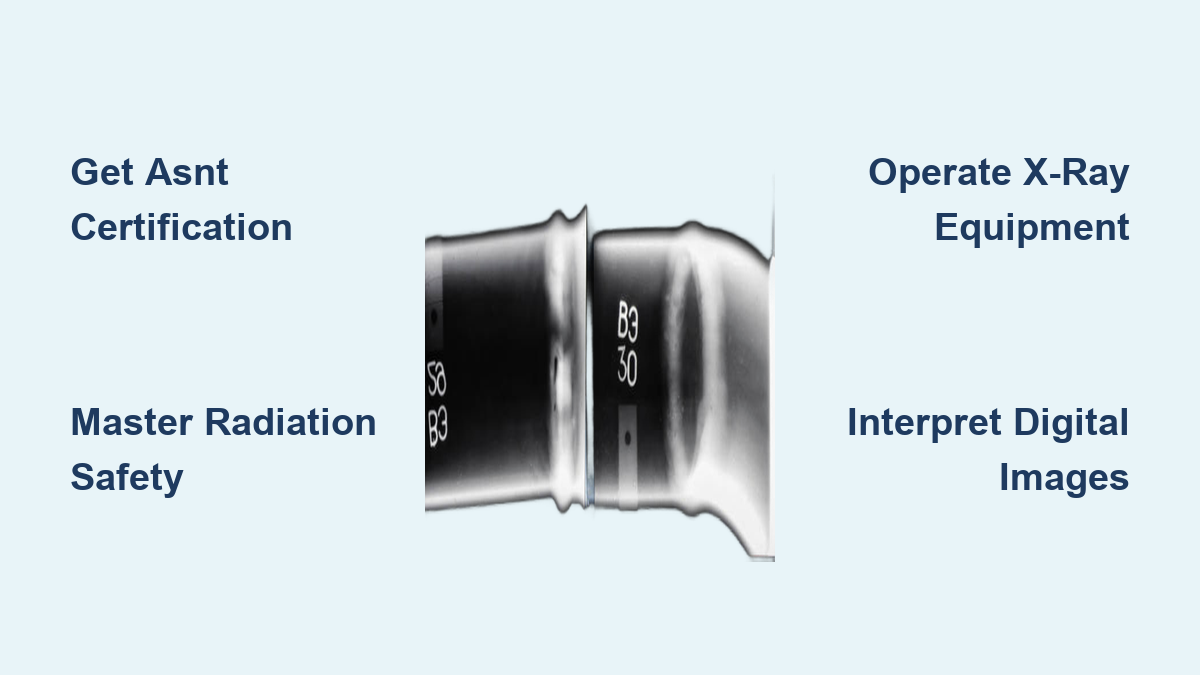
You’ve seen those striking images revealing hidden flaws inside metal structures—now you want to know how to get into x-raying welds and become a certified radiographic inspector. This specialized non-destructive testing (NDT) field offers a lucrative career path where your expertise directly prevents catastrophic failures in pipelines, aircraft, and infrastructure. As an NDT technician specializing in radiographic testing (RT), you’ll use X-rays or gamma rays to detect internal weld defects invisible to the naked eye, ensuring structural integrity across critical industries. With proper training and certification, you can transform from curious beginner to qualified weld X-ray inspector in as little as 12-18 months, opening doors to six-figure earning potential in high-demand sectors like oil and gas, aerospace, and power generation.
The radiographic inspection field faces a critical workforce shortage as experienced technicians retire, creating unprecedented opportunities for newcomers willing to invest in the right training. This guide cuts through the confusion to provide your exact roadmap—from meeting entry requirements to landing your first RT position—without wasting time on irrelevant information. You’ll discover the certification shortcuts that accelerate your career, the specific equipment skills employers demand, and the salary-boosting specializations that separate entry-level technicians from industry leaders.
Pass These 3 Essential Entry Requirements for Radiographic Weld Inspection
Before investing in training, verify you meet the non-negotiable requirements that determine your eligibility for radiographic work. These criteria separate serious candidates from those who waste time pursuing an incompatible career path.
Complete Minimum Educational Training in 6 Months
You need at least a high school diploma to begin radiographic training, but competitive candidates complete specialized NDT coursework first. Enroll in an ASNT-recognized Level I NDT program at a community college or technical school—these 8-12 week courses provide foundational knowledge in radiation physics and safety that traditional education lacks. Military veterans should leverage GI Bill benefits for accelerated NDT training through programs like the Navy’s Non-Destructive Testing School in San Diego, which provides free certification recognized by civilian employers. For those changing careers, prioritize programs offering job placement assistance, as established relationships with inspection companies dramatically increase your hiring odds after certification.
Critical mistake to avoid: Skipping formal training to save money. Self-taught technicians fail certification exams at 3x the rate of trained candidates due to knowledge gaps in radiation safety protocols.
Pass Rigorous Radiation Safety and Vision Screening
Radiographic inspectors must pass stringent medical evaluations before handling radiation sources. Your vision must be correctable to 20/25 (Snellen chart) with adequate color perception to distinguish subtle density variations on radiographs—complete color blindness typically disqualifies candidates. You’ll undergo regular blood tests and wear dosimetry badges to monitor radiation exposure under the ALARA (As Low As Reasonably Achievable) principle. Physical requirements include lifting 50-pound equipment, climbing structures, and working in confined spaces—prepare by building core strength and flexibility before applying for positions.
Develop These 4 Technician Mindset Characteristics
Beyond physical and educational requirements, successful radiographic inspectors share specific work habits that determine long-term success. Attention to detail proves critical when identifying hairline cracks that could cause pipeline failures. Patience with precision matters during exposure calculations where a 5% error creates unusable images requiring costly retakes. Comfort with strict protocols separates professionals who thrive in regulated environments from those overwhelmed by radiation safety procedures. Finally, analytical problem-solving skills let you distinguish actual defects from image artifacts that mimic weld flaws.
Earn Your RT Certification Through This Accelerated Pathway
Certification represents your professional currency in radiographic inspection—without proper credentials, employers won’t trust you with million-dollar equipment or safety-critical inspections. Follow this streamlined approach to maximize your earning potential while minimizing time-to-certification.
Complete ASNT Level I Certification in 4-6 Months
Start with the American Society for Nondestructive Testing (ASNT) Level I certification—the industry standard for entry positions. You’ll need 40 hours of classroom training (available through community colleges or specialized NDT schools) plus four months of supervised experience. The $300-$400 exam tests radiation safety, basic equipment operation, and exposure techniques. Pro tip: Document every work hour meticulously—certification applications require supervisor-signed verification of experience that often delays unprepared candidates.
Advance to Level II Certification Within 12 Months
Level II certification unlocks independent work and substantially higher pay—typically $15,000-$20,000 more annually than Level I positions. After completing Level I, accumulate 12 months of documented experience while taking an additional 40 hours of advanced training covering image interpretation and technique development. The $500 exam includes practical demonstrations where you must correctly identify defects on sample radiographs. Focus your training on digital radiography systems (DR/CR), as 75% of new industry positions now require these modern skills over traditional film methods.
Choose Between These 3 Certification Options Based on Your Goals
| Certification Type | Best For | Time to Completion | Salary Impact |
|---|---|---|---|
| ASNT (Level I-III) | U.S. domestic work | 12-18 months to Level II | +$25,000 over uncertified |
| PCN (BINDT) | International projects | 18-24 months | +$35,000 for global assignments |
| Military NDT | Veterans seeking fast track | Varies by branch | Immediate Level II equivalent |
Key insight: Oil and gas employers increasingly require dual certification in multiple NDT methods (like ultrasonic testing) alongside radiography—plan your training to include one additional method within your first 24 months.
Master These 4 Critical Equipment Skills Before Your First Job
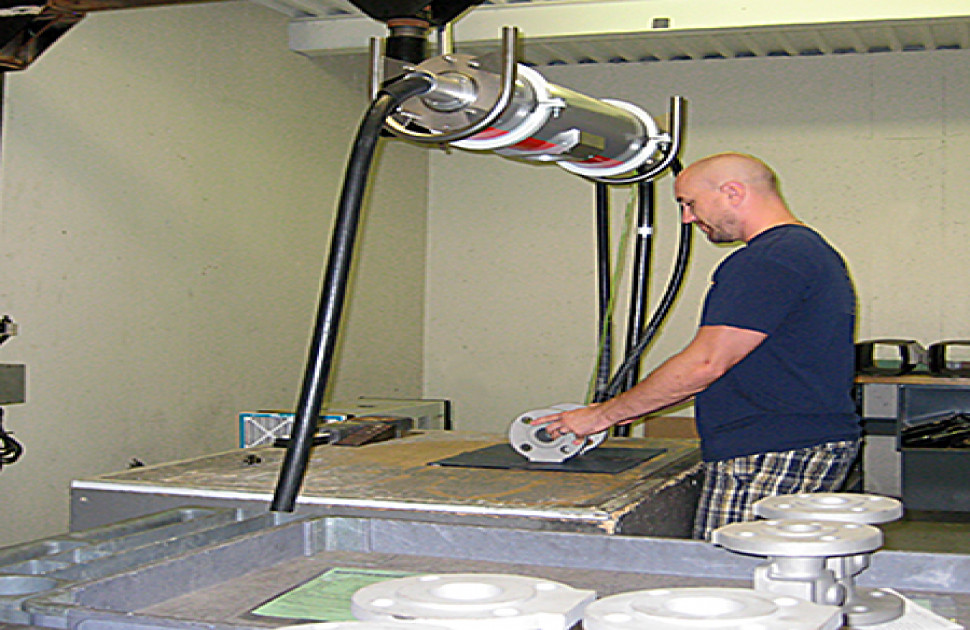
Employers prioritize technicians who arrive job-ready with hands-on equipment experience—don’t rely solely on classroom theory. Dedicate 30% of your training time to practical operation of industry-standard systems.
Operate Portable X-Ray Units Like a Seasoned Technician
Learn to adjust kV (kilovoltage), mA (milliamperage), and exposure time settings on directional X-ray tubes—the most common field equipment for pipeline inspections. Practice calculating exposure parameters using inverse square law formulas to achieve proper film density on materials from 1/8″ to 2″ thick. Warning: Incorrect settings create false indications that waste client time and damage your professional reputation—always verify calculations with a radiation survey meter before exposing.
Handle Gamma Radiography Sources Safely and Confidently
Master Ir-192 source projectors used in 90% of industrial weld inspections—you’ll manipulate radioactive isotopes through guide tubes to specific exposure positions. Training must include emergency procedures for stuck sources, as improper handling creates serious safety incidents. Practice source retrieval drills until they become muscle memory—when seconds count during an emergency, hesitation risks radiation overexposure.
Interpret Digital Radiographs With Professional Accuracy
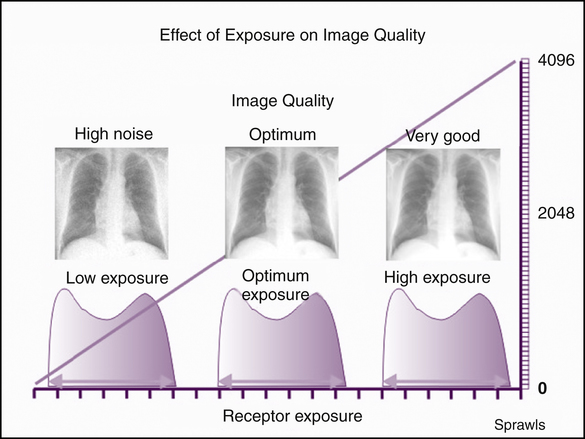
Digital systems now dominate new installations, so prioritize training on computed radiography (CR) phosphor plates and flat panel detectors (FPD). Learn to adjust acquisition parameters like gain and contrast to optimize image quality without masking defects. Develop proficiency using software tools to measure defect sizes and generate compliance reports—these digital skills command 15-20% higher starting salaries than film-only expertise.
Launch Your Career With These 3 Strategic Job Search Tactics
The job market favors radiographic inspectors—U.S. employment is projected to grow 10% through 2030—but landing your ideal position requires targeted strategies beyond generic applications.
Target These 3 High-Demand Industries First
- Pipeline construction: Offers consistent work with major contractors like TransCanada and Enbridge, paying $65,000-$85,000 for Level II technicians
- Aerospace manufacturing: Requires precision RT on critical components (Boeing, Lockheed Martin), offering premium pay but stricter qualification requirements
- Power generation: Nuclear facilities pay 20-30% more than other sectors but require additional security clearances and specialized training
Pro tip: Join ASNT’s job board and attend regional section meetings—40% of entry-level positions get filled through networking before appearing on public job sites.
Negotiate Salary Using These 3 Market Factors
Your earning potential depends on strategic positioning—don’t accept the first offer without considering these leverage points:
– Geographic location: Texas and Alberta pay 15-25% above national averages for oil and gas work
– Certification level: Level II technicians earn 30% more than Level I with the same experience
– Equipment specialization: Digital radiography skills add $8,000-$12,000 to base compensation
Create This 90-Day Onboarding Plan for New Hires
Your first three months on the job determine long-term success—accelerate your value with this structured approach:
1. Weeks 1-4: Document every procedure under supervision, focusing on site-specific safety protocols
2. Weeks 5-8: Shadow senior technicians on complex inspections while building your defect reference library
3. Weeks 9-12: Request progressively challenging assignments while mastering report generation software
Take Action Today With This 30-Day Kickstart Plan
Don’t let analysis paralysis delay your career launch—implement these concrete steps immediately:
- This week: Contact three ASNT-recognized training providers for program details and enrollment dates
- Within 14 days: Schedule radiation safety awareness training (often free through industry associations)
- By day 30: Secure a part-time position as an NDT assistant to begin accumulating experience hours
The most successful radiographic inspectors start with structured action, not endless research. Your first certification exam is closer than you think—begin building the foundation today that will support your six-figure career tomorrow. With the right training and strategic approach, you can transform from curious beginner to qualified weld X-ray inspector within a year, joining the ranks of professionals who literally see what others cannot.
Leave a Reply