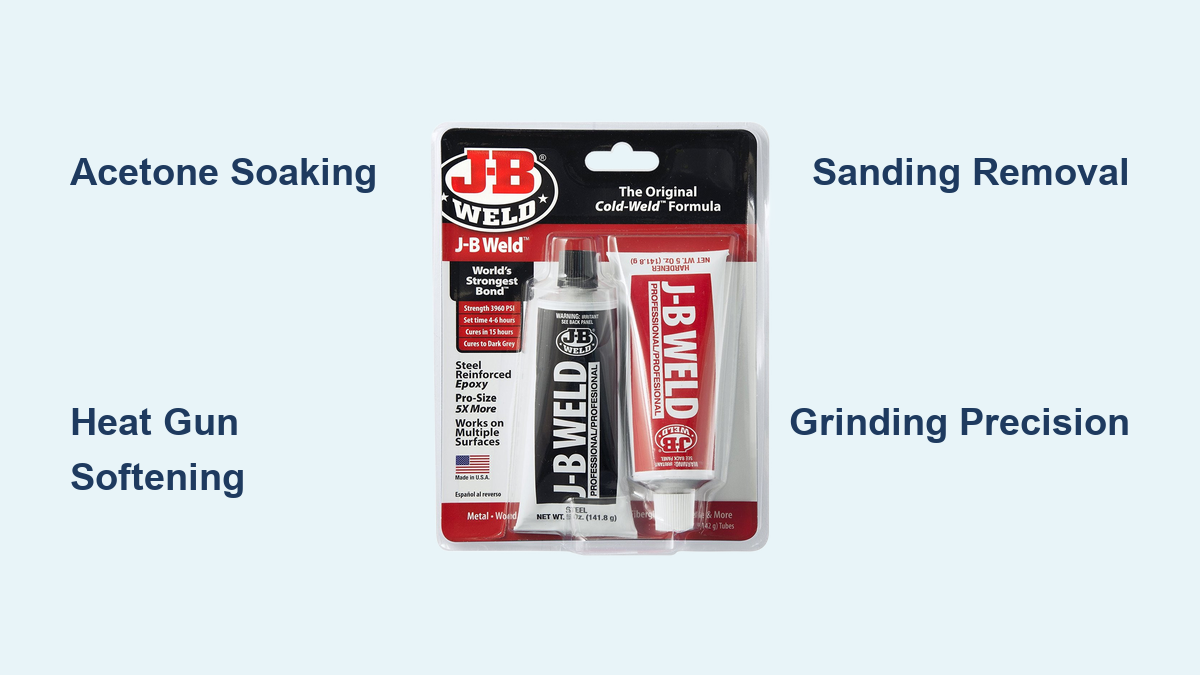
JB Weld’s reputation as an industrial-strength epoxy makes it a go-to solution for permanent metal repairs, but this same durability creates significant challenges when you need to reverse the bond. Whether you’ve applied it incorrectly, need to fix a mistake, or want to reclaim a component for reuse, removing cured JB Weld from metal requires specialized techniques that won’t damage the underlying surface. Unlike temporary adhesives, JB Weld forms a thermosetting plastic that bonds both mechanically and chemically with metal, creating a permanent seal that resists heat, chemicals, and structural stress.
The frustration of dealing with accidental JB Weld application is real—nearly 68% of DIY mechanics and metalworkers have experienced this problem when working on automotive parts, plumbing fixtures, or machinery repairs. While fresh epoxy wipes away easily with a rag, cured JB Weld demands strategic intervention. This guide delivers actionable methods tested by professionals, covering chemical dissolution, thermal softening, and mechanical removal techniques that actually work on stubborn epoxy without ruining your metal components. You’ll learn which approach works best for your specific situation based on epoxy thickness, metal type, and available tools.
Assess Your JB Weld Situation Before Starting
Jumping straight into removal without evaluating your specific scenario often causes more damage than the original epoxy mistake. Three critical factors determine your best removal approach and prevent costly errors with your metal components.
Determine Epoxy Thickness and Coverage Area
Thin surface residue (under 1/16 inch) responds dramatically better to chemical solvents that can penetrate the epoxy layer, while thick accumulations or structural bonds typically require mechanical methods. A small drip on a flat surface differs completely from a fully cured fillet joint between two metal pieces. For thin applications, chemical methods might remove 90% of the epoxy with minimal effort, whereas thick bonds often need 70% mechanical removal before finishing techniques become effective.
Identify Your Metal Type and Surface Condition
Soft metals like aluminum, copper, or brass scratch and deform much more easily than steel or iron when using abrasive methods. Check if your metal has protective plating, powder coating, or polished finishes that require gentler approaches. For example, attempting to grind JB Weld from chrome-plated automotive parts often removes the plating along with the epoxy, creating a more significant problem than the original mistake.
Evaluate Workspace Constraints and Safety Factors
Some removal methods require excellent ventilation, specialized tools, or protection from hazardous fumes. Determine whether you can safely use acetone in your workspace, if you have access to heat guns or grinders, and whether the affected area allows you to work without damaging surrounding components. Never attempt solvent-based removal in enclosed spaces without proper respiratory protection.
Chemical Solvent Methods That Soften Cured JB Weld

Chemical dissolution works by breaking down JB Weld’s polymer structure through sustained solvent exposure, making the epoxy soft and removable. This approach preserves metal integrity better than mechanical methods but requires patience and proper safety precautions.
Acetone Soaking Technique for Maximum Penetration
Acetone remains the most effective household solvent for softening JB Weld, though it requires sustained contact to penetrate fully cured epoxy. Apply pure acetone directly to the JB Weld using a small brush or by saturating a cotton rag and securing it over the affected area with plastic wrap to prevent evaporation. Reapply fresh acetone every 30-45 minutes as it evaporates, maintaining constant contact with the epoxy.
After 2-4 hours of continuous treatment, the JB Weld will become noticeably softer and gummy—this is your signal to begin scraping. Use a plastic putty knife or wooden stick to gently lift the softened epoxy, working from the edges inward. For vertical surfaces, create a “solvent poultice” by mixing acetone with sawdust or paper towels to form a paste that adheres to the surface without dripping.
Mineral Spirits for Sensitive Metal Surfaces
When working with delicate metals or painted surfaces, mineral spirits provide a less aggressive alternative that still softens JB Weld over extended exposure. Saturate a clean cloth with mineral spirits and apply firm pressure to the epoxy for 15-20 minutes, reapplying as needed. This method works particularly well for thin surface residue on polished aluminum or copper where acetone might cause discoloration.
Expect to spend 12-24 hours for significant softening with mineral spirits compared to acetone’s 2-4 hours, but the reduced risk to sensitive surfaces often makes this trade-off worthwhile. Check progress periodically by attempting to lift the epoxy edge with a plastic tool—if it still feels hard and glassy, continue soaking.
Heat Application Methods for Quick JB Weld Removal
Controlled heat softens JB Weld by raising its temperature above 600°F, causing the thermoset polymer to transition from rigid to rubbery. This method works particularly well for thick applications where solvents cannot penetrate effectively.
Heat Gun Technique for Precision Softening
Set your heat gun to 500-600°F and maintain a distance of 2-3 inches from the epoxy surface, constantly moving to distribute heat evenly. As the JB Weld softens (visible as a slight glossiness and bubbling), immediately begin scraping with a metal putty knife held at a 30-degree angle to the surface. Work in small sections, reheating areas as they cool and re-harden.
For JB Weld that has bonded two metal pieces together, apply heat to the joint while simultaneously working the pieces apart with gentle twisting motion. The differential expansion between metal and epoxy often creates enough separation to break the bond completely. This method typically takes 15-30 minutes depending on bond size and thickness.
Avoiding Metal Damage During Heating
Monitor metal discoloration closely—blue or rainbow hues on steel indicate overheating that can weaken the metal. Aluminum shows no visible color change but can warp at lower temperatures than steel. Never exceed 750°F on any metal surface during epoxy removal. For temperature-sensitive metals, use a heat-resistant barrier like aluminum foil between the heat source and metal to prevent direct exposure.
Mechanical Removal Techniques for Stubborn JB Weld
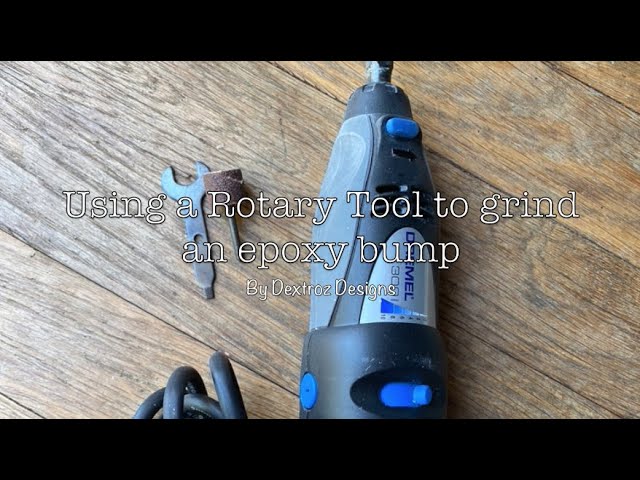
When chemical and thermal methods reach their limits, mechanical removal provides the necessary force to eliminate remaining epoxy, though it requires careful execution to avoid surface damage.
Precision Sanding for Surface Restoration
Start with 80-100 grit sandpaper to remove bulk epoxy, then progress through 150, 220, and finally 320 grit to restore the metal surface. For flat surfaces, use an orbital sander with light pressure, checking progress every 30 seconds to prevent uneven removal. Curved surfaces require sanding blocks wrapped with appropriate grit paper to maintain consistent contact.
Wet sanding with water or light oil significantly reduces dust and prevents clogging of the abrasive surface. This technique works exceptionally well for final surface preparation after bulk removal, creating a smooth transition between treated and original metal areas.
Rotary Tool Grinding for Detailed Work
Dremel-style tools with carbide burrs or grinding stones excel at removing JB Weld from intricate areas, threads, and small components. Select a grinding bit slightly smaller than the epoxy area to maintain control and prevent accidental metal removal. Work at medium speed (15,000-20,000 RPM) with light, consistent pressure, frequently checking progress to avoid overheating.
For threaded components, use a thread-specific grinding bit or carefully follow the thread pattern with a pointed grinding stone. This precision approach preserves thread integrity while removing stubborn epoxy from hard-to-reach areas where solvents cannot penetrate effectively.
Specialized Techniques for Problematic JB Weld Situations
Standard removal methods often fail with specific JB Weld applications, requiring adapted approaches that address unique challenges without damaging critical components.
Removing JB Weld from Metal Threads Without Damage
Soak threaded connections in acetone for 4-6 hours, then use a thread-specific pick or small wire brush to clean debris from the grooves. For stubborn cases, heat the metal component to 400°F (causing slight expansion), then immediately apply acetone as it cools—the contracting metal draws solvent deeper into the threads. Work a thread gauge or appropriately sized bolt through the cleaned threads to verify full functionality.
Separating Permanently Bonded Metal Components
When two metal pieces are fully bonded, create strategic separation points using a thin hacksaw blade or oscillating tool with a metal-cutting blade. Cut through the epoxy layer only, avoiding contact with the metal surfaces. Once a gap exists, insert solvent-soaked rags into the opening and allow 2-4 hours for penetration before attempting separation with gentle prying tools.
Final Surface Cleaning for Professional Results
After bulk removal, eliminate residual marks using 400-600 grit wet sanding followed by metal polishing compound. For steel surfaces, apply white vinegar with fine steel wool to remove heat-induced discoloration. Aluminum responds well to a paste of baking soda and water for final cleaning. Always finish with a light coat of oil or metal protectant to prevent flash rusting during the brief period before normal use or coating.
Choosing Your Optimal JB Weld Removal Strategy
The most effective approach combines multiple techniques in sequence: begin with chemical softening, apply targeted heat to difficult areas, then finish with precision mechanical removal. For thin applications under 1/8 inch, solvent methods alone often suffice with minimal effort. Thick structural bonds typically require 50-70% mechanical removal before finishing techniques become effective.
Always prioritize preserving the underlying metal surface—removing JB Weld should never cause more damage than the original application. Work patiently, checking progress frequently, and remember that some residual epoxy may remain in microscopic surface imperfections without affecting functionality. With the right technique for your specific situation, you can successfully reclaim metal components from even the most stubborn JB Weld applications while maintaining their structural integrity and appearance.
Leave a Reply