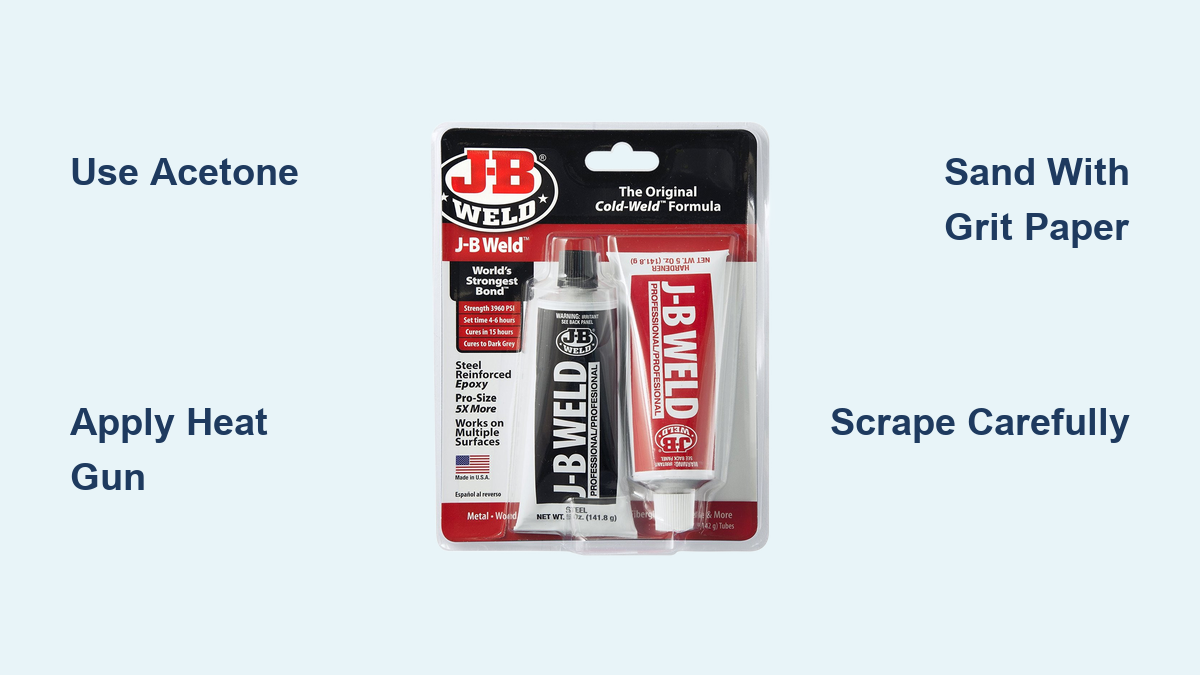
JB Weld has earned its reputation as one of the toughest industrial-strength epoxies available for metal repairs, creating bonds that often outlast the steel itself. This incredible strength becomes a double-edged sword when you need to reverse that bond—whether you’ve made an application error, need to disassemble a previously bonded component, or simply want to correct a mistake. Removing cured JB Weld from steel requires strategic planning, the right techniques, and proper safety precautions to avoid damaging your metal surface. This guide provides proven methods for removing JB Weld from steel surfaces, helping you select the most appropriate approach based on your specific situation and available tools.
The challenge of removing JB Weld depends significantly on how long it has cured, the thickness of the application, and the surface area involved. Fresh JB Weld (less than 24 hours old) responds well to chemical solvents that can penetrate the still-forming polymer structure, while fully cured epoxy (72 hours or more) typically requires more aggressive mechanical methods. Understanding that you’re working to dissolve or abrade a material harder than the steel itself is crucial—success comes from patience and methodical work rather than force and frustration.
Evaluate Your JB Weld Removal Challenge First
Before selecting your removal method, thoroughly assess the specifics of your situation. Determine whether the epoxy is fully cured or still within the first few hours of application—this dramatically affects your approach options. Examine whether you’re dealing with a thin film or a thick bead of epoxy, and whether the steel surface is flat or features complex contours with grooves and corners.
Consider whether preserving the underlying steel’s integrity is critical. Some removal methods, particularly aggressive grinding, can damage the base metal if not applied carefully. If you’re working with thin-gauge steel, precision components, or visible surfaces where appearance matters, prioritize chemical methods first and reserve mechanical techniques for stubborn areas only.
Gather your safety equipment before beginning any removal attempt. Most JB Weld removal processes involve chemicals, fine particulates, or high temperatures—all requiring proper protection. Safety glasses, chemical-resistant gloves, and adequate ventilation aren’t optional extras but essential requirements for safe epoxy removal from steel surfaces.
Chemical Solvent Approach for Recent Applications

When dealing with JB Weld that’s still within the first 24 hours and hasn’t fully cured, solvents provide the gentlest and most effective removal option. Partially cured epoxy hasn’t yet formed its complete cross-linked polymer structure, making it vulnerable to certain chemicals that break down the bond with the steel surface.
Acetone stands out as the most accessible and effective solvent for fresh JB Weld applications. Apply generous amounts using a clean cloth or disposable brush, ensuring complete coverage of the epoxy area. Allow the acetone to soak for 15 to 30 minutes—the chemical works by swelling the epoxy and weakening its adhesion to the steel. Reapply acetone as it evaporates to maintain consistent saturation. Once the epoxy softens and becomes tacky, carefully scrape it away using a plastic scraper or putty knife to avoid scratching the steel surface.
For particularly stubborn spots, combine acetone soaking with gentle abrasion using extra-fine steel wool (grade 0000). The steel wool helps lift softened epoxy without damaging the underlying metal. Work in small sections, reapplying acetone as needed, and wipe the area clean with a damp cloth between applications to assess your progress.
Methyl ethyl ketone (MEK) offers a stronger alternative to acetone but requires additional safety precautions due to its harsh fumes. If using MEK, work exclusively outdoors or in a well-ventilated area, and wear a respirator rated for organic vapors. Apply MEK similarly to acetone, allowing 10 to 15 minutes of soak time before attempting to scrape the softened epoxy. Always keep fire sources away from your work area when using either solvent.
Heat Application for Cured Epoxy Removal
Applying controlled heat softens fully cured JB Weld by raising the epoxy above its glass transition point, making it pliable enough to scrape away. This technique works best on heat-resistant steel surfaces and requires careful temperature management—insufficient heat won’t affect the epoxy, while excessive heat can damage surrounding materials.
A heat gun set to 300-400°F provides ideal controlled heating for JB Weld removal. Maintain a distance of 2-3 inches from the epoxy surface and keep the heat gun in constant motion to prevent scorching. Heat each area for 30-60 seconds until the epoxy develops a slightly glossy appearance, indicating it has softened. Immediately scrape the heated epoxy with a putty knife while it remains warm—JB Weld re-hardens quickly as it cools.
For thick epoxy applications, work in layers. Heat the top surface, scrape off the softened layer, then reapply heat to reach the remaining epoxy. This sequential approach prevents overheating the steel while ensuring complete removal. Plastic scrapers outperform metal tools for heated epoxy, as they won’t gouge the steel and create less friction that could prematurely cool the softened material.
Never use an open flame (torch or propane burner) for JB Weld removal on steel. The uncontrolled, intense heat can weaken the steel structure, cause discoloration, or create dangerous flash points if solvent residues remain.
Mechanical Removal for Stubborn Epoxy

When chemical and heat methods prove insufficient—especially with fully cured, thick JB Weld applications—mechanical removal becomes necessary. This approach physically abrades the epoxy away, requiring care to avoid damaging the underlying steel.
Begin with the least aggressive mechanical option: sandpaper. Start with 80-grit sandpaper to remove the bulk of the epoxy, then progress through 120-grit, 180-grit, and finally 220-grit to blend the surrounding steel surface. Maintain consistent pressure and use circular motions to avoid creating grooves in the metal. This method generates significant dust, so wear a NIOSH-approved dust mask and work in a well-ventilated area.
For larger areas or thicker epoxy, a rotary tool (like a Dremel) with a sanding drum or grinding bit accelerates the process significantly. Apply light pressure and keep the tool moving constantly to prevent heat buildup, which can melt epoxy into the sandpaper or create deep grooves in the steel. This precision tool excels for detailed work or small spots where larger sanders would be impractical.
Angle grinders with zirconia alumina flap discs tackle the most stubborn JB Weld removal jobs. These powerful tools remove epoxy rapidly but demand experience and steady hands—an angle grinder can gouge steel instantly if misused. Start with a coarse flap disc (36-40 grit) for efficient material removal, then switch to a finer disc (80 grit) for refining the surface. Work in short bursts and frequently inspect your progress to avoid over-grinding.
Precision Scraping for Delicate Steel Surfaces

For thin epoxy layers, edges, corners, or situations requiring maximum steel preservation, precision scraping offers controlled removal without power tools. This technique works well for delicate steel components where surface integrity is critical.
A sharp utility knife or single-edge razor blade serves as your primary scraping tool. Hold the blade at a low angle (15-30 degrees) to the steel surface and use firm, controlled strokes to lift the epoxy edges. Once you’ve created a starting point, work the blade beneath the epoxy to pry it loose. This method requires patience—rushing increases the risk of slips that could cut into the steel or cause injury.
For curved or irregular steel surfaces, flexible putty knives or plastic scrapers conform to the shape while providing enough rigidity to remove epoxy. Slightly heating the epoxy with a heat gun before scraping makes it more pliable and reduces the force required. A plastic ice scraper works surprisingly well for flat surfaces and won’t scratch steel if kept clean and sharp.
After scraping, residual epoxy often remains as a thin film. Remove this by reapplying acetone or light sanding with 400-grit or higher sandpaper. The goal is a clean steel surface ready for new applications—whether that’s fresh JB Weld, paint, or another protective coating.
Final Surface Preparation for Steel
Once you’ve removed the visible JB Weld, proper surface preparation ensures the steel is ready for its next use. Residual epoxy, chemical residues, or surface damage can compromise new bonds or finishes.
Begin by cleaning the area with warm water and dish soap to remove any remaining solvent or debris. For chemical residue, follow with a second cleaning using isopropyl alcohol to ensure the surface is completely clean and free of oils that might interfere with new applications. Wipe the steel dry with a clean lint-free cloth and allow it to air dry completely before proceeding.
Inspect the steel surface for damage from your removal method. Grinding or aggressive sanding may have created grooves or removed too much material in spots. Fill any deep scratches with a metal filler compound and sand smooth once it cures. Light surface scratches typically don’t affect new JB Weld bonds but may show through paint or clear coats.
For optimal results when reapplying JB Weld or another epoxy, roughen the cleaned steel surface with 80-100 grit sandpaper. This creates a mechanical bond profile that the new epoxy can grip more effectively than a smooth surface. Wipe away all sanding dust with a tack cloth or acetone before applying any new adhesive.
Safety First During JB Weld Removal
Every JB Weld removal method carries specific hazards, and proper safety equipment protects you from harm. Never skip these precautions, even for quick jobs—chemical exposure, eye injuries, and respiratory damage accumulate over time.
Chemical solvents like acetone and MEK are highly flammable and cause skin irritation with prolonged contact. Always wear chemical-resistant gloves (nitrile or neoprene), safety glasses to protect against splashes, and work in ventilated areas. Keep solvents away from open flames, sparks, or hot surfaces. If working indoors, position a fan to blow vapors away from your face while you work.
Mechanical removal methods generate fine dust and particles that irritate lungs and eyes. Always wear safety glasses to protect against flying debris, and use a NIOSH-approved dust mask or respirator rated for fine particulates. For power sanding or grinding, a full-face shield provides additional protection. Clean up dust immediately with a damp cloth or vacuum—dry sweeping redistributes particles into the air.
Heat application requires heat-resistant gloves and awareness of surroundings. JB Weld can release irritating fumes when heated, so adequate ventilation is essential. Keep flammable materials away from your work area, and never leave a heat gun unattended while it’s powered on.
Removing JB Weld from steel is achievable with the right approach and persistence. Start with the least aggressive method appropriate for your situation, prioritize safety throughout the process, and remember that patience beats force every time. Whether you’re correcting a mistake or disassembling an old repair, these techniques restore your steel to usable condition for whatever project comes next.
Leave a Reply