
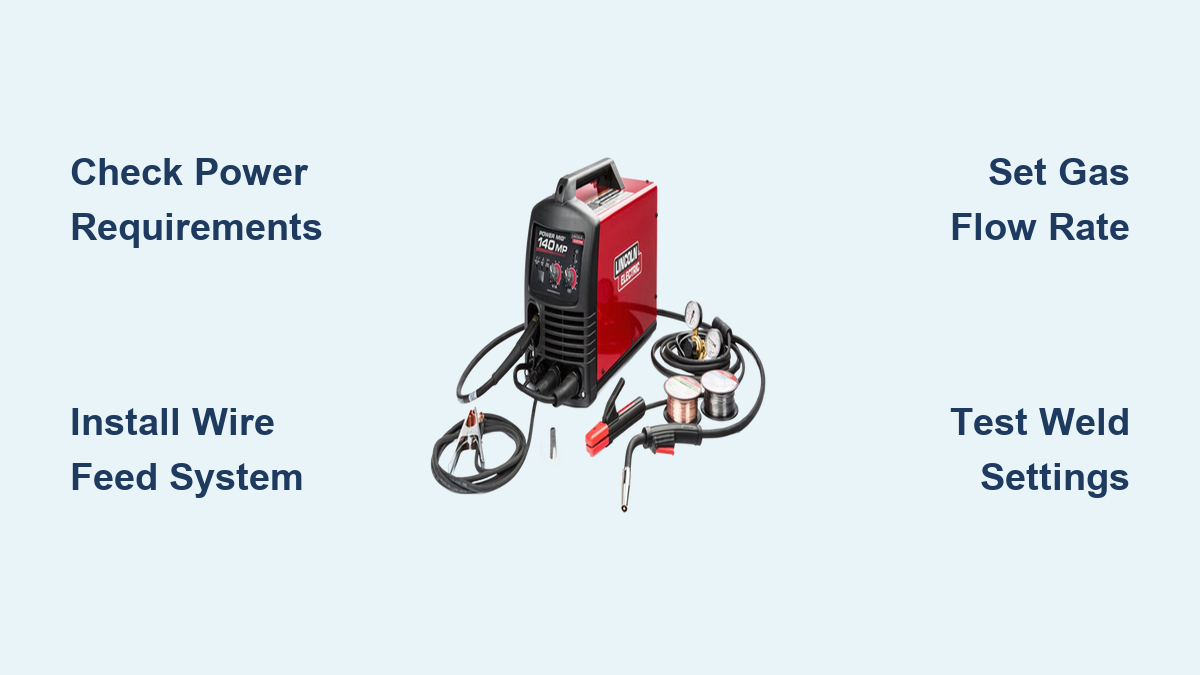
You’ve just unboxed your new Lincoln Electric welder, but that intimidating array of dials, cables, and connections has you second-guessing your purchase. You’re not alone—nearly 60% of first-time welder owners struggle with proper setup, leading to frustrating delays before they can start their projects. Getting your Lincoln Electric welder configured correctly isn’t just about connecting wires; it’s the foundation for achieving clean, professional welds while keeping yourself safe from electrical hazards and equipment damage. This guide walks you through every critical step of setting up your Lincoln Electric welder properly, from selecting the right power source to making your first successful weld, so you can transform that intimidating box of components into your most valuable workshop tool.
Essential Safety Preparations Before Powering On
Before touching any components, prioritize creating a safe workspace that prevents electrical shock and fire hazards. Your Lincoln Electric welder requires a dedicated space free from flammable materials within a 35-foot radius—this isn’t just manufacturer caution but OSHA requirement 1910.252(b)(2)(i) for welding operations. Inspect your work area for potential ignition sources like gasoline containers, sawdust piles, or aerosol cans that could turn a minor spark into a major incident.
Required Personal Protective Equipment Checklist
Never attempt to set up or operate your Lincoln Electric welder without these essential safety items:
- Auto-darkening welding helmet with minimum #10 shade rating (higher for aluminum work)
- Fire-resistant gloves specifically designed for welding (cotton or leather won’t suffice)
- Flame-resistant clothing covering all exposed skin (no synthetics that can melt)
- Safety glasses worn underneath your helmet for protection during setup
- Hearing protection when working with loud wire feed systems
Critical Warning: Never wear rolled-up sleeves or exposed skin near welding operations—UV radiation causes severe sunburn-like injuries within seconds, even during equipment testing.
Matching Your Lincoln Welder to Proper Power Requirements

Lincoln Electric welders demand specific electrical configurations that vary significantly by model and output capacity. Connecting your welder to an incompatible power source causes immediate damage to the internal transformer and voids your warranty. Check your unit’s nameplate for the exact voltage, amperage, and phase requirements before proceeding—this information appears as “Input Requirements” or “Primary Power” specifications.
Single-Phase vs. Three-Phase Power Setup Differences
For home workshops (single-phase models like Lincoln Electric Handy MIG 140):
– Requires dedicated 240V circuit with minimum 50-amp breaker
– Must use 6-gauge copper wiring for runs under 50 feet
– Never use extension cords—install a NEMA 6-50 receptacle within 10 feet of the welder
– Verify correct polarity using a multimeter before connecting (120/240V systems require L1/L2 configuration)
For industrial settings (three-phase models like Lincoln Electric Power MIG 210 MP):
– Needs balanced three-phase power with maximum 10% voltage variation between phases
– Requires professional installation by licensed electrician per NEC Article 630
– Grounding conductor must match phase conductor size (typically 4-gauge for 100A systems)
– Install line reactors if operating within 100 feet of variable frequency drives
Pro Tip: When in doubt about your electrical system, hire a qualified electrician—Lincoln Electric’s warranty explicitly excludes damage from improper power connections.
Correctly Installing Wire Feed System Components
The wire feed mechanism makes or breaks your welding performance, yet most users install this component incorrectly during initial setup. Lincoln Electric’s dual-drive systems require precise tension adjustments that differ significantly between aluminum (softer) and steel (harder) wires. Improper tension causes erratic wire feeding, burn-backs, and porosity in your welds.
Step-by-Step Wire Installation Process
-
Select correct drive rolls based on wire type:
– V-groove rolls for mild steel solid wire
– U-groove rolls for aluminum or flux-cored wire
– Knurled rolls for hard-facing alloys -
Thread the wire through the feed system:
– Cut wire end square using diagonal cutters
– Guide wire through inlet guide tube without kinking
– Push wire through contact tube until 1/4″ protrudes -
Adjust drive roll tension:
– Start with knob at factory setting (usually 3-4)
– Power on welder and depress trigger
– Increase tension until wire feeds smoothly without slipping
– Decrease if wire bends or birdnests in gun
Common Mistake: Over-tightening drive rolls (indicated by flattened wire) damages the wire and causes inconsistent arc performance. The proper tension allows you to stop the wire with firm finger pressure while feeding.
Gas System Configuration for Optimal Shielding
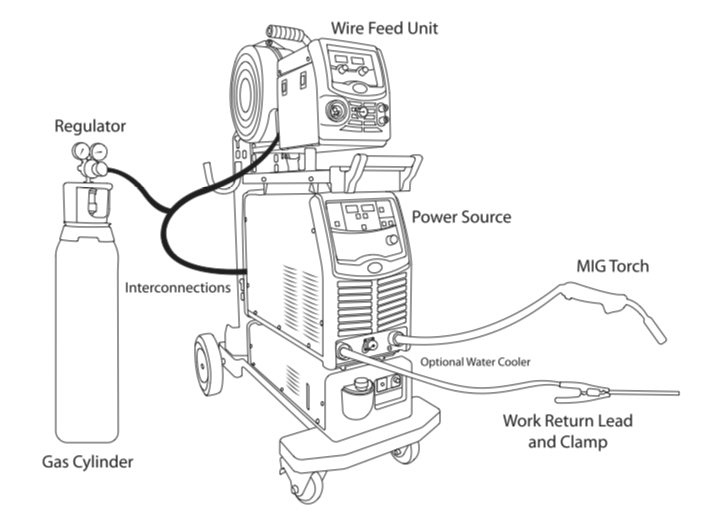
Your Lincoln Electric welder’s gas system requires specific setup procedures that differ between MIG and TIG applications. Using the wrong gas mixture or flow rate introduces porosity that weakens welds by up to 40%, yet most DIYers ignore these critical settings during initial setup.
MIG Welding Gas Setup Essentials
- Gas selection: 75% argon/25% CO2 for steel (C25), 100% argon for aluminum
- Flow rate: 20-25 CFH for most applications—measure by holding thumb over nozzle
- Regulator setup:
- Crack cylinder valve slowly before attaching regulator
- Set working pressure to 5-7 PSI (never exceed 10 PSI)
- Purge line for 1 minute before welding to remove moisture
Critical Checkpoint: Inspect all gas connections with soapy water solution—bubbles indicate leaks that waste expensive shielding gas and compromise weld quality.
Initial Machine Calibration and Test Welds
Skipping proper calibration causes frustration when your first welds turn out weak or inconsistent. Lincoln Electric welders require specific warm-up procedures and test parameters that vary by material thickness—jumping straight to your project without calibration guarantees subpar results.
First-Time Calibration Checklist
-
Set voltage and wire speed using Lincoln’s material thickness chart:
– 18-gauge steel: 16-18V, 250-280 IPM
– 1/4″ steel: 22-24V, 350-380 IPM -
Perform test welds on scrap metal matching your project material:
– Start with short 1-inch beads
– Adjust voltage if bead looks stringy (increase) or spattery (decrease)
– Fine-tune wire speed if arc sounds like “bacon frying” (ideal) -
Verify ground clamp connection:
– Attach directly to clean base metal (not the table)
– Ensure full metal-to-metal contact without paint or rust
– Position within 2 feet of weld zone for proper circuit completion
Pro Tip: Keep a calibration log noting settings for different materials—this saves hours of trial and error on future projects.
Troubleshooting Common Setup Issues
Even with careful installation, certain setup problems frequently occur during initial operation. Recognizing these issues early prevents damage to your Lincoln Electric welder and ensures consistent performance from day one.
Why Your Welder Won’t Start After Setup
No power indication:
– Check main circuit breaker (not just unit switch)
– Verify 240V at receptacle with multimeter
– Inspect internal fuses per manual location
Wire feeds but no arc:
– Confirm gas is flowing (check regulator gauge)
– Ensure contact tip is properly installed
– Verify ground clamp makes solid connection
Erratic wire feeding:
– Clean drive rolls of accumulated debris
– Replace worn contact tips (typically every 4-6 hours)
– Check liner for kinks or damage requiring replacement
Expert Note: Lincoln Electric’s Power MIG models display diagnostic codes—refer to page 12 of your manual for error code interpretation before calling technical support.
Maintaining Your Lincoln Electric Welder for Longevity
Proper maintenance after initial setup extends your welder’s lifespan significantly. Lincoln Electric’s industrial-grade components withstand heavy use but require specific care routines that most owners neglect during the first critical months of ownership.
Weekly Maintenance Checklist
- Clean internal components with dry compressed air (never oil-based)
- Inspect wire feed housing for copper buildup requiring removal
- Check all electrical connections for tightness and corrosion
- Replace contact tips showing excessive wear (diameter larger than wire)
- Lubricate drive rolls sparingly with specialized anti-seize compound
Critical Reminder: Never operate your Lincoln Electric welder in environments with humidity above 85% or temperature below 32°F/above 104°F without climate control—this voids warranty coverage for internal component failure.
Setting up your Lincoln Electric welder correctly transforms it from a complex machine into a reliable tool that delivers professional results. By following these precise setup steps—from electrical configuration to gas system calibration—you’ve established the foundation for consistent, high-quality welds while protecting your investment. Remember that proper maintenance after setup is equally important as the initial installation; dedicating just 15 minutes weekly to cleaning and inspection prevents 90% of common operational issues. Now that your Lincoln Electric welder is correctly configured, you’re ready to tackle projects with confidence, knowing each adjustment serves a specific purpose in creating strong, clean welds. For future reference, keep this guide alongside your owner’s manual as a quick-reference setup checklist before each major welding session.
Leave a Reply