
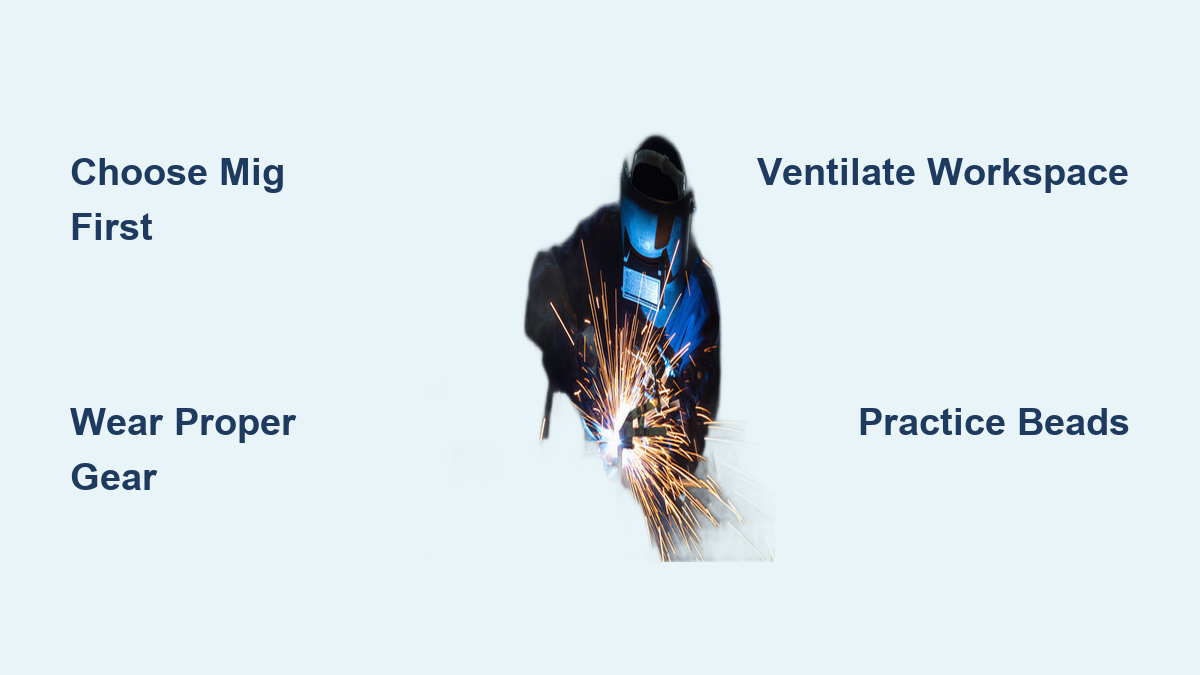
Nothing compares to the satisfaction of fusing metal with your own hands—whether you’re repairing a broken trailer hitch or creating custom artwork. If you’ve ever felt intimidated by the sparks, equipment, and technical aspects of welding, you’re not alone. Thousands of beginners discover that with the right approach, learning how to start welding is more accessible than they imagined. This guide cuts through the confusion and gives you a clear roadmap to make your first successful weld. You’ll learn which process matches your skill level, how to set up safely, and the fundamental techniques that turn beginners into confident welders—all without wasting money on equipment you don’t need.
Choose Your Welding Process Wisely

Selecting the right welding method dramatically impacts your success as a beginner. Understanding each process’s strengths helps you avoid frustration and wasted materials while accelerating your learning curve.
Why MIG Welding Is Your Best First Choice
MIG welding (Metal Inert Gas) stands out as the most beginner-friendly process for good reason. It uses a continuously fed wire electrode that automatically maintains the arc length, eliminating one of the biggest hurdles new welders face. Unlike stick or TIG welding, MIG delivers consistent results even with less-than-perfect hand movements. The wire feed system handles the filler metal application, allowing you to focus solely on torch angle and travel speed. This process works effectively on common materials like mild steel, aluminum, and stainless steel in thicknesses from 24-gauge sheet metal up to 1/2 inch plate. When you’re learning how to start welding, MIG’s forgiving nature means you’ll produce acceptable welds much faster than with other methods.
When Stick Welding Makes Sense for Beginners
Stick welding (Shielded Metal Arc Welding) offers unique advantages that might appeal to certain beginners. Its self-shielding electrodes work well outdoors or on dirty, rusty metal—situations where MIG welding would fail. If you plan to work primarily on farm equipment, structural steel, or in windy conditions, stick welding deserves consideration despite its steeper learning curve. The equipment costs less initially, and you won’t need gas tanks or regulators. However, stick welding produces more spatter, requires frequent electrode changes, and demands better hand-eye coordination to maintain proper arc length. Many beginners find stick welding frustrating at first but valuable to learn after gaining basic skills with MIG.
Why TIG Should Wait Until You’re More Experienced
TIG welding (Tungsten Inert Gas) produces the cleanest, highest-quality welds but requires significant practice to master. The two-handed technique—manipulating the torch with one hand while feeding filler rod with the other—makes TIG notoriously difficult for beginners. While tempting because of its precision and beautiful results, TIG welding involves controlling multiple variables simultaneously: arc length, heat input via foot pedal, filler rod addition, and travel speed. Most instructors recommend gaining proficiency with MIG first before tackling TIG. If your goal is purely hobbyist work on thin materials or aluminum, TIG might eventually become valuable, but it’s not the best way to start welding for most beginners.
Gather Essential Safety Equipment Before Your First Spark

Welding without proper safety gear risks serious injury, but quality protection doesn’t need to break the bank. Prioritize these critical items before striking your first arc.
Your Helmet: More Than Just Eye Protection
A reliable auto-darkening welding helmet represents your most crucial safety investment. Look for models with at least 1/13,000 of a second switching speed to protect against arc flash. Variable shade settings (typically 5-13) allow you to adjust for different processes and materials. Comfort matters too—poorly balanced helmets cause neck strain during extended practice sessions. Avoid cheap helmets with slow reaction times, as even momentary exposure to welding arc can cause “arc eye,” a painful corneal burn similar to sunburn on your eyes.
Gloves That Balance Protection and Dexterity
Welding gloves must stop heat and sparks while allowing enough finger movement to manipulate your torch. MIG-specific gloves tend to be lighter for better wire feeding control, while stick welding requires heavier leather for electrode handling. Try on gloves before buying—they should fit snugly without restricting movement. Remember that gloves lose effectiveness as they wear thin, so replace them when you notice holes, excessive wear, or reduced heat resistance.
Clothing That Won’t Melt Onto Your Skin
Never wear synthetics like nylon or polyester near welding—they can melt from stray sparks and cause severe burns. Opt for heavy cotton or purpose-made flame-resistant welding jackets. Leather aprons and spats protect your legs from falling sparks, especially when seated. Cover all exposed skin; even small gaps can let sparks through. High-top leather boots with no laces (or laces covered by spats) prevent sparks from entering your shoes.
Set Up Your First Welding Workspace Properly
Creating a functional welding area prevents accidents and improves your welding quality from day one. You don’t need a professional shop—just smart planning with safety in mind.
Ventilation: Your Invisible Safety System
Welding fumes contain harmful metal oxides that can cause serious respiratory issues with repeated exposure. Position your workspace near open doors or windows with cross-ventilation, or better yet, install an exhaust fan that pulls fumes away from your breathing zone. For occasional hobby welding, natural airflow might suffice, but serious practitioners need dedicated fume extraction systems. Remember: if you can smell the fumes, you’re breathing dangerous particles.
Fire Safety: Don’t Wait for an Accident
Clear all flammable materials from your welding area—this includes sawdust, paper, solvents, and even some fabrics. Keep a Class ABC fire extinguisher within arm’s reach, and consider fire-resistant welding curtains to contain sparks. Designate a fire watch person when welding near potential fire hazards, and inspect your work area for smoldering materials after finishing. Many welding fires start minutes after you’ve stopped working, so maintain vigilance.
Master Fundamental Techniques Through Practice
Your first welds won’t win awards, but focusing on core techniques builds the foundation for quality work. Practice these fundamentals on scrap metal before attempting real projects.
Proper Joint Preparation Makes All the Difference
Clean metal is essential for strong welds—remove rust, paint, oil, and mill scale with a wire brush or grinder. For butt joints, ensure tight fit-up with minimal gaps; excessive gaps cause weak welds and burn-through. Bevel edges on thicker materials (over 1/4 inch) to allow full penetration. Remember that poor preparation causes most beginner welding defects, not lack of skill.
Torch Angle and Travel Speed: The Dynamic Duo
Hold your torch at a 10-15 degree push angle for MIG welding on thin materials (moving the torch away from the completed weld), or a slight drag angle for thicker metals. Maintain consistent travel speed—too fast creates thin, weak beads; too slow causes burn-through and excessive spatter. Practice making beads the width of three wire diameters with uniform ripples. Your first goal isn’t perfect appearance but consistent penetration and fusion.
Select Beginner-Friendly Equipment Without Overspending

Choosing the right starter equipment prevents frustration and wasted money. You don’t need professional gear, but extremely cheap options often hinder learning.
The Right MIG Machine for Your First Welder
A 120V MIG welder that plugs into standard household outlets serves most beginners perfectly. Look for machines with:
– At least 140 amps output
– Smooth wire feed system (critical for consistent arcs)
– Simple voltage and wire speed controls
– Thermal overload protection
Avoid the cheapest models—they often have unreliable wire feeding that frustrates beginners. Spend enough to get reliable performance, but don’t over-invest until you’re sure welding is your long-term interest.
Essential Consumables for Consistent Results
Stock up on these often-overlooked items:
– ER70S-6 welding wire in 0.023″ or 0.030″ diameter
– Contact tips matching your wire size
– Nozzles and gas diffusers
– Extra shielding gas (75% argon/25% CO2 for steel)
– Wire brush and chipping hammer for cleanup
Keep wire dry in sealed containers—moisture causes porosity and inconsistent arcs.
Practice Like a Pro Before Tackling Real Projects
Deliberate practice on scrap metal separates successful beginners from those who quit in frustration. Follow this structured approach to build real skill.
Create a Systematic Practice Routine
- Start with stringer beads on flat plates
- Progress to horizontal fillet welds
- Try vertical up welding on thicker material
- Practice edge starts and restarts
- Experiment with different travel speeds and angles
Focus on consistency rather than appearance—uniform ripples and consistent bead width indicate proper technique.
Analyze Your Welds to Accelerate Learning
After each practice session, examine your welds for:
– Penetration (cut a sample and check fusion)
– Spatter (excessive indicates wrong settings)
– Porosity (small holes mean contamination)
– Bead shape (should be slightly convex, not concave)
Keep a practice log noting settings and results to identify patterns and improvements.
Start Your Welding Journey Today with Confidence
Learning how to start welding successfully comes down to three things: proper safety preparation, the right equipment for beginners, and focused practice on fundamentals. Begin with MIG welding on clean metal, prioritize safety at every step, and dedicate regular time to practice without pressure. Your first welds won’t be perfect, but each one builds the muscle memory and confidence that leads to mastery. The welding community welcomes new practitioners daily—join them by striking your first arc today. Remember, every expert welder started exactly where you are now: standing before a machine, wondering if they can make that first successful weld. The only way to find out is to begin.
Leave a Reply