
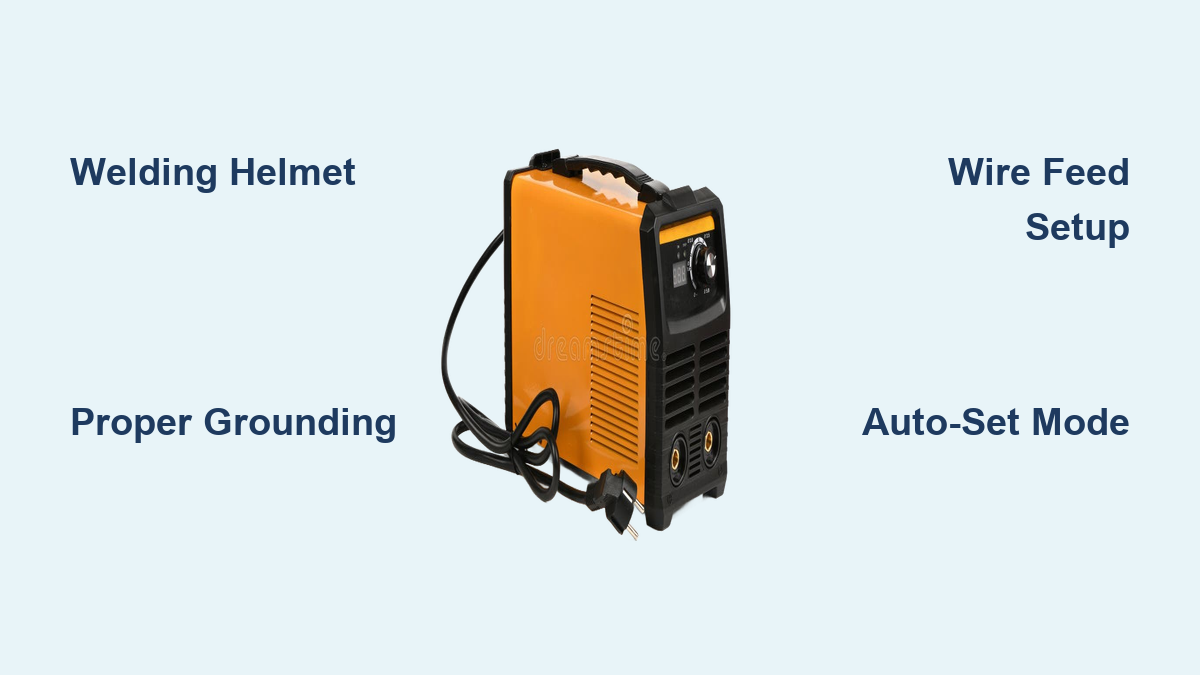
Inverter welders have revolutionized the welding industry by combining sophisticated microprocessor technology with compact, portable design. Whether you’re a hobbyist tackling your first automotive restoration project or a fabricator looking to expand your capabilities, learning how to use an inverter welder opens doors to precise, consistent welding across a wide range of applications. These advanced machines offer superior arc control, significantly reduced weight compared to traditional transformer units, and intelligent features that simplify parameter selection while maintaining professional-quality results. This comprehensive guide walks you through everything from initial setup and safety protocols to advanced techniques that will help you master your inverter welder and achieve flawless welds on projects ranging from delicate sheetmetal panels to structural components.
Essential Safety Precautions Before Striking Your First Arc
Before powering on your inverter welder, implementing proper safety measures protects both you and those around you. Welding involves high-voltage electricity, intense ultraviolet radiation, molten metal, and potentially hazardous fumes—each requiring specific protective measures to prevent injury.
Personal protective equipment (PPE) forms your first line of defense against welding hazards. You need a welding helmet with auto-darkening lenses that shield your eyes from arc flash while allowing clear visibility when not actively welding. Flame-resistant welding gloves protect your hands from spatter and radiant heat, while a welding jacket or apron prevents burns from molten metal sparks. Never skip steel-toed boots for essential foot protection against dropped workpieces.
Electric shock prevention requires constant vigilance during every welding session. Inverter welders operate on high-voltage electricity, and ensuring proper grounding of both the machine and your workpiece minimizes shock risk. Never weld while standing on damp surfaces or in wet conditions, and avoid contact with grounded metal surfaces while the equipment is energized. Inspect all cables and connections weekly for damage, as worn insulation creates shock hazards that might not be immediately obvious.
Ventilation requirements depend on your workspace and materials. Welding steel produces metallic oxide fumes that should not be inhaled, making adequate ventilation essential regardless of your shop size. For enclosed areas, local exhaust systems that capture fumes at the source provide the most effective protection. Even in open shops, position fans to direct fumes away from your breathing zone during extended welding sessions.
How to Verify Proper Grounding for Your Inverter Welder
Connect your work clamp directly to the workpiece rather than through intervening metal objects, ensuring proper circuit completion throughout your welding operation. Check for secure connections at both the work clamp and machine terminal points. If you notice inconsistent arc performance or electrical buzzing, immediately stop welding and verify all grounding connections before continuing.
Correctly Setting Up Your Inverter Welder for Optimal Performance
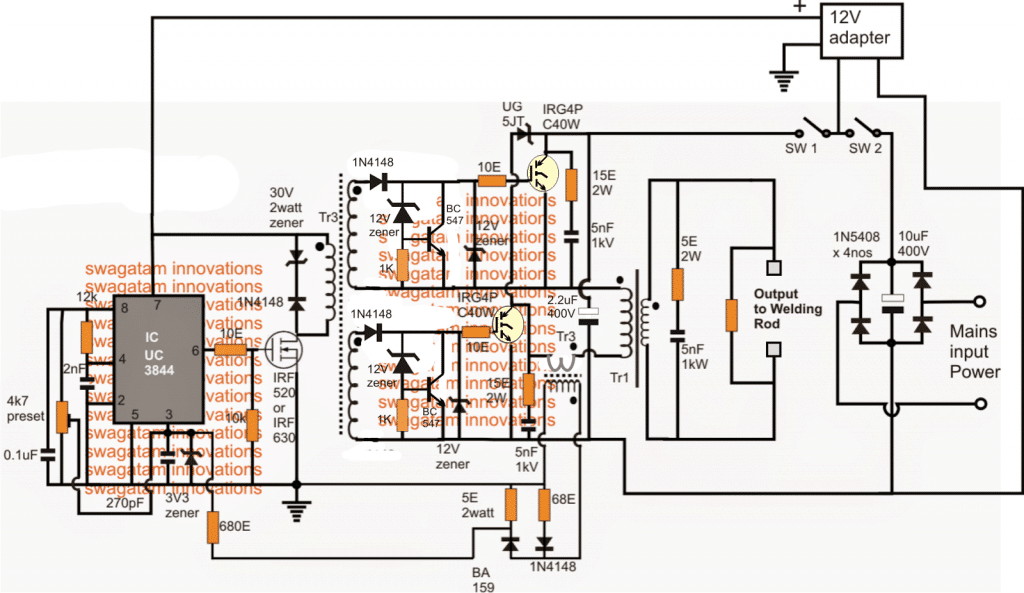
Proper machine configuration directly impacts your welding results, making attention to setup details essential before striking your first arc. Taking five minutes to configure your inverter welder correctly prevents frustration and substandard results that could discourage new operators.
Power supply verification ensures your electrical service can support the welder’s demands. Check that your outlet matches the welder’s input requirements—most inverter welders accept either 120-volt or 240-volt input depending on the model’s capacity. Avoid extension cords that are too long or insufficiently gauged; using proper gauge extension cords prevents voltage drop that compromises arc stability.
How to Install and Thread Welding Wire Properly
- Load your spool onto the drive mechanism, ensuring it rotates in the direction indicated on the machine
- Cut the wire end cleanly and thread it through the feed system without introducing kinks
- Adjust drive roll tension until it grips the wire firmly without crushing it
- Verify the wire feeds smoothly through the torch when you press the trigger
Using the wrong drive roll groove for your wire diameter damages the wire and impairs feed consistency. Different wire types (solid MIG vs. flux-cored) also require specific groove configurations—always match your drive roll to your wire type.
Mastering Power Settings and Controls for Perfect Welds
Understanding your inverter welder’s control interface unlocks its full potential for producing consistent, high-quality welds. Modern units like the Millermatic 211 simplify parameter selection while maintaining flexibility for experienced operators.
The Auto-Set feature found on many inverter welders represents a significant advancement for beginners. When you select your wire diameter and material thickness, the machine automatically calculates appropriate power and wire speed settings. For example, when configuring for mild steel welding with 25% CO2 shielding gas, selecting 16-gauge material with .023-inch wire causes the machine to establish optimal settings automatically.
When to Use Manual Mode Instead of Auto-Set
Switch to manual mode when:
– You’ve developed enough experience to fine-tune beyond automated settings
– Working with unusual material combinations or joint configurations
– You need precise control for critical structural welds
– You’ve identified optimal settings for recurring projects
Beginners should start with Auto-Set to establish a reliable baseline, then transition to manual mode as their skills develop. Make parameter adjustments incrementally—dramatic changes often produce worse results than careful fine-tuning.
Effective Welding Techniques for Different Material Thicknesses

Developing proper technique separates professional results from amateur attempts, and inverter welders’ forgiving nature makes them excellent platforms for skill development. Master these fundamental techniques to handle various material gauges.
The continuous bead technique works well for thicker materials where heat accumulation poses minimal problems. Maintain consistent torch angle (10-15 degrees from perpendicular) and steady travel speed for even penetration. However, this approach becomes problematic with thin materials where heat buildup causes warping.
How to Spot-Stitch Weld Thin Sheetmetal Without Distortion
Spot-stitch welding solves heat management problems when working with 20- to 22-gauge sheetmetal:
- Place individual welds at regular intervals along the joint
- Allow each weld to cool partially before placing the next
- Overlap welds generously to eliminate gaps or pinholes
- Apply air quench after every four or five spot stitches
This technique produces the strength of a continuous bead while maintaining dimensional stability that thin panel work requires. The heat ring pattern will be noticeably smaller than with continuous bead welding, indicating reduced heat concentration.
Troubleshooting Common Inverter Welder Problems

Understanding common issues and their solutions helps maintain productivity and achieve consistent weld quality. Most problems have simple causes that can be identified through systematic troubleshooting.
Inconsistent wire feed manifests as sputtering arcs and uneven bead appearance. Check these potential causes in order:
– Worn drive rolls (replace if grooves are worn smooth)
– Incorrect tension settings (too tight crushes wire, too loose causes slippage)
– Kinked or clogged liner (replace if damaged)
– Wire nesting in the guide tube (rethread properly)
Poor penetration despite adequate power settings often results from:
– Contaminated base metal (remove mill scale, rust, or paint)
– Improper torch angle (maintain 10-15 degrees from perpendicular)
– Excessive travel speed (slow down to allow proper heat penetration)
How to Fix Excessive Spatter During Welding
Excessive spatter typically indicates problems with:
– Gas flow rate (verify 35-50 cubic feet per hour with a flow meter)
– Wire stickout (maintain ¼ to ⅜ inch beyond contact tip)
– Voltage settings (adjust incrementally while testing on scrap)
If you see ball formation at the wire tip, your settings are too low for the application—increase power to achieve proper arc initiation.
Essential Maintenance for Long-Term Reliability
Regular maintenance ensures your inverter welder continues performing optimally throughout its operational lifespan. These electronic components are robust but require protection from environmental contaminants.
Dust accumulation inside your welder creates overheating risks. Perform these maintenance tasks monthly:
– Disconnect power before cleaning
– Use compressed air to remove debris from circuit boards and heat sinks
– Check cooling fan operation (should cycle on/off based on temperature)
– Inspect electrical connections for security and signs of overheating
Wire feed system maintenance is critical for consistent performance. Replace drive rolls when grooves become worn, clean liners regularly, and verify proper tension settings each time you change wire types. Worn components cause inconsistent wire feed that manifests as erratic arc behavior.
Why Inverter Welders Outperform Traditional Transformer Units
The benefits of inverter welder technology extend throughout your welding process. Understanding these advantages helps you maximize your equipment’s potential and appreciate why learning how to use an inverter welder is worth the effort.
Weight reduction from approximately 80 pounds in transformer units to 30 pounds in comparable inverter units dramatically improves portability. This difference becomes significant when welding in confined spaces or at elevations where you must transport equipment frequently.
Arc stability superior to transformer welders results from the microprocessor’s continuous monitoring and adjustment. While transformer welders produce a fixed output that requires perfect operator technique, inverter welders actively maintain arc characteristics despite variations in your technique or workpiece conditions.
Energy efficiency in inverter welders reduces operating costs and generates less waste heat within the equipment, contributing to reliability and longevity. The precise control provides cleaner welds with reduced spatter, meaning less post-weld cleanup and higher productivity.
Mastering how to use an inverter welder opens possibilities across automotive restoration, fabrication, and production welding applications. By understanding proper setup, safety protocols, technique application, and maintenance requirements, you can unlock the full potential of your inverter welder and achieve professional-quality results on every project. Start with Auto-Set for reliable baseline performance, then gradually develop the skills to fine-tune settings for specific applications as your confidence grows.
Leave a Reply