
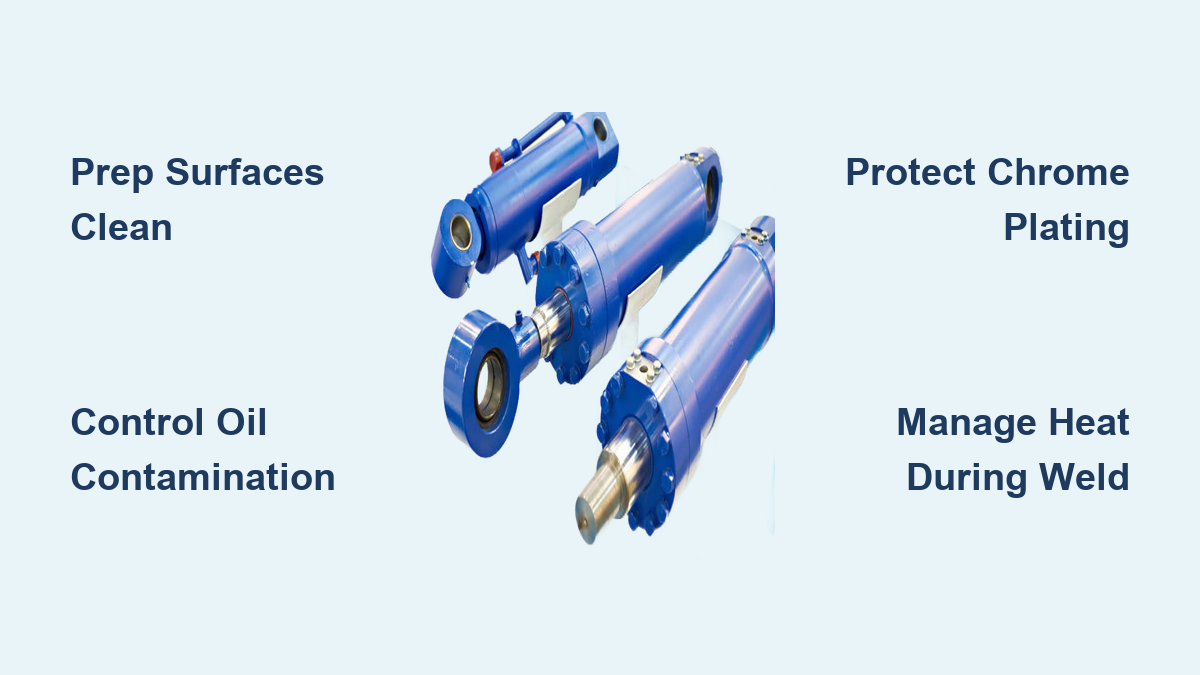
Hydraulic cylinder failures can bring your equipment to a standstill, but knowing how to weld a hydraulic cylinder properly can save you costly downtime and replacement expenses. Unlike standard welding projects, hydraulic cylinder repairs demand specialized techniques to address oil contamination, chrome plating, and pressure integrity concerns. Whether you’re fixing a cracked rod eyelet, repairing an end cap leak, or reattaching a severed piston rod, improper welding leads to immediate or premature failure under pressure. This guide delivers the exact procedures professional welders use to successfully repair hydraulic cylinders in the field, focusing on techniques that prevent common failure points like porosity, distortion, and seal damage.
Understanding how to weld a hydraulic cylinder requires recognizing that 90% of repair failures stem from inadequate preparation rather than poor welding skill. The presence of hydraulic fluid creates unique challenges that standard fabrication techniques won’t address. What follows are battle-tested methods from experienced hydraulic specialists who repair hundreds of cylinders annually across industrial and mobile applications.
Prepare Hydraulic Cylinder for Welding
Before striking an arc, proper cylinder preparation determines whether your repair will last weeks or years. Rushing through setup creates weak welds that fail under pressure, wasting your time and potentially causing equipment damage. The critical preparation steps focus on three areas: eliminating hazardous conditions, ensuring clean metal surfaces, and establishing proper electrical connections.
Position the cylinder to maximize access while maintaining stability. When possible, remove the cylinder from equipment and secure it on a workbench. For in-place repairs, block or support the equipment to prevent movement during welding. Any shifts compromise weld integrity as the cylinder heats and cools.
Connect your ground clamp directly to the component you’re welding—not to the cylinder housing or rod. This prevents welding current from passing through seals and internal surfaces. For eyelet repairs, clamp to the clevis; for end cap work, connect directly to the cap section.
Remove All Contaminants Completely
Hydraulic fluid contamination causes porosity, weak fusion points, and eventual failure. Before welding, drain the cylinder as completely as possible by extending the rod fully and positioning any drain fitting at the lowest point. Gravity drainage removes the majority of fluid, but residual oil remains trapped in microscopic pores.
If complete disassembly isn’t possible, pull the pressure line to prevent pressure buildup during welding—but only after supporting the equipment weight to avoid loading the hydraulic system. For critical repairs where weld quality is paramount, complete disassembly provides the cleanest working environment despite the additional labor.
When welding must proceed with some oil present, preheat the area around the weld zone to 200-300°F before welding. This thermal driving force pushes oil away from the penetration point as heat causes expansion. Monitor for oil weeping from pores—this indicates successful displacement but signals additional cleaning may be needed.
Clean Metal Surfaces Systematically
All rust, paint, oil, and grease must be removed from the weld zone using wire brushing followed by acetone application. Multiple cleaning passes ensure complete contaminant removal—wipe the surface, allow it to dry, then wipe again with fresh cleaner. Any residue compromises weld fusion.
For cracked areas, grind out the entire crack before rewelding. Simply welding over an uncleared crack typically causes propagation through the new weld. Grind a groove that removes all visible crack evidence and extends slightly beyond boundaries in all directions. This creates a clean void to fill with new weld material that bonds to sound metal.
Control Oil Contamination Effectively

Managing hydraulic fluid contamination requires understanding oil behavior during welding and implementing techniques that minimize its impact. Oil trapped in the weld zone creates gas pockets as it vaporizes, resulting in porosity that weakens the weld.
When the cylinder cannot be drained completely, preheating provides the most effective mitigation. Apply heat to the area surrounding the weld zone, bringing the metal to approximately 200-300°F before welding. This thermal driving force pushes oil away from the heated area, clearing the path for clean weld metal deposition.
Stick welding with deep-penetration electrodes like 7018 works better than shallow-arc processes when oil contamination is suspected. The deeper penetration helps burn through minor residual contamination, while processes like TIG often fail completely with even trace oil present.
Protect Chrome During Welding

Hydraulic cylinder rods feature chrome plating that provides essential wear resistance but creates significant welding challenges. Chrome is vulnerable to heat damage and spatter accumulation that damages rod seals during operation.
Wrap the exposed rod with wet rags positioned precisely at the gland line where the rod enters the cylinder housing. The wet rag absorbs heat conducted along the rod, preventing thermal transfer to internal seals. Keep the rag cool by periodically adding water—effectiveness depends on continuous moisture. Some welders place metal flashing over the wet rag to block sparks while maintaining access.
When cutting or shortening chrome-plated rods, grind back approximately one inch of chrome plating from the weld zone. The hardened surface interferes with proper weld penetration and creates stress concentration points.
Weld Rod Eyelets and Crosstubes
Rod eyelet and crosstube repairs rank among the most common cylinder welding scenarios. These components experience significant stress during operation, and cracks frequently develop at weld joints.
Begin by verifying proper alignment—strong welds fail if the eyelet becomes misaligned, causing cylinder binding. For rods approximately one inch in diameter or larger, machine down the rod end and bore a corresponding hole in the crosstube for a socket-type joint. This configuration allows full-perimeter welding that provides superior strength compared to surface fillet welds.
Execute Weld in Staged Increments
Tack the weld at four equidistant points around the circumference first. Then complete approximately 90 degrees of weld before allowing cooling, continue with the opposite 90-degree section, then fill in the remaining areas. This staged approach allows heat dissipation between passes, protecting seals and reducing distortion risk.
Both MIG and stick welding work well for eyelet repairs. Factory welds typically use wire feed welding, indicating adequate penetration for the application. Stick welding with 7018 electrodes offers deeper penetration that handles minor contamination better and produces extremely strong welds.
Select Appropriate Welding Process

The three primary welding processes—stick, MIG, and TIG—offer distinct advantages for cylinder repair applications. Selecting the right process depends on contamination concerns, access requirements, and equipment availability.
Stick Welding for Cylinder Repairs
Stick welding (SMAW) is widely regarded as the preferred process for many hydraulic cylinder repairs. The high penetration characteristics of 7018 electrodes provide strong fusion with base material, and the process tolerates some surface contamination better than TIG welding.
The primary limitation is slag that must be chipped between passes, slowing progress. However, for field repairs where surface preparation may not be perfect, stick welding’s tolerance for less-than-ideal conditions makes it practical.
MIG Welding Advantages
MIG welding (GMAW) offers faster deposition rates and easier operation for experienced welders. Solid wire ER70S-6 with C25 argon/CO2 shielding gas provides good results. Ensure adequate power output for material thickness—thinner materials need lower heat input to prevent burn-through while thicker materials require sufficient amperage.
For clean, well-prepared joints on completely disassembled components, MIG produces excellent results. The process is particularly valuable when welding stainless steel cylinders where corrosion resistance must be maintained.
Manage Heat During Welding
Effective heat management protects seals, prevents distortion, and ensures weld quality. The wet rag cooling method serves as the most common approach for in-place repairs.
Soak a clean cotton rag in water and wrap it around the cylinder rod at the gland line. Keep the rag moist by periodically adding water during welding. For additional protection, cover the wet rag with metal flashing to block sparks while maintaining access.
Control total heat input by welding in sections with adequate cooling time between. After tacking the weld at multiple points, complete small sections (approximately 90 degrees) with cooling time between. For critical repairs, wait until each section is completely cool before continuing.
Verify Weld Quality After Completion
Post-weld procedures ensure the repair performs reliably under operating conditions. Clean the weld area of all slag, spatter, and heat tint. Visual inspection should verify complete fusion and absence of cracks, porosity, or excessive undercut.
Examine the surrounding chrome surface for any spatter or slag that adhered during welding—these particles damage seals during operation and must be removed using fine-grit sandpaper. For critical repairs, dye penetrant inspection detects surface cracks that might not be visible to the naked eye.
After reinstallation, test the cylinder through its full range of motion under actual operating conditions. Observe the repair area for leakage signs and monitor operation for unusual sounds or behavior indicating binding.
Solve Common Welding Problems
Even experienced welders encounter problems during cylinder repairs. Porosity in welds typically indicates contamination in the weld zone, most commonly hydraulic oil. Address porosity by grinding back to sound metal and ensuring complete cleaning with acetone.
Lack of fusion occurs when weld metal doesn’t properly bond with base metal, resulting from insufficient heat input or contaminated surfaces. Correct by grinding back to sound metal and rewelding with adequate amperage for material thickness.
Distortion and warping occur when uneven heating causes base metal to expand and contract non-uniformly. Minimize distortion by using stringer passes rather than wide weave passes, allowing adequate cooling between passes, and using fixtures to maintain alignment.
Make Repair Versus Replace Decision
Assessing whether to repair or replace a damaged cylinder involves evaluating cost, risk, and practical feasibility. Field welding is appropriate when the cylinder is relatively inexpensive, damage is minor and clearly visible, and consequences of repair failure are acceptable.
Complete cylinder removal and professional repair is warranted when damage isn’t fully visible, alignment is questionable, or the cylinder is part of a critical safety system. Removal allows optimal access and positioning for superior repair quality.
For expensive cylinders—over $200 for welded types—professional repair or replacement is often more economical than field repairs that may require reworking. Failed repairs on safety-critical applications like forklift mast cylinders create unacceptable risks regardless of cost savings.
Leave a Reply