
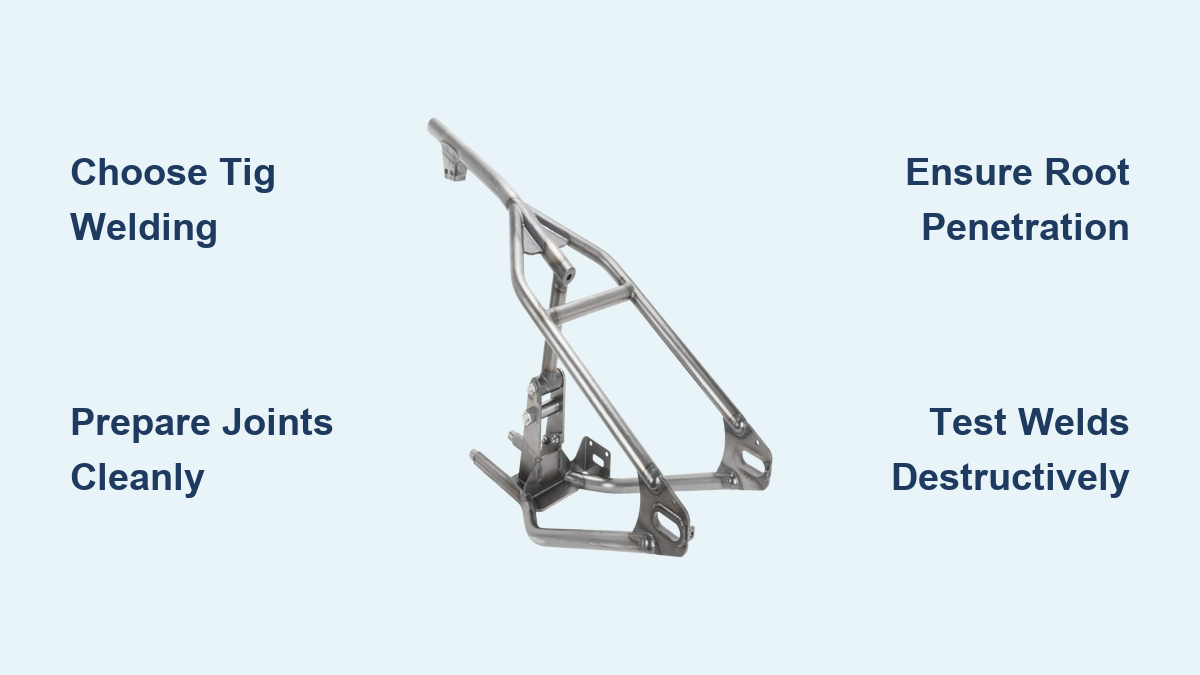
Your motorcycle frame’s structural integrity depends entirely on quality welds that can withstand extreme forces during operation. Unlike ordinary fabrication projects, motorcycle frame welding demands precision that could mean the difference between a safe ride and catastrophic failure. Modern welding equipment has made professional-quality results accessible to hobbyists, but mastering how to weld a motorcycle frame requires understanding that this isn’t a skill you’ll perfect overnight. The satisfaction of building or repairing your own frame—knowing your welds hold together something traveling at triple-digit speeds—makes the learning journey worthwhile. This guide reveals exactly what you need to know to create strong, reliable motorcycle frame welds that prioritize safety while delivering professional results.
Choose the Best Welding Process for Frame Construction

Selecting the right welding method forms the foundation of successful motorcycle frame work. Each process offers distinct advantages that directly impact weld quality, material compatibility, and your ability to handle the thin-walled tubing common in motorcycle frames.
MIG Welding for Steel Frames: Fast and Forgiving
MIG welding (Gas Metal Arc Welding) serves as the most accessible entry point for steel frame construction. This process uses a continuously fed wire electrode that melts to form the weld while shielding gas protects the molten pool from contamination. For steel frames—which represent the majority of custom builds—MIG welding works exceptionally well because the concentrated heat minimizes distortion on thin tubing.
The primary advantage of MIG for beginners is its relatively gentle learning curve. Once properly set up with the right gas mixture (typically 75% argon/25% CO₂ for steel), MIG machines produce clean, strong welds with minimal spatter. However, MIG’s limitation becomes apparent if you plan to work with multiple metals—switching between steel, stainless steel, and aluminum requires different wire spools and torch liners, making the process more expensive and time-consuming. If you’re committed exclusively to steel frames, MIG provides an excellent, cost-effective solution.
TIG Welding for Precision Frame Fabrication
TIG welding (Gas Tungsten Arc Welding) delivers the control needed for professional-grade motorcycle frames. Instead of using a consumable electrode, TIG employs a non-consumable tungsten electrode while you manually add filler metal with your other hand. This dual-hand coordination—combined with foot-controlled amperage—creates welds of exceptional quality with minimal heat distortion.
The real advantage of TIG for motorcycle frames lies in its versatility. With simple changes to filler material and tungsten type, you can weld steel, stainless steel, and aluminum—the most common frame materials—using the same machine. This precision makes TIG ideal for thin-walled tubing where heat control prevents warping that could compromise frame geometry. While TIG has a steeper learning curve, the ability to see and control the weld pool results in stronger, more reliable joints that meet safety-critical requirements.
Why Stick Welding Fails for Motorcycle Frames
Stick welding (Shielded Metal Arc Welding) should never be used for motorcycle frame construction. While adequate for heavy fabrication or field repairs, Stick welding lacks the precision required for thin-walled motorcycle tubing. The process creates excessive heat input that causes distortion in frame geometry while producing inconsistent penetration in critical joints.
Cheap hobby welding machines often use Stick technology, but the lack of control makes them dangerously unsuitable for structural motorcycle work. When weld failure could mean life-threatening consequences, the precision of TIG or properly executed MIG welding becomes non-negotiable. Save Stick welding for barn repairs—not for the structural backbone of your motorcycle.
Select the Right Frame Welding Machine for Professional Results
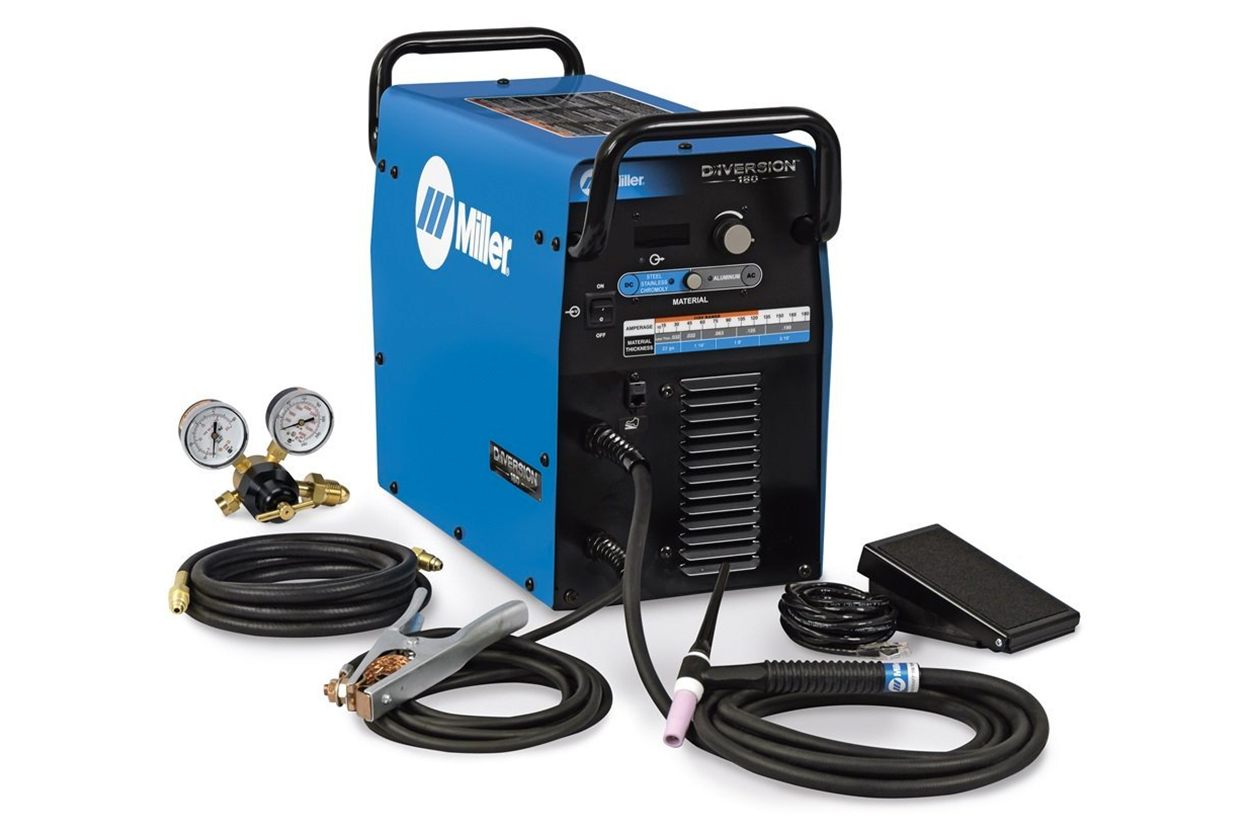
Choosing quality welding equipment represents one of the most important decisions in how to weld a motorcycle frame properly. Low-end machines may seem economical but typically deliver inconsistent performance that compromises weld integrity. For serious frame work, invest in a quality inverter-based TIG machine with 160-200 amps output and high-frequency starting capability—like the Miller Diversion 180—which provides the control needed for thin-walled tubing.
This single investment covers all common frame materials (steel, stainless, aluminum) and handles everything from delicate frame joints to heavier shop fabrication. While the initial cost seems high, this machine should last a lifetime and deliver professional results immediately. Beginners should consider taking a community college welding course first—this hands-on experience helps you understand machine features before purchasing your own equipment.
Master Critical Frame Welding Techniques for Safety
Proper technique separates strong, reliable welds from dangerous weak points that could fail under stress. Your motorcycle frame must handle extreme forces, making these techniques non-negotiable for safety.
Prepare Joints for Maximum Strength
Proper joint preparation directly determines weld quality. Tube-to-tube joints require precise fit-up with gaps no larger than 1-2mm—excessive gaps force multiple passes that increase heat distortion. Before welding, thoroughly clean all surfaces to remove oil, grease, rust, and paint that cause porosity and weak welds.
For aluminum frames, surface preparation becomes even more critical. Aluminum forms an oxide layer with a much higher melting point than the base metal, so use a dedicated stainless steel wire brush immediately before welding. This attention to detail ensures proper fusion at the root of the weld—the most common failure point in amateur frame welding.
Achieve Complete Root Penetration
The most dangerous defect in motorcycle frame welds is lack of root fusion—where the weld appears sound on the surface but fails to bond properly at the joint’s base. To prevent this, focus heat at the root edge before adding filler material, allowing the puddle to flow slightly past the joint. For tube joints, this technique ensures complete penetration without excessive heat that causes distortion.
When TIG welding, maintain consistent torch angle and travel speed while rhythmically dipping the filler rod into the leading edge of the weld pool. For MIG welding on thin materials, use the push technique (traveling away from the weld pool) for better visibility and reduced heat input. Always verify penetration by inspecting the back side of accessible joints or through destructive testing of sample coupons.
Test Your Frame Welds Before Riding

Verifying weld quality before final assembly represents the final, critical step in how to weld a motorcycle frame safely. Never skip this process—undetected defects could lead to catastrophic failure during operation.
Perform Basic Destructive Testing
For DIY frame builders, simple destructive testing provides essential quality verification. Weld sample joints on scrap tubing matching your frame material, then clamp them in a vise and strike with a hammer. A properly welded joint should fail in the base material—not at the weld. For T-joints, a successful 3/8-inch bend test confirms adequate penetration and fusion.
Professional builders often use etch testing with mild acid solution to reveal the weld profile and heat-affected zone. This visual inspection confirms penetration depth and identifies hidden defects like lack of fusion that aren’t visible on the surface. While formal X-ray or ultrasonic testing remains the gold standard, these basic methods provide substantial confidence in your work.
Implement Essential Safety Precautions
Welding produces intense UV radiation, toxic fumes, and fire hazards that demand proper protection. Always wear a welding helmet with shade 10-12 lens, heavy leather gloves, and natural fiber clothing—never synthetic materials that can melt onto skin. Welding leathers provide superior protection against sparks and spatter during frame work.
Your workshop must have excellent ventilation, especially when welding aluminum which produces hazardous fumes. Keep fire extinguishers accessible and never weld near containers with unknown contents—even seemingly empty fuel tanks can explode. Most importantly, never skip eye protection—even brief exposure to welding arc can cause permanent eye damage.
Protect Motorcycle Electronics During Frame Welding
Modern bikes contain sensitive electronics that welding currents can easily damage. To prevent frying your ECU or other components, always disconnect the battery before welding. For maximum protection, remove the ECU entirely—especially when TIG welding which generates electrical interference that MIG welding doesn’t produce.
Some experienced welders claim success by placing the ground clamp extremely close to the weld area, minimizing the path welding current travels through the frame. However, this approach carries risk—documented cases exist of ABS systems and other electronics failing after frame welding. When in doubt, disconnect everything. Your motorcycle’s electronics cost far less than potential crash damage from malfunctioning systems.
Repair or Replace: Making the Critical Frame Decision
When facing frame damage, the repair-versus-replacement decision requires careful evaluation of several factors. Cracks in high-stress areas like the steering head often indicate the frame has exceeded design limits—making replacement the only safe option. Certain models, like some Suzuki GSX-Rs from the 1980s-90s, developed known steering stem cracks that Suzuki addressed with recall programs.
For personal projects, consider your risk tolerance and intended use. A frame for occasional street riding might safely accept a properly verified repair, while racing applications demand replacement for maximum safety. Always test repaired frames rigorously before riding—some professional shops use 750+ pound test fixtures to simulate extreme loads. If in doubt about repair feasibility, consult a professional frame builder—your safety depends on it.
Final Safety Considerations for Frame Welding
Never practice welding techniques directly on your motorcycle frame—build skills first on scrap material through smaller projects like bicycle frames or go-karts. Professional welders emphasize that safety factors for structural items should reach 4X, meaning components designed for 250 pounds must withstand 1,000 pounds without failure.
The consequences of weld failure on a motorcycle frame could be catastrophic, making quality and proper technique non-negotiable requirements. Through practice on scrap material, understanding welding theory, and rigorous quality verification, you can develop the skills to produce motorcycle frame welds that are strong, reliable, and safe. Remember: when it comes to how to weld a motorcycle frame properly, cutting corners simply isn’t an option—your life depends on those welds holding.
Leave a Reply