
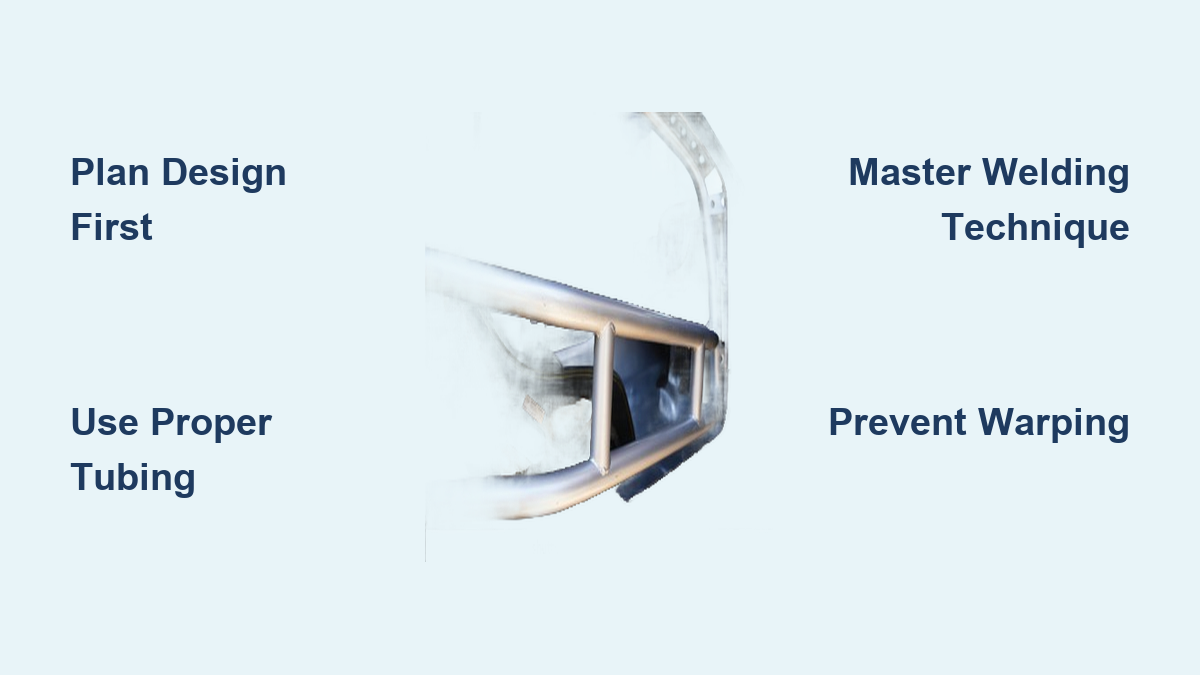
Welding a roll cage represents one of the most critical safety projects any vehicle builder can undertake. A poorly constructed cage won’t protect occupants during a rollover—it could become a deadly hazard as tubing separates and penetrates the cabin. If you’re learning how to weld a roll cage properly, you must understand that the actual welding process accounts for only about five percent of the total build time. The remaining ninety-five percent involves meticulous planning, precise cutting, careful fitting, and constant verification. Whether you’re building a race car to SCCA specifications, an off-road vehicle for rugged durability, or a street-legal cage that meets regulatory requirements, this guide delivers the exact techniques and strategies you need to create a life-saving structure.
The complexity of how to weld a roll cage extends far beyond simply joining tubing. It requires understanding vehicle structural dynamics, mastering welding techniques for tight spaces, and knowing how to distribute impact forces effectively. A proper cage must resist deformation from all directions—not just downward pressure during a rollover but also side impacts, which occur more frequently. This guide walks you through every critical phase, from material selection and blueprint creation to welding techniques for difficult access points and final inspection protocols that ensure your cage will perform when lives depend on it.
Plan Your Roll Cage Design Before Welding
Define Your Specific Cage Purpose
Your roll cage’s intended use determines every design decision, so define this before cutting a single piece of tubing. Racing applications demand precision-engineered structures with multiple bars meeting specific sanctioning body requirements. Off-road builds prioritize durability and flexibility to withstand repeated impacts from rocks and jumps. Street cages balance safety with practicality while complying with local regulations.
For racing applications, obtain and study your sanctioning body’s rulebook before beginning. SCCA specifications dictate exact requirements for cage foot size, maximum bends in the main hoop, support tube angles, and required contact points. Even if not racing competitively, these standards provide excellent baseline requirements. Remember that welding represents only a small portion of the build process—the structural integrity of your cage is established during planning and preparation, not during the final welds.
Create Detailed Blueprints with Structural Integrity
Your blueprint must detail every structural component with precise dimensions to ensure proper force distribution during impact. Include roof bars that form the protective canopy, A-pillars connecting the windshield area to the roof structure, B-pillars for multi-row seating vehicles, side bars for door impact protection, horizontal crossbars for force distribution, and door bars creating additional protective zones around occupants.
Professional cage designs incorporate specific structural features that maximize protection. A properly positioned roof bar provides primary resistance against crushing forces during rollovers. Seat bars connect the main hoop to the area behind the seat, preventing rearward occupant movement during frontal impacts. Horizontal braces at multiple heights create a rigid lattice that distributes impact forces across the entire structure rather than concentrating them at individual joints. Diagonal bracing prevents the cage from deforming into parallelogram shapes that would compromise occupant protection.
Verify Regulatory Compliance Before Cutting Tubing
Check applicable safety standards before beginning construction, as different applications require different certifications. Widely recognized standards include SFI 16.1 for drag racing and circle track, FIA 8855 for international competition, and various NHRA/IHRA specifications for different racing classes. These standards specify minimum tubing dimensions, acceptable joint configurations, required weld quality, and proper attachment methods to the vehicle chassis.
When full penetration welding isn’t possible due to accessibility constraints, regulatory bodies provide approved alternatives. For example, NHRA allows specific gusset configurations when you cannot weld completely around a joint. Two 1-3/4 inch by 1-3/4 inch by 0.110-inch plate gussets (4130 chromoly or mild steel), fully welded on one side, may replace up to twenty-five percent of the required weld at affected joints. Alternatively, two fully welded tube gussets per affected joint are acceptable, provided they meet minimum size specifications (minimum 3/4 inch by 0.049 4130 chromoly or 3/4 inch by 0.118-inch mild steel, at least four inches long). Proactively communicate with inspectors during your build to address concerns before they become problems.
Select Proper Roll Cage Tubing and Plate Materials

Choose Correct Steel Tubing Specifications
Most roll cages use steel tubing with outside diameters ranging from 1.75 to 2 inches and wall thicknesses of 0.120 to 0.150 inches for standard applications. For racing builds requiring maximum strength with minimum weight, chrome moly steel (4130) offers superior strength-to-weight ratio compared to mild steel. DOM (Drawn Over Mandrel) steel tubing is preferred over standard welded tubing because the drawing process produces more consistent wall thickness and superior concentricity for stronger, more predictable welds.
Common custom build specifications include:
– 1.5 inch OD by 0.095 inch wall DOM steel for lighter applications
– 1.75 inch OD by 0.120 inch wall for medium-duty builds
– 2 inch OD by 0.156 inch wall for maximum protection
Wall thickness significantly affects both strength and weldability—thicker walls require more heat input for proper penetration, while thinner walls are more susceptible to burn-through and need careful heat management. For SCCA road race cars, 1.5 inch by 0.095 inch DOM mild steel represents a common specification balancing strength requirements with fabrication practicality.
Match Material Thickness to Your Application
Material thickness must align with your specific use case and expected load conditions. High-impact applications like off-road rock crawling benefit from thicker tubing that withstands repeated abuse without cracking. Street applications and road racing can often use slightly thinner material, as expected crash forces are typically lower with focus on a single major impact event.
Most cages utilize 3/16-inch plates at mounting points to distribute downforce during rollovers and prevent tubing from punching through thin sheet metal. Proper cages sit directly on top of main frame rails rather than thin floor pans for a solid foundation. If you must attach to thin floor pan material, reinforcement plates become essential—never compromise on these attachment points. Your cage needs to be extremely functional if it ever has to perform its life-saving purpose.
Choose the Right MIG or TIG Welder for Roll Cage Construction
Select Appropriate MIG Welding Equipment
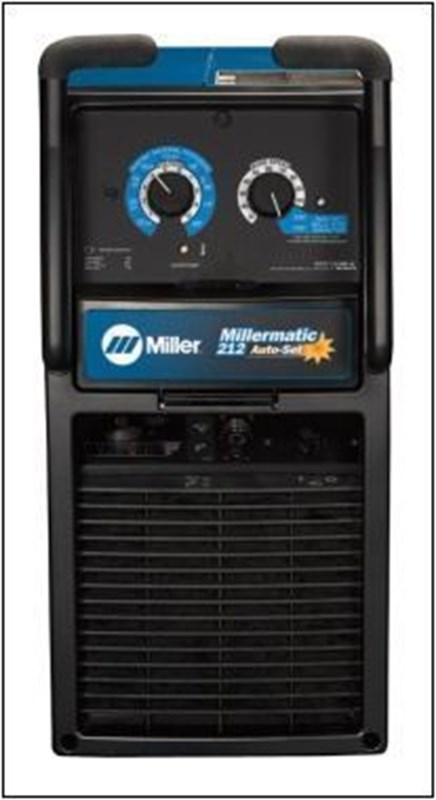
For serious roll cage work, choose a MIG welder in the 200-250 amp range as the minimum suitable for quality construction. The Miller Millermatic series receives consistent praise among professional fabricators, with the Millermatic 212 being an excellent choice for 1.5 inch by 0.095 inch wall DOM steel tubing commonly used in race car construction. The Millermatic 210 also offers a good balance of cost versus power with capability for roll cage work using 0.030 or 0.035 wire, operating on a reasonable 30-amp circuit.
Consider the HTP MIG 1600 with a flexible swan neck gun for improved access to tight areas—it’s affordable at approximately $750 and makes welding roll cages significantly easier. If budget constrained, a 230-volt DC stick welder represents the cheapest viable option, though it requires significant skill development. Miller or Lincoln buzz boxes in the $300-$600 range can weld everything on a race car, but expect to grind out and redo some welds with extensive cleanup required.
Evaluate TIG Welding for Critical Structural Joints
For fabricators committed to TIG welding roll cages, DC-only units handle steel effectively while AC/DC units add aluminum welding capability. A good AC/DC TIG machine suitable for roll cage work typically costs $1600-$2500, while a DC-only unit runs around $1300. TIG produces more precise beads with superior appearance and, according to many experienced welders, provides stronger welds on critical structural components.
TIG requires an extremely clean welding area—any contamination on base metal or filler rod causes porosity or lack of fusion. It takes longer to learn and is a slower process overall. Full TIG setups with enough amperage for thick materials approach $3000 or more. If you don’t absolutely need TIG capabilities, a properly set up MIG welder will suit your needs just fine for welding a roll cage. The critical factor is operator proficiency rather than the process itself.
Prepare Essential Supporting Tools and Fixtures
Beyond your welding machine, roll cage construction requires specific supporting tools that dramatically improve quality:
- Tubing notcher: JD2 Model 3, Ol’ Joint Jigger, or JMR tubing notcher produces precise cope angles for tight-fitting joints
- Welding jigs and clamps: Maintain alignment during tacking and final welding
- Rotisserie: Provides access to all sides of the structure without uncomfortable positions
- Angle grinder: With cutting and sanding discs for preparing tubing and cleaning welds
- Pipemaster: Helps pattern tube cuts for achieving good joint fit-up
- Measuring tools: Tape measure, square, level, and plumb bob for accurate layout and verification
Having well-cut tubes makes a significant difference in weld quality, as gaps between tubes require more heat to bridge and are more susceptible to porosity and incomplete fusion. The investment in quality tools pays dividends throughout your cage building process.
Master MIG Welding Techniques for Tubing Joints
Set Correct MIG Parameters for Thin-Wall Tubing
Achieving proper penetration without burning through thin material requires balancing wire feed speed and voltage. For 1.5 inch by 0.095 inch wall DOM steel, wire feed speeds around 200 inches per minute provide a good starting point. Start with settings that produce a stable arc with good root fusion, then adjust based on observed results.
Use 0.030 inch diameter wire paired with 75/25 argon/CO2 shielding gas for steel roll cages—this combination provides good penetration while minimizing spatter. Some builders prefer 0.035 inch wire for thicker materials as the larger diameter delivers more filler metal for structural joints. The 75/25 gas mix balances penetration, spatter, and bead appearance effectively.
Weld Round Tubing Joints Without Distortion
Tack new tubing in at least three places to prevent movement before final welding. Then proceed by welding the joint in segments rather than completing the entire circumference at once. Beginners should complete about one-third of the joint at a time, progressing to half or the full joint as proficiency develops.
Critical heat management techniques:
– Move continuously around the joint while maintaining proper torch angle
– Jump between multiple joints rather than completing any single weld
– Allow each weld to cool partially before adding more heat nearby
– Distribute heat evenly across the structure to prevent warping
Heat management becomes increasingly important as the cage nears completion, when accumulated stress from multiple welds can cause significant distortion if not properly controlled.
Implement TIG Welding for Critical Structural Connections
Prepare for TIG Success on Roll Cage Joints
TIG welding roll cages demands an extremely clean welding environment. Remove all mill scale, paint, and coatings from the weld zone before beginning. The TIG process requires multi-tasking—using the foot pedal to control heat input while maintaining a stable arc and adding filler rod at the precise moment.
Beginners should practice on flat plate butt joints before attempting tubing. Tubing is exceptionally challenging due to the curved surface requiring constant adjustment of torch angle and filler rod placement. Upside-down welding presents particular challenges as gravity works against the weld pool, requiring faster travel speeds to prevent sagging. Do these positions while you’re upside down with sharp objects poking you in the ribs and back with sparks falling down your neck—you must master these uncomfortable positions for real cage welding.
Create Strong Convex TIG Weld Beads
When TIG welding tubing, aim for convex beads rather than concave profiles for greater strength. Concave welds may look attractive but contain less filler metal and can become stress concentration points that initiate cracking under impact loading. The additional filler metal in a convex bead provides extra material to absorb energy during a crash.
During a wreck, tubes should distort and bend but not break—a well-built cage with proper convex welds will bend in multiple directions while maintaining integrity. Starting settings for TIG on 1.5 inch by 0.095 inch DOM steel might begin around 120 amps, though this varies significantly based on joint configuration and operator preference. Regular practice on boxes full of joints maintains skill levels and provides opportunities to experiment with new techniques.
Build a Stable Roll Cage Frame with Proper Tack Welding
Execute Progressive Tack Welding Strategy
Tack welding holds components in alignment before final welding and prevents distortion. Tack the entire cage together before any finish welding to minimize warping. Place tacks at multiple points around each joint—at least three places per joint—to prevent movement during final welding. These tacks must be substantial enough to hold alignment but not so large they interfere with the final weld.
The sequence of tacking matters significantly for complex assemblies. Begin with main structural elements and work outward, frequently checking alignment with squares and levels to prevent accumulated errors. Verify alignment at multiple stages during the tacking process, as correcting misalignment after final welding is extremely difficult. If using a kit, follow the manufacturer’s recommended tacking sequence.
Weld Roll Cage Top Sections in Tight Access Spaces
Solve Top Access Problems Without Compromising Structure
Welding roof bars where they meet the main hoop presents significant challenges with an intact vehicle roof. Drilling holes in the floor to drop the cage down, weld it, and then raise it back into position represents a common solution. Round holes should be slightly larger than the roll bar outside diameter. After welding, these holes are welded shut and covered with a 6-inch square reinforcement plate.
For SCCA specifications, builders have drilled 3-inch diameter holes through newly installed floor behind rear torque boxes to drop the main hoop down for accessing the top of front down bars. NHRA guidelines don’t allow rocker boxes as a solution for inaccessible top welds in certain classes, making floor holes the primary option. The holes should be placed behind the rear torque box through single floor thickness, and welding them shut is essential.
Implement Approved Gusset Alternatives for Inaccessible Joints
When full penetration welding is impossible, plate gussets provide an approved alternative that maintains structural integrity. Two 1-3/4 inch by 1-3/4 inch by 0.110-inch plate gussets, fully welded on one side, may replace up to twenty-five percent of the required weld at affected joints. These distribute impact forces across a larger area and provide backup attachment points.
Tube gussets offer another approved alternative, providing continuous structural support through the gusset tube itself. These must meet minimum size specifications (minimum 3/4 inch by 0.049 4130 chromoly or 3/4 inch by 0.118-inch mild steel, at least four inches long) and be fully welded at both ends. If the cage isn’t too tight against the roof, a small TIG torch can sometimes make a full weld on otherwise inaccessible joints, eliminating the need for floor modifications.
Stop Roll Cage Warping During Welding

Understand Thermal Expansion Effects on Tubing
Welding generates significant heat causing thermal expansion and contraction in base metal. As welds cool, contracted metal pulls surrounding areas out of alignment, creating distortion that compounds with each successive weld. This effect is pronounced with thin-walled tubing where relatively small material mass heats and cools rapidly, creating steep thermal gradients.
A 4-inch long piece of tubing heats much faster than a longer piece, creating different thermal conditions than the actual cage. For accurate practice, use longer sections of tubing (6 feet or more) that better simulate actual build conditions with proper heat sinking. This maintains realistic thermal environments while allowing inspection of weld quality.
Apply Effective Distortion Control Techniques
Proven methods to prevent roll cage warping:
– Move between multiple joints rather than completing any single weld
– Allow each weld to cool to touch temperature before resuming work
– Clamp workpieces to rigid surfaces to resist movement during contraction
– Use longer tubing sections during practice to simulate actual heat sinking
– Tack the entire cage before final welding to maintain alignment
The “jump around” approach requires more setup time but significantly reduces final alignment problems. For home builders with time flexibility, allowing complete cool-down between welds prevents heat accumulation that drives distortion. This patience pays off when your cage maintains perfect alignment throughout construction.
Develop Roll Cage Welding Skills with Targeted Practice
Create Realistic Practice Joints Before Starting
Build numerous test joints using the same tubing specification and welding process planned for your final build. These should replicate actual joint configurations—notched T-joints simulating cage connections rather than simple butt joints. For TIG practice, cut tubing into 3-inch pieces and cope one end to make realistic T-joints.
When first starting, stop and start frequently to prevent excessive heat buildup. The skill development process naturally improves heat control over time. Building boxes full of these joints and continuing regular practice, even after developing proficiency, maintains skill levels. Even advanced fabricators continue practicing—true mastery comes from consistent effort.
Practice in Actual Welding Positions You’ll Encounter
Simulate real roll cage welding conditions by practicing in uncomfortable positions difficult to replicate on a workbench. Practice overhead welding, vertical welding, and upside-down welding to prepare for actual conditions. Add the physical demands of working in and out of the caged vehicle approximately twenty times per hour to simulate actual build conditions.
Getting positioned, finding something isn’t set correctly, exiting to correct the issue, then re-entering and repositioning creates a realistic workflow that tests both welding skill and physical conditioning. The builder who can maintain weld quality under these conditions is well-prepared for actual roll cage construction. Consider taking welding courses at a local vocational school to accelerate skill development and identify bad habits before they become ingrained.
Implement Essential Safety Measures for Roll Cage Welding
Wear Proper Protective Equipment for Roll Cage Construction
Welding demands comprehensive personal protective equipment:
– Welding helmet with appropriate shade lens (shade 10-12 for MIG/TIG)
– Welding gloves rated for your specific welding process
– Leather apron protecting body from spatter and radiation
– Safety goggles worn under helmet during grinding/cutting
– Respiratory protection with NIOSH-approved cartridges for welding fumes
Never cut or weld near fuel lines or electrical wiring—the heat transfer through metal can ignite fuel vapors even when the flame isn’t directly applied to the line. Removing seats, interior panels, and other obstructions before welding provides better access and reduces fire risk from hidden materials.
Prepare Your Roll Cage for Technical Inspection and Certification
Verify Weld Quality Through Multiple Inspection Methods
All roll cage welds must be smooth, consistent, and free of defects including cracks, porosity, and incomplete fusion. Visual inspection identifies many problems, but some defects require more sophisticated testing:
- Dye penetrant testing reveals surface cracks invisible to the naked eye
- Bend testing practice joints to verify proper fusion (visual appearance doesn’t guarantee structural integrity)
- Radiographic or ultrasonic testing for critical applications (typically at professional shops)
Even a good-looking weld may not be sound. In one instructional example, beautiful multipass stringer beads visually separated completely from the base metal under load testing. Testing practice joints by bending or breaking them provides feedback that visual inspection cannot reveal whether proper fusion was achieved.
Complete Final Alignment Verification Before Inspection
Verify alignment throughout the structure using appropriate measuring tools:
– Level checks that vertical members are truly vertical
– Plumb bob confirms vertical alignment at multiple points
– Squares verify intersections are at intended angles
– Tape measures confirm matching diagonal measurements
For competition vehicles, maintain documentation of cage construction including photographs of key welds, material certifications, and records of any inspections performed. Having the cage inspected by a certified professional before competition provides independent verification of construction quality. Many sanctioning bodies require or accept third-party certification of roll cage construction.
Prioritize safety over appearance—ugly welds with good fusion provide more protection than beautiful beads with incomplete penetration. Take time to practice on scrap material before beginning your actual cage. When possible, remove the roof skin to install cages, especially when tight to the vehicle body—this access allows better weld quality and easier verification of proper fit-up. Building a quality roll cage takes time, but when needed, it must perform perfectly.
Leave a Reply