
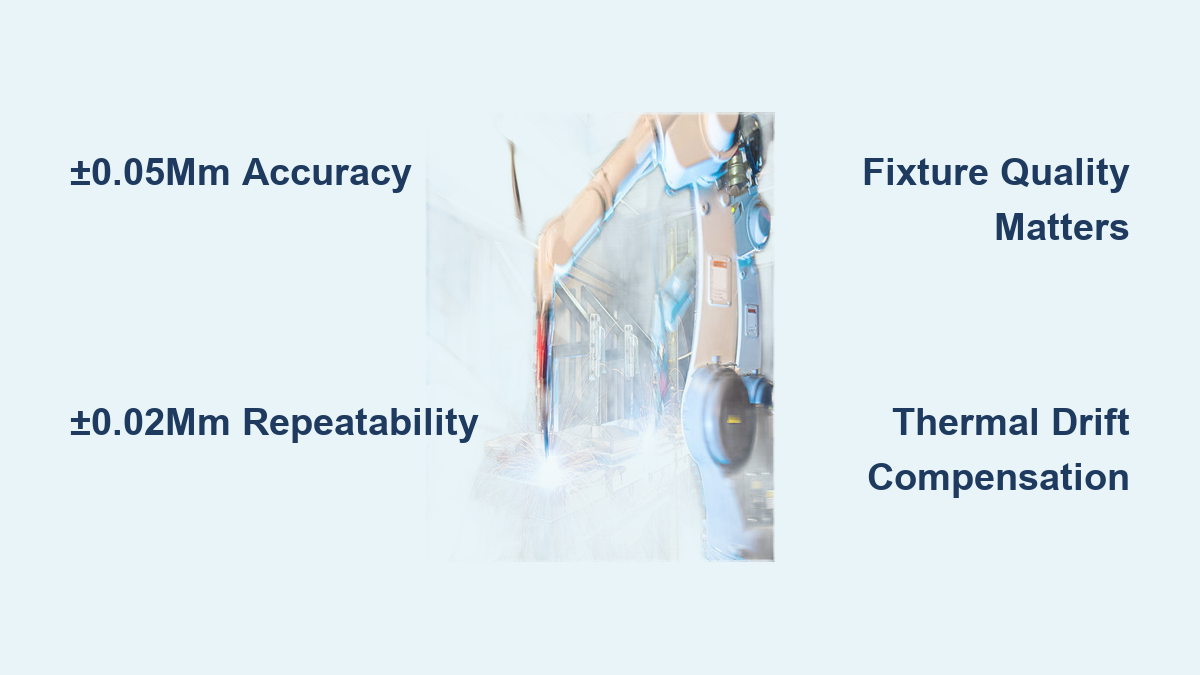
Robotic welding delivers remarkable consistency that manual welding simply cannot match, but many manufacturers wonder: just how accurate is robotic welding in real-world production? The answer reveals why automation has become essential for quality-critical applications. Most industrial robotic welding systems achieve positional accuracy within ±0.05mm to ±0.2mm, with repeatability often reaching ±0.02mm or better in high-end systems. Understanding these specifications—and what affects them—helps manufacturers maximize quality while avoiding unnecessary costs on over-specified equipment.
This guide breaks down the technical reality behind robotic welding accuracy, explores the factors that influence precision in your production environment, and provides actionable strategies to optimize your system’s performance for consistent, high-quality welds.
Real-World Robotic Welding Accuracy Specifications
When manufacturers ask “how accurate is robotic welding,” they’re usually concerned with two distinct but related measurements: accuracy (how close the robot gets to the programmed point) and repeatability (how consistently it returns to that same point across multiple cycles). Both metrics impact your final product quality, but they serve different purposes in production environments.
Positional accuracy measures the deviation between where your robot is commanded to weld and where it actually positions the torch. For example, if your program specifies a weld at coordinate (500, 200, 300), the robot might actually reach (500.1, 199.9, 300.05). That difference represents its accuracy rating. Most industrial robotic welding systems from major manufacturers like FANUC, ABB, KUKA, and Yaskawa deliver positional accuracy between ±0.05mm and ±0.2mm under optimal conditions.
Repeatability matters even more for most welding applications—it measures how reliably your robot reproduces the same path. A robot with excellent repeatability will hit nearly the same spot every time, even if that spot isn’t precisely where the program intended. For high-volume production, this consistency directly translates to predictable weld strength, appearance, and reduced inspection requirements. Modern welding robots typically achieve repeatability ratings between ±0.02mm and ±0.1mm, with most general-purpose welding robots falling in the ±0.05mm to ±0.07mm range.
Why Repeatability Often Matters More Than Absolute Accuracy
For welding applications, consistent performance frequently outweighs perfect positional accuracy. Consider this scenario: a robot with poor absolute accuracy but excellent repeatability will weld the same slightly offset path every time. This consistency produces predictable mechanical properties and appearance across all parts, making quality control more manageable.
Your quality team can compensate for a consistent offset through program adjustments, but they can’t easily correct unpredictable variation. When evaluating how accurate robotic welding can be for your specific application, prioritize repeatability metrics over absolute accuracy—especially for high-volume production where consistency directly impacts yield rates and production costs.
Critical Factors That Determine Your System’s Actual Accuracy
Several variables influence how accurately your robotic welding system performs on the factory floor. Understanding these factors helps you optimize performance and diagnose quality issues when they arise.
Robot Type and Configuration Impact
The robot’s mechanical design significantly affects achievable accuracy. Articulated six-axis robots offer flexibility but may sacrifice some precision compared to specialized gantry or SCARA configurations. Larger robots with greater reach typically have slightly lower accuracy than smaller, more compact designs. When selecting equipment, choose a model with appropriate reach and payload for your application—oversizing your robot often degrades accuracy unnecessarily.
Fixturing Quality Determines Overall System Accuracy
Your fixture’s precision often becomes the limiting factor in overall system accuracy, not the robot itself. Even a perfect robot produces defective welds if parts are fixtured incorrectly. For critical applications, fixture repeatability should equal or exceed robot repeatability. Evaluate your fixturing system carefully—each component in the chain (locators, clamps, base plates) contributes to tolerance stack-up that affects final weld position.
Thermal Effects Degrade Accuracy During Production
Thermal distortion accumulates as robot components heat from motor operation and ambient conditions. A robot calibrated at the start of a shift may show measurable accuracy drift after several hours of continuous operation. This effect compounds when welding generates additional heat in the workpiece and fixture. Allow 30-60 minutes for warm-up time before critical production runs, and consider implementing thermal compensation algorithms if your application requires sustained precision.
Manual vs. Robotic Welding: The Consistency Advantage
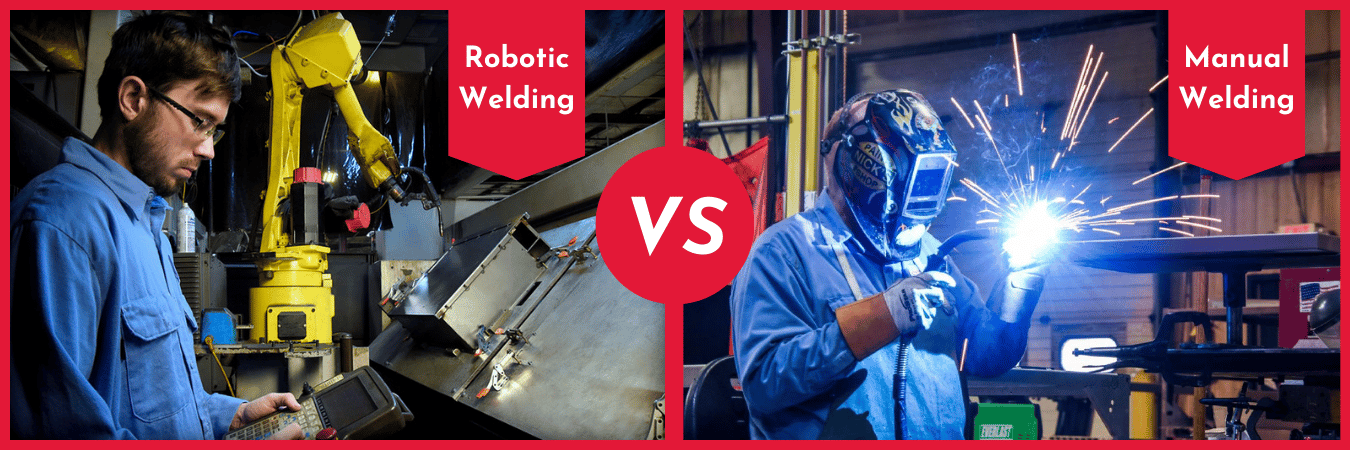
Comparing robotic and manual welding accuracy reveals why automation has become standard for quality-critical applications. While skilled human welders possess remarkable adaptability, robots excel at producing consistent, repeatable results that humans cannot match over extended periods.
Quantifying the Consistency Gap
A highly trained welder might achieve positional accuracy of approximately ±0.5mm to ±1.0mm when working carefully, with typical production welding showing ±2mm or greater variation. Repeatability suffers even more—human fatigue, attention lapses, and natural variation cause weld quality to drift throughout shifts. Studies consistently show that manual weld quality varies significantly within a single welder’s output, between welders, and across time periods.
Your robotic system with ±0.05mm repeatability produces far more consistent welds than even your most skilled human welder can achieve. This consistency translates directly to predictable mechanical properties, reduced inspection requirements, and reliable structural performance—critical advantages for automotive, aerospace, and other quality-sensitive industries.
Industry-Specific Accuracy Requirements
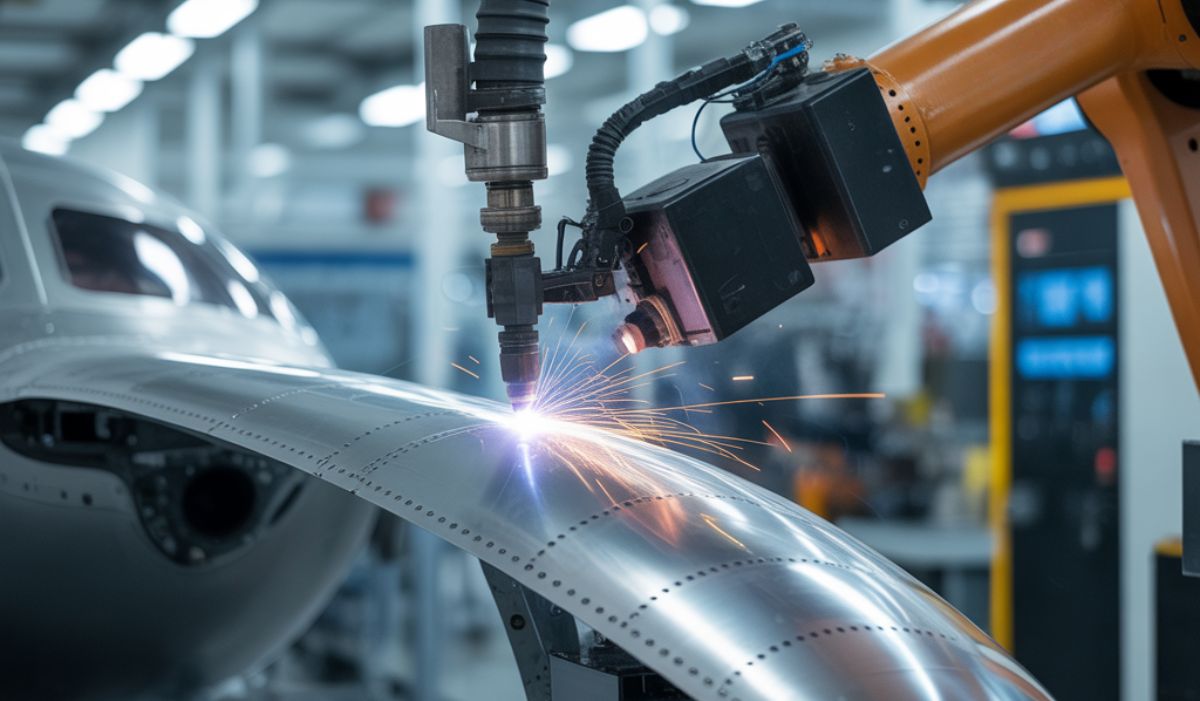
Different industries demand varying levels of robotic welding precision based on their product specifications and performance requirements. Understanding these distinctions helps you determine appropriate specifications without over-investing in unnecessary capabilities.
Automotive Manufacturing: Speed Meets Consistency
Body-in-white welding typically requires positional accuracy of ±0.5mm to ±1.0mm, well within standard robot capabilities. The emphasis here lies in speed and consistency rather than extreme precision. Robot repeatability of ±0.1mm ensures consistent weld nugget formation for resistance spot welding—the dominant automotive joining method.
Aerospace Applications: Extreme Precision Demands
Aircraft structures and rocket components require precision welding to tolerances often specified at ±0.05mm or better. Thin materials, critical joint configurations, and stringent regulatory requirements drive these demands. Specialized welding robots with enhanced accuracy specifications, combined with extensive process validation, meet these challenging requirements.
Maximizing Your Robotic Welding Accuracy Today
Achieving optimal robotic welding accuracy requires attention to several key areas beyond simply purchasing high-specification equipment.
Implement Strategic Calibration Practices
Schedule regular verification checks according to manufacturer recommendations—weekly or monthly verification with full calibration performed quarterly or semi-annually. Use calibrated artifacts or laser tracking systems to measure actual robot positioning against commanded positions. Significant deviations indicate the need for calibration adjustment before they impact quality.
Address Thermal Drift Proactively
Allow adequate warm-up time before critical production runs. Monitor temperature fluctuations in your production environment and implement environmental controls if necessary. Some advanced systems offer thermal compensation algorithms that adjust commanded positions based on measured temperatures—consider this feature if your application requires sustained precision.
Optimize Fixturing for Maximum Consistency
Design fixtures with appropriate precision for your application requirements. Minimize the number of components in the locators chain to reduce tolerance stack-up. Implement part verification procedures before welding begins to catch positioning errors early. Your fixture should consistently position parts within 50-75% of your required weld tolerance.
How Accurate Is Robotic Welding? The Practical Answer
When evaluating how accurate robotic welding can be for your specific application, focus on your actual production requirements rather than chasing maximum specifications. Most industrial systems provide more than enough precision for virtually any manufacturing need when properly selected, installed, and maintained.
Your real-world accuracy depends on the entire system—not just the robot. By addressing fixturing quality, thermal effects, and maintenance practices, you’ll achieve significantly better results than simply purchasing the most precise robot available. For the vast majority of manufacturing applications, robotic welding delivers exceptional consistency that manual processes cannot match, directly improving product quality while reducing production costs.
Remember that the true measure of robotic welding accuracy isn’t found in laboratory specifications—it’s reflected in your production yield rates, inspection results, and customer satisfaction. By understanding the factors that influence precision in your specific environment and implementing strategic improvements, you’ll maximize the return on your automation investment while consistently delivering high-quality welded products.