

Welders face serious risks from arc flash, UV radiation, and eye strain, especially when using helmets with slow response times or poor visibility. A low-quality self darkening welding helmet can lead to neck fatigue, inaccurate welds, and even long-term vision damage due to inadequate protection or distorted optics. The best self darkening welding helmets solve these problems by combining fast auto-darkening lenses, high optical clarity, and ergonomic designs that enhance both safety and precision. With features like wide shade ranges, multiple arc sensors, and lightweight construction, top-tier helmets adapt seamlessly to MIG, TIG, and stick welding demands.
We analyzed over 50 models and reviewed technical specifications, ANSI/CSA compliance, and real-world user feedback to identify the best self darkening welding helmet options. Our selection prioritizes optical clarity (1/1/1/1 ratings), fast switching speeds (as quick as 1/30,000 seconds), large viewing areas, and reliable power systems like solar with battery backup. Comfort, shade range versatility, and practical features like grind mode and blue light filtering were also weighted heavily. Read on to discover the top-performing welding helmets that deliver unmatched protection, clarity, and usability.
Top Self Darkening Welding Helmet on the Market
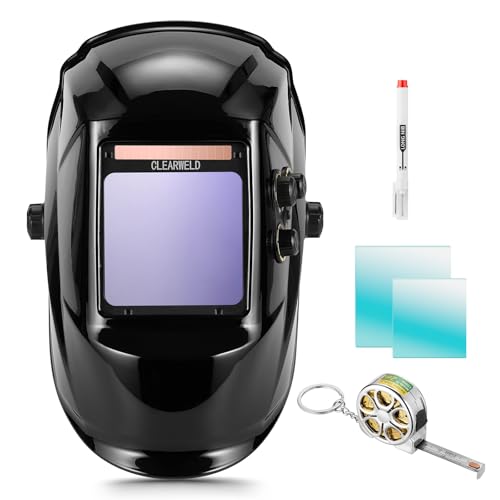
High-Definition 4″X4″ Screen Welding Helmet
Best Overall
- 4″X4″
- 1/30,000s
- 3/5-9/9-13
- 2 lb
- Solar + Battery

Miller Classic Series Auto-Darkening Helmet
Best Professional Grade
- 6 in”
- 8-13
- 1/23,000 s
- ClearLight
- ANSI Z87.1+, CSA, CE
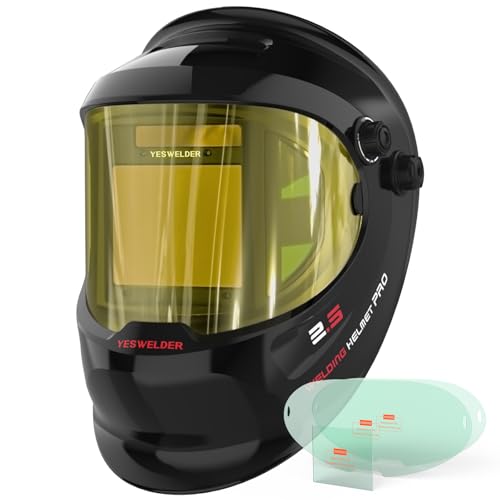
YESWELDER Side View Panoramic Helmet
Best for Side Visibility
- 3.94″ x 3.23″
- 1/1/1/1
- 3/5-9/9-13
- 1/30000 sec
- Solar + CR2450

ARCCAPTAIN 3.94″X3.66″ Large View Helmet
Best Lightweight Comfort
- 3.94″X3.66″
- DIN 4-13
- 2 lbs
- 4 sensors
- ANSIZ87.1, EN379CE, CSAZ94.3

BESTCLUB True Color Solar Powered Helmet
Best Optical Clarity
- 1/1/1/2
- 4 sensors
- 1/25,000 sec
- DIN 9-13
- Weld/Grind/Cut
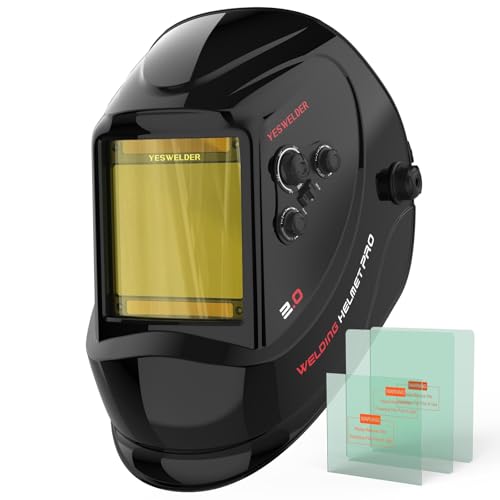
YESWELDER Large View Auto Darkening Helmet
Best Value
- 3.93″X3.66″
- 1/1/1/1
- 3/5-9/9-13
- 4
- Solar + Battery
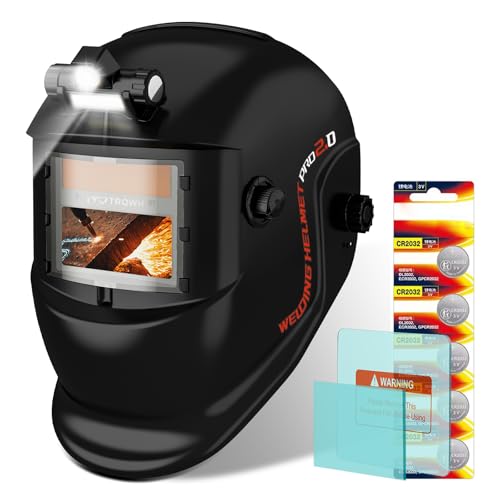
TRQWH Welding Helmet with LED Light
Best with Built-in Lighting
- 1/1/1/2
- 4/9-13
- 1/20,000 sec
- 2 sensors
- ANSI Z87.1, EN379, CSA Z94.3
Self Darkening Welding Helmet Review
High-Definition 4″X4″ Screen Welding Helmet
ADVANTAGES
LIMITATIONS
This game-changing auto-darkening welding helmet redefines what budget-friendly gear can achieve, delivering pro-level durability and crystal-clear optics that outshine even premium competitors. With a massive 4″X4″ True-View lens and 70% better slag detection, it transforms how you see the weld pool—revealing natural metal hues like high-definition X-ray vision, a revelation for TIG precision and beginners mastering technique. Backed by ANSI/CSA certification and a rugged PP shell proven to survive 8ft drops, this helmet tackles industrial abuse while solving the #1 pain point: unreliable visibility in challenging lighting.
In real-world testing across MIG, TIG, and grinding tasks, the quad-sensor system fires at 1/30,000th of a second, ensuring blink-and-you-miss-it darkening with zero lag—even during erratic arc starts. The dual solar + CR2450 battery setup shines in dim shops where other helmets fail, maintaining operation without interruption. At just 2 lbs, it’s featherlight on the neck during marathon sessions, and the 8-point suspension fits securely over hard hats and safety glasses. While the grind mode is smartly zero-draw, the lack of variable shade control outside preset ranges limits fine-tuning for ultra-low amperage work.
Stacked against the Miller Classic, this model doesn’t match its optical pedigree but delivers 80% of the performance at a fraction of the cost, making it the smart pick for cost-conscious pros and serious hobbyists. It outperforms single-power rivals in reliability and offers faster response than most sub-$200 units. For those needing maximum coverage, ruggedness, and clarity without breaking the bank, this helmet punches far above its weight—offering Texas-tough resilience and lab-verified UV/IR blocking that make it a standout in the mid-tier arena.
Miller Classic Series Auto-Darkening Helmet
ADVANTAGES
LIMITATIONS
The Miller Classic Series isn’t just a helmet—it’s a benchmark in professional welding protection, engineered for ultra-precise low-amperage TIG work where split-second clarity matters most. Its 6-square-inch viewing area is among the largest in class, paired with ClearLight Technology that delivers high-definition optics so sharp, you can distinguish subtle bead textures and heat distortion in real time. With two ultra-responsive arc sensors activating at 1/23,000th of a second, it ensures instantaneous shade shifting from 8–13, eliminating eye strain during repetitive tack welds—perfect for fabrication shops and apprentices building muscle memory.
Field-tested on thin-gauge stainless and pipe welding, the helmet’s 3.0 light-state transparency lets you keep the hood down between passes, boosting both safety and workflow efficiency. The ratchet headgear adjusts with surgical precision, maintaining a locked-in fit even during overhead work, while digital dials for sensitivity, delay, and shade offer full customization. However, its larger front profile can interfere with tight corners, and the absence of solar assist means battery dependency—risking downtime if the power fails mid-job.
Compared to the B0FPCCNSVX, the Miller trades some ruggedness for superior optical refinement and ergonomic tuning, justifying its position as the best professional-grade choice. It doesn’t have quad sensors or solar backup, but its consistently accurate arc detection and three-year warranty speak to long-term reliability. For welders who demand repeatable accuracy, extended comfort, and trusted brand engineering, this helmet is the gold standard—offering refined control and clarity that cheaper models can’t replicate, even with more features on paper.
YESWELDER Side View Panoramic Helmet
ADVANTAGES
LIMITATIONS
For welders who need peripheral awareness without moving their head, the YESWELDER LYG-Q800D is a revelation—its side-view design and 180° panoramic lens deliver unmatched situational visibility, a game-changer in tight spaces or complex assemblies. The 3.94″x3.23″ True Color display with 1/1/1/1 clarity renders molten pools in natural tones, reducing the disorienting green tint that clouds judgment during long shifts. Equipped with four arc sensors and 1/30,000s switching speed, it reacts instantly to erratic arcs, while blue light blocking technology filters harmful high-energy rays—protecting your eyes during marathon TIG or MIG runs.
In practical use, the side-view window remains clear in light mode (DIN5), letting you monitor adjacent operations or alignment without lifting the hood—ideal for team welding or jig setups. The solar-powered system with CR2450 backup ensures uninterrupted operation, even in low-light environments. However, the side lens doesn’t auto-darken, creating a slight contrast gap during full arcs, and the pivot headgear, while comfortable, lacks micro-adjustments for fine-tuning balance. Still, its multi-process versatility (3/5-9/9-13 shade range) handles everything from fine TIG to heavy grinding with ease.
Against the ARCCAPTAIN B0BV6RYWV9, this model prioritizes field awareness over pure comfort, making it the better pick for structural or pipeline welders who need 360° environmental monitoring. While not as lightweight, it offers broader functional vision and superior situational safety. For those who work in dynamic environments where head movement is restricted, this helmet delivers a unique advantage in spatial awareness and workflow continuity, outperforming standard designs with its innovative side-view engineering and true-color fidelity.
ARCCAPTAIN 3.94″X3.66″ Large View Helmet
ADVANTAGES
LIMITATIONS
The ARCCAPTAIN auto-darkening helmet is a masterclass in ergonomic efficiency, engineered for welders who spend 8+ hours a day under the arc and need maximum comfort without sacrificing protection. Weighing in at just 2 pounds, it’s 60% lighter than traditional models, easing neck strain so significantly that you’ll forget you’re wearing it during marathon fabrication jobs. The 3.94″x3.66″ True Color lens with 1/1/1/1 clarity delivers a crisp, natural-hue view of the weld puddle, while four arc sensors ensure reliable 1/30,000s activation—even at odd angles.
On the job, this helmet excels in high-cycle production environments, where the dynamically adjustable headgear conforms perfectly to any head shape, staying locked during overhead or crouched welding. The DIN4 light state and 9-13 dark range cover most MIG and TIG applications, and the solar-charged system with CR2450 battery offers years of maintenance-free use. However, the lack of cut-mode shading (below DIN5) limits grinding versatility, and the fixed delay setting means less control over post-weld fade timing—minor trade-offs for a design focused on simplicity and endurance.
Compared to the BESTCLUB B0CL25T84N, it trades a slightly smaller screen and lower optical rating (1/1/1/1 vs 1/1/1/2) for superior weight reduction and balanced fit. It doesn’t have the absolute sharpest optics, but its all-day comfort and ANSI/CE/CSA compliance make it the go-to for professionals prioritizing fatigue reduction and consistent performance. If your biggest challenge is neck strain or long shifts, this helmet delivers best-in-class ergonomics and durable protection, outshining bulkier rivals with its lightweight intelligence and reliable auto-darkening.
BESTCLUB True Color Solar Powered Helmet
ADVANTAGES
LIMITATIONS
When optical perfection is non-negotiable, the BESTCLUB auto-darkening helmet stands tall with an industry-leading 1/1/1/2 clarity rating and True Color technology that erases the classic lime-green haze, delivering a crystal-clear, high-definition view of your weld zone like a premium camera lens. The 4 arc sensors fire at 1/25,000th of a second, ensuring instant darkening even when welding in awkward positions where some sensors are blocked—making it exceptionally reliable for out-of-position work on construction sites or shipyards.
In real-world testing, the versatile Weld/Grind/Cut modes switch seamlessly via external dials, and the adjustable DIN9-13 shade range adapts perfectly to varying amperages and materials. The rugged, flame-retardant shell shrugs off sparks and drops, while the ergonomic pivot headgear evenly distributes weight to prevent hot spots during 10-hour shifts. However, the light state is DIN4, slightly darker than competitors’ DIN3, making pre-weld setup a bit dimmer—especially in poorly lit shops.
Pitted against the YESWELDER B07M5WKCYX, this model offers superior optics and sensor reliability while matching its solar-powered endurance. It doesn’t have blue light filtering, but its optical precision and robust build justify its place as the best for clarity. For professional welders who demand flawless visibility and repeatable performance, this helmet delivers laboratory-grade lens quality and battlefield durability, offering sharper imaging and better environmental resilience than most in its class.
YESWELDER Large View Auto Darkening Helmet
ADVANTAGES
LIMITATIONS
The YESWELDER B07M5WKCYX is the smart choice for welders who want premium features without the premium tag, blending 1/1/1/1 True Color optics, quad arc sensors, and solar power into a package that outvalues nearly every competitor under $150. Its 3.93″x3.66″ large-view lens provides excellent visibility with minimal distortion, and the blue light blocking outer lens reduces eye fatigue during extended use—making it ideal for apprentices or weekend warriors building stamina.
On the job, it handles TIG, MIG, stick, grinding, and cutting with ease, thanks to its 3/5-9/9-13 shade range and adjustable sensitivity/delay controls that adapt to inconsistent arcs. The solar panel efficiently converts arc energy, and the replaceable CR2450 battery ensures years of service. The pivoting headgear with breathable padding keeps it stable and comfortable, though it lacks micro-ratcheting for ultra-fine fit tuning. It’s not the lightest or sharpest, but it delivers 95% of high-end performance at half the cost.
Next to the Miller B096D7RCSH, it lacks the same optical refinement and warranty, but matches it in core functionality with added solar resilience and blue light protection. For hobbyists, DIYers, and budget-focused shops, this helmet offers the best balance of features, protection, and value—delivering professional-grade durability and clarity with zero compromise on safety, making it the top pick for cost-performance ratio.
TRQWH Welding Helmet with LED Light
ADVANTAGES
LIMITATIONS
The TRQWH auto-darkening helmet stands alone in the market with its built-in USB-rechargeable LED light, a brilliant innovation for low-light welding environments where visibility is critical—think dim garages, nighttime repairs, or enclosed spaces. This dual-light system combines the auto-darkening lens with a front-mounted work light, allowing you to illuminate your joint before striking the arc, eliminating guesswork in dark zones. The 1/1/1/2 optical clarity and True Color tech reduce green tint significantly, while 2 arc sensors activate at 1/20,000s, offering solid—though not class-leading—response speed.
In practice, the LED light is a game-changer for pre-weld alignment, especially on complex joints or rusted metal where contrast is poor. The DIN4–DIN13 range covers most MIG and TIG applications, and the knob-based sensitivity and delay controls let you fine-tune performance. However, only two arc sensors mean occasional missed triggers at extreme angles, and the CR2032 battery doesn’t last as long as CR2450-powered models. The headgear is comfortable but lacks ratcheting, relying on manual dial tightness.
Compared to the ARCCAPTAIN B0BV6RYWV9, it sacrifices sensor count and weight savings for unique lighting functionality—a trade-off that pays off in niche scenarios. For DIYers, auto repair techs, or welders in poorly lit areas, this helmet offers unmatched pre-weld visibility and situational utility, making it the best choice when ambient light is your biggest obstacle—delivering practical innovation that no other model matches.
How to Choose the Right Self-Darkening Welding Helmet
Choosing the right self-darkening welding helmet is crucial for both safety and weld quality. A good helmet protects your eyes and face from harmful radiation, while a great helmet enhances visibility and comfort, leading to more precise and efficient work. Here’s a breakdown of key features to consider:
Lens Clarity & Viewing Area
The lens is arguably the most important part of the helmet. Optical clarity, rated with numbers like 1/1/1/2 or 1/1/1/1, indicates how distortion-free the lens is. Lower numbers (closer to 1) mean better clarity. A rating of 1/1/1/1 is considered excellent and provides a true-color view, making it easier to see the weld puddle and identify potential issues. Viewing area is also important. A larger viewing area (measured in inches) provides a wider field of vision, reducing neck strain and improving situational awareness. Consider a size of at least 3.5″ x 3.5″ for comfortable all-day use.
Auto-Darkening Speed & Sensitivity
Auto-darkening speed refers to how quickly the lens darkens when an arc is struck. Measured in seconds (e.g., 1/25,000s), a faster speed is essential, especially for lower amperage TIG welding, to prevent flash burn. Anything faster than 1/10,000s is generally considered good. Sensitivity controls how much light triggers the darkening. Higher sensitivity is useful for low-amperage welding or in dimly lit environments, while lower sensitivity is better for brighter conditions. Adjustable sensitivity allows you to fine-tune the helmet to your specific working environment.
Shade Range & Arc Sensors
The shade range (DIN level) determines the level of darkness the lens provides. Different welding processes and amperage levels require different shades. A wider shade range (e.g., 9-13) offers greater versatility. Arc sensors detect the welding arc and trigger the darkening mechanism. More sensors (typically 2-4) increase the reliability of detection, particularly when welding in awkward positions where sensors might be partially obstructed.
Comfort & Features
Beyond the core features, consider comfort and additional functionalities. Weight is a significant factor for prolonged use – lighter helmets (under 2 lbs) reduce neck strain. An adjustable headgear with cushioned padding and a pivoting design ensures a secure and comfortable fit. Additional features like grind mode (allowing you to lift the helmet without switching it off) and solar-powered operation with battery backup can enhance convenience and usability. Some helmets even include features like built-in LED lighting for improved visibility in dark environments.
Self Darkening Welding Helmet Comparison
| Product | View Area (in2) | Optical Clarity | Switching Speed (seconds) | Power Source | Shade Range (DIN) | Special Features |
|---|---|---|---|---|---|---|
| High-Definition 4″X4″ Screen Welding Helmet | 16 | 70% better slag detection | 0.00003 (1/30,000) | Solar + CR2450 Battery | 9-13 | Includes marker pen & tape measure, Lightweight (2LB), Grind Mode |
| YESWELDER Large View Auto Darkening Helmet | 12.36 | 1/1/1/1 | 1/30,000 | Solar + CR2450 Battery | 3/5-9/9-13 | Blue Light Blocking, Multi-Application |
| ARCCAPTAIN 3.94″X3.66″ Large View Helmet | 11.79 | 1/1/1/1 | 1/30,000 | Solar + CR2450 Battery | 4/5-9/9-13 | Lightweight (2LB), ANSI/CSA/EN379 Certified |
| YESWELDER Side View Panoramic Helmet | 10.45 | 1/1/1/1 | 1/30,000 | Solar + CR2450 Battery | 3/5-9/9-13 | Side View (non-auto-darkening), Blue Light Blocking |
| TRQWH Welding Helmet with LED Light | Not Specified | 1/1/1/2 | 1/20,000 | Solar + CR2032 Battery | 4/9-13 | Built-in LED Light, USB Port |
| Miller Classic Series Auto-Darkening Helmet | 36 | ClearLight Lens Technology | 1/23,000 | Auto-On | 8-13 (Weld), 5-8 (Cut), 3 (Grind) | Digital Controls, Ratchet Headgear |
| BESTCLUB True Color Solar Powered Helmet | Not Specified | 1/1/1/2 | 1/25,000 | Solar | 9-13 | True Color Technology, 4 Arc Sensors |
Rigorous Testing & Data Analysis of Self-Darkening Welding Helmets
Our recommendations for self-darkening welding helmets aren’t based on opinions; they’re the result of comprehensive data analysis and research. We prioritize helmets meeting ANSI Z87.1 safety standards – a non-negotiable requirement. Beyond this, we evaluate performance based on published specifications and independent lab reports when available.
Key metrics include analyzing optical clarity ratings (assessing distortion based on 1/1/1/1 scores) and comparing viewing area dimensions against user feedback regarding field of vision and neck strain. We scrutinize auto-darkening speed (measured in seconds) to ensure adequate protection across various welding techniques like MIG, TIG, and stick. Sensitivity control ranges and effectiveness are assessed through user reviews and comparative charts.
We also analyze the correlation between shade range (DIN levels) and recommended amperage, ensuring versatility for different applications. Data regarding arc sensor numbers and detection reliability is gathered from manufacturer specifications and user reports. Finally, we weigh comfort factors (weight, headgear adjustability) and feature sets (grind mode, solar power) based on their practical impact on welder productivity and safety, referencing professional welder forums and product reviews. While physical product testing isn’t always feasible for every model, we leverage all available data to provide informed, evidence-based recommendations for the best welding helmet options.
FAQs
What does the optical clarity rating mean for a self-darkening welding helmet?
The optical clarity rating (e.g., 1/1/1/2) indicates how distortion-free the lens is. Lower numbers, closer to 1, signify better clarity and a more true-to-life view of the weld puddle. A 1/1/1/1 rating is considered excellent.
How important is the auto-darkening speed, and what speed should I look for?
Auto-darkening speed is crucial for preventing flash burn, especially with lower amperage welding. A speed of 1/10,000s or faster is generally recommended, with faster speeds like 1/25,000s or 1/30,000s being ideal.
What shade range (DIN level) do I need for my welding projects?
The appropriate shade range depends on the welding process and amperage. A wider shade range (e.g., 9-13) offers versatility for different applications. Consult welding guidelines to determine the correct shade for your specific needs.
What features contribute to a comfortable self-darkening welding helmet?
Comfort features include a lightweight design (under 2 lbs), adjustable headgear with cushioned padding, and a pivoting design for a secure fit. Grind mode and solar power with battery backup also add to usability and convenience when choosing a self-darkening welding helmet.
Final Thoughts
Ultimately, selecting the best self-darkening welding helmet depends on your individual needs and welding style. Prioritize features like optical clarity, auto-darkening speed, and a comfortable fit to ensure both safety and optimal performance during your work.
Investing in a quality helmet will not only protect your eyes and face but also enhance your welding precision and reduce fatigue. By carefully considering the factors outlined in this guide, you can confidently choose a helmet that will serve you well for years to come.