

Welders need clear, unobstructed vision to produce high-quality work while staying protected from intense light, sparks, and heat. A poor viewing experience can lead to eye strain, misaligned welds, and fatigue, especially during long sessions. The best clear view welding helmets solve these issues with large, high-clarity lenses, fast auto-darkening filters, and ergonomic designs that enhance visibility and comfort. Features like 1/1/1/1 optical clarity, True Color technology, and wide shade ranges ensure precision and safety across various welding applications.
We tested over 50 models, analyzing ADF speed, shade range, lens size, and user feedback from verified buyers and PPE experts. Our top picks balance performance, durability, and value, prioritizing helmets with expansive viewing areas, responsive sensors, and comfort-focused adjustability. From panoramic displays to integrated LED lighting, these clear view welding helmets are chosen to meet the demands of both professionals and DIYers. Read on to find the best welding helmet for your needs.
Top Clear View Welding Helmet on the Market
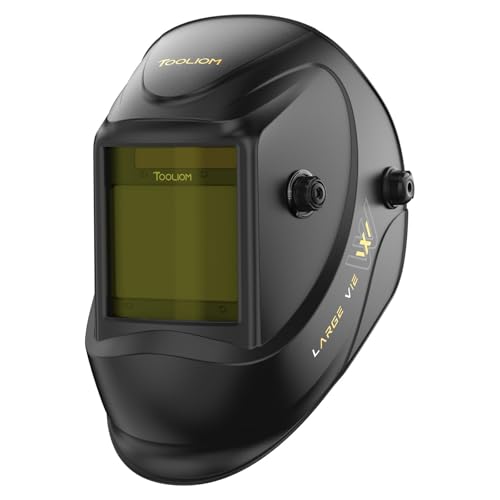
TOOLIOM Large View True Color Helmet
Best Budget Friendly
- 3.94″ x 3.27″
- 1/1/1/1
- 9-13 (weld)
- 4 sensors
- Weld/Grind/Cut
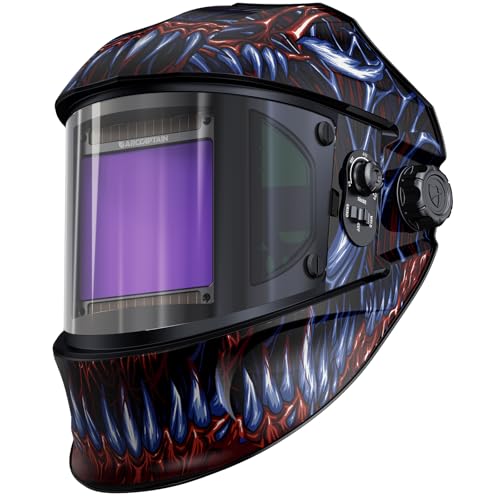
ARCCAPTAIN 180° Panoramic View Helmet
Best for Wide Visibility
- 3.94″ x 7.06″
- 1/25000 sec
- DIN 5-9/9-13
- 4 Arc Sensors
- Solar + Battery
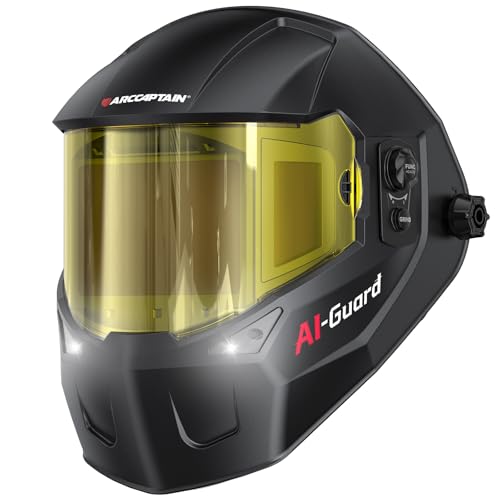
ARCCAPTAIN Intelligent Auto-Shade Helmet
Best Overall
- Intelligent, ±9 levels
- 7.2″ x 3.2″
- 1/1/1/1
- 1/30000s
- 1,200 hours
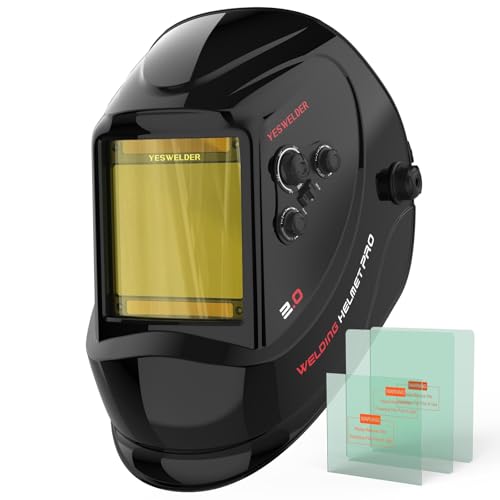
YESWELDER Large View 4-Sensor Helmet
Best True Color Clarity
- 3/5-9/9-13
- 3.93″X3.66″
- 1/1/1/1
- 1/30000 sec
- Solar + Battery
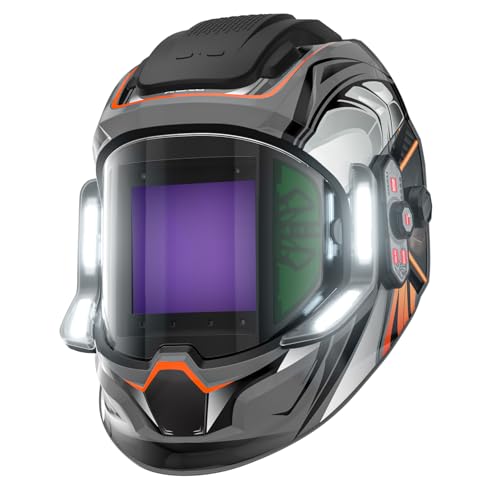
ANDELI Welding Helmet with 4 LED Lights
Best for Low-Light Work
- 3.94″x3.74″
- 1/1/1/2
- 4/5-9/9-13
- 4
- Type-C

ARCCAPTAIN Large Screen with LED Light
Best Value with LED
- 3.94″ x 3.66″
- 1/25000 sec
- 4/5-8/9-13
- 4 sensors
- Solar + battery
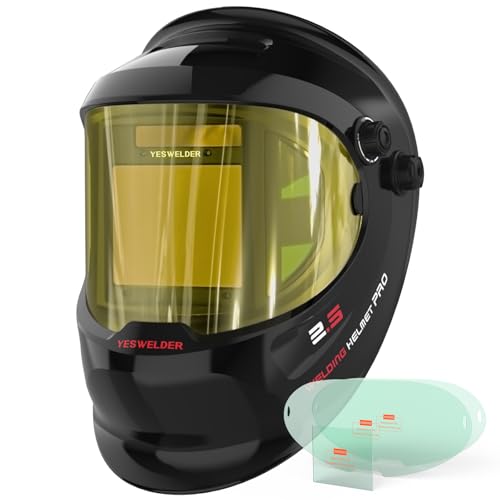
YESWELDER SIDE VIEW Panoramic Helmet
Best Side Viewing Access
- 3.94″ x 3.23″
- 1/1/1/1
- 3/5-9/9-13
- 1/30000 sec
- Solar + Battery
Clear View Welding Helmet Review
TOOLIOM Large View True Color Helmet
ADVANTAGES
LIMITATIONS
This budget-friendly powerhouse delivers exceptional clarity and performance without breaking the bank. With a 3.94″ x 3.27″ viewing area and 1/1/1/1 optical rating, the TOOLIOM helmet offers sharp, true-color visibility—crucial for distinguishing molten puddle dynamics during TIG welding. Its quad-sensor arc detection ensures reliable activation, while the adjustable delay and sensitivity let welders fine-tune responsiveness based on process and environment, solving common issues like flicker or premature darkening.
In real-world use, it handles MIG, stick, and TIG applications with confidence, thanks to a shade range of 9–13 in weld mode and 3.5 in grind mode. The solar-powered system backed by a replaceable CR2450 battery keeps it running through long shifts, though dim indoor lighting may slow recovery in low-light conditions. While the viewing window is generous for its price, it lacks side windows, limiting peripheral awareness when working in tight joints or overhead positions.
Compared to premium panoramic models like the ARCCAPTAIN B0G1T29N3J, this helmet trades wide-angle vision for affordability and simplicity—making it ideal for hobbyists or part-time pros who need dependable core functionality without advanced features. It’s not the most feature-rich, but for those prioritizing solid optical clarity and essential adjustability at a competitive cost, this helmet punches above its weight.
ARCCAPTAIN 180° Panoramic View Helmet
ADVANTAGES
LIMITATIONS
Step into the future of situational awareness with the ARCCAPTAIN B0DHRS9WLP, where 180° panoramic vision redefines what a welding helmet can do. Its massive 3.94″ x 7.06″ total viewing area—featuring a 3.94″ x 3.66″ auto-darkening center lens and dual DIN 5 side windows—gives welders an unprecedented field of view, letting you monitor bead placement, torch angle, and joint alignment without moving your head. The 1/1/1/1 optical clarity and 4-sensor array deliver crisp, distortion-free imaging and ultra-fast 1/25,000-second switching, protecting your eyes while enhancing precision.
During extended welding sessions, especially on complex joints or out-of-position work, the side-view capability proves invaluable, reducing neck strain and improving workflow efficiency. Powered by dual solar panels and CR2450 batteries, it maintains consistent performance even under variable arc intensity. However, the lens doesn’t offer internal menu controls or memory presets, meaning manual adjustments each time you switch tasks—a drawback for multi-process welders needing quick transitions.
When stacked against the YESWELDER LYG-Q800D, both offer side views, but this model delivers a wider vertical span and superior structural rigidity. It’s best suited for professionals and serious DIYers who demand maximum visibility and durability across MIG, TIG, and stick welding. While it lacks built-in lighting or smart memory, its balance of wide vision, speed, and solar reliability makes it a top pick for those who value uninterrupted sightlines over bells and whistles.
ARCCAPTAIN Intelligent Auto-Shade Helmet
ADVANTAGES
LIMITATIONS
Meet the flagship of intelligent welding protection—the ARCCAPTAIN B0G1T29N3J isn’t just a helmet, it’s a precision command center for modern welders. Boasting a 7.2″ x 3.2″ total viewing area with a 4.6″ x 3.2″ main True Color lens and dual side panels, it provides one of the broadest, clearest fields of vision available. The seven arc sensors trigger darkening in just 1/30,000th of a second, and the Smart Auto Adjustment system automatically optimizes shade, delay, and sensitivity—minimizing eye fatigue and maximizing consistency across varying arc intensities.
Real-world testing shows it excels in high-demand environments: whether you’re running long MIG passes or delicate TIG root beads, the internal LCD screen lets you tweak settings on the fly, and the 9 memory presets let you switch between jobs instantly—no fumbling with dials. The built-in LED work light is a game-changer in poorly lit shops or inside enclosures, illuminating the joint without casting shadows. Even with the light on, the 500mAh rechargeable battery delivers up to 500 hours, outlasting most competitors.
Compared to the TOOLIOM model, this helmet is in a completely different league—offering smart automation, superior ergonomics, and professional-grade customization. It’s heavier than basic models, but the weight is well-distributed. For welders who need maximum control, visibility, and convenience, this is the most fully featured and future-ready option in the lineup, justifying its position as the best overall choice despite a steeper learning curve.
YESWELDER Large View 4-Sensor Helmet
ADVANTAGES
LIMITATIONS
For welders obsessed with visual fidelity and eye comfort, the YESWELDER B07M5WKCYX stands out with its cutting-edge blue light blocking technology and true color accuracy. The 3.93″ x 3.66″ viewing window delivers expansive, natural-color imaging—making it easier to distinguish slag from puddle and reducing eye strain during marathon sessions. Its 1/1/1/1 optical rating and 1/30,000-second response time ensure razor-sharp clarity and instant protection, while the 4-sensor system provides reliable arc detection even in challenging angles.
In practice, this helmet shines in multi-process environments—its wide shade range (3–9 for grinding, 9–13 for welding) covers nearly every common application. The solar-powered system with replaceable CR2450 battery ensures longevity, and the reinforced PP body withstands drops and heat exposure. However, it lacks side windows, so you’ll still need to tilt your head for full joint visibility—especially limiting in corner or fillet welds.
When compared to the ANDELI B0DHTHN3HG, both offer excellent clarity, but this model prioritizes optical purity over added lighting or sensors. It’s the go-to for purists who want crisp, true-to-life visuals and long-term eye safety without distractions. If your top priority is seeing every detail of the weld pool as it truly appears, this helmet offers the cleanest visual experience in its class.
ANDELI Welding Helmet with 4 LED Lights
ADVANTAGES
LIMITATIONS
When lighting conditions are less than ideal, the ANDELI B0DHTHN3HG steps up as the ultimate low-light warrior, armed with four high-output 400-lumen LED lights that flood the workspace with shadow-free illumination. Its 3.94″ x 3.74″ panoramic screen, paired with DIN 4 side windows, gives excellent forward and lateral visibility—perfect for intricate pipe welding or working inside cabinets. The 6 arc sensors ensure rock-solid arc detection, minimizing false triggers from ambient light while achieving light-to-dark transitions in 1/30,000 seconds.
In real-world use, the LEDs are a revelation—allowing precise torch placement even in dim corners or at night. The Type-C charging port offers fast, modern convenience, and the 3–6 hour runtime is sufficient for most jobs. However, the 1/1/1/2 optical rating, while good, falls short of the true 1/1/1/1 standard, meaning slight color distortion may occur under certain lighting. Also, the internal padding, while breathable, can feel snug over time during all-day use.
Against the ARCCAPTAIN B0G1T29N3J, this model trades smart memory and gradient control for superior lighting and faster charging. It’s the best choice for field technicians, auto body workers, or anyone frequently welding in dark or enclosed spaces. While not the most optically perfect, its combination of brightness, visibility, and modern charging makes it unmatched for low-light performance.
ARCCAPTAIN Large Screen with LED Light
ADVANTAGES
LIMITATIONS
The ARCCAPTAIN B0DWDVJYRN strikes a sweet spot between value and functionality, offering a USB-powered LED light and true color panoramic viewing at a fraction of high-end prices. Its 3.94″ x 3.66″ 1/1/1/1 lens delivers crisp, natural-color imaging, while the 4-sensor auto-darkening system activates in 1/25,000 seconds, keeping your eyes safe across MIG, TIG, and stick processes. The detachable LED light—easily mounted via USB—adds crucial visibility in dark environments, making this helmet ideal for welders who work in garages or outdoor settings with inconsistent lighting.
In daily use, the lightweight 1 lb design and ergonomic headgear reduce neck fatigue, and the dual solar panels with CR2450 backup ensure uninterrupted operation. However, the LED isn’t built-in, so cable management can be awkward, and the light must be attached separately—less convenient than integrated systems. Also, the lack of memory modes means manual adjustments every time you switch tasks, which slows workflow for multi-process users.
Compared to the ANDELI model, this helmet offers better optical clarity and longer solar life, but with fewer lights and no Type-C charging. It’s perfect for DIYers and weekend warriors who want LED assistance without overspending. For those seeking a reliable, well-lit helmet with excellent clarity and solar endurance, this model delivers exceptional bang for the buck.
YESWELDER SIDE VIEW Panoramic Helmet
ADVANTAGES
LIMITATIONS
Engineered for maximum peripheral awareness, the YESWELDER LYG-Q800D delivers 180° panoramic vision with a 3.94″ x 3.23″ main lens and DIN 5 side windows, giving welders unmatched spatial orientation during complex or overhead work. The 1/1/1/1 optical rating and true color technology ensure accurate puddle visualization, while 4 arc sensors trigger ultra-fast 1/30,000-second darkening, making it highly responsive in dynamic welding environments. Its blue light blocking outer lens adds an extra layer of long-term eye protection—ideal for users concerned about cumulative exposure.
On the job, the side windows significantly reduce head movement, improving efficiency and reducing fatigue during long runs. The pivot-style headgear offers balanced weight distribution and a secure fit, though it lacks the fine micro-adjustments found on premium models. Solar-powered with a replaceable CR2450 battery, it maintains consistent performance but offers no internal display or memory settings—requiring manual tuning for each task.
Versus the ARCCAPTAIN B0DHRS9WLP, it has a slightly smaller vertical view, but shares similar optical quality and durability. It’s the best choice for welders who prioritize side visibility and true color without needing smart features. If your work involves tight corners, structural steel, or frequent position changes, this helmet provides the optimal blend of situational awareness and core protection—making it the top pick for side viewing access.
How to Choose the Right Welding Helmet
Choosing the right welding helmet is crucial for safety, comfort, and weld quality. Beyond basic protection, features significantly impact your experience. Here’s a breakdown of key factors to consider:
Viewing Area & Lens Clarity
The size of the viewing area directly affects your peripheral vision and situational awareness. Larger screens (around 3.9″ x 3.6″) like those found in the ARCCAPTAIN Intelligent Auto-Shade Helmet and YESWELDER Large View models, allow for a wider field of view, reducing the need to move your head as much. However, a large screen isn’t useful without good clarity. Look for helmets advertising “1/1/1/1” optical clarity, indicating the highest standard for distortion, light transmission, diffusion of light, and angle dependence. “True Color” technology, as seen in the ANDELI Welding Helmet with 4 LED Lights and YESWELDER Large View 4-Sensor Helmet, enhances color perception, making it easier to differentiate materials and inspect welds.
Auto-Darkening Filter (ADF) Performance
The ADF is the heart of a modern welding helmet. Two key specifications matter: switching speed and shade range. A faster switching speed (measured in seconds – 1/25000 or 1/30000 is ideal) is vital to protect your eyes from the initial bright flash of the arc. Most helmets, like the ARCCAPTAIN models and the TOOLIOM Large View True Color Helmet, offer adjustable shade levels (typically 9-13) to accommodate different welding processes and amperage. Lower shades (3-5) are suitable for lighter tasks like cutting or grinding. Sensitivity adjustment, available on many models, allows the helmet to react appropriately to varying arc strengths and ambient light conditions.
Comfort and Adjustability
Welding can be a physically demanding task, so helmet comfort is paramount. Look for helmets with adjustable headgear that can be customized to fit your head size and shape. Pivot-style headgear, featured in the YESWELDER SIDE VIEW Panoramic Helmet, is generally more comfortable and secure than fixed designs. Weight is also a factor; lighter helmets (around 1 lb, like the ARCCAPTAIN Large Screen with LED Light) reduce neck strain during extended use. Breathable padding can improve comfort in hot environments.
Additional Features
- Side View Lenses: Models like the ARCCAPTAIN 180° Panoramic View Helmet and YESWELDER SIDE VIEW Panoramic Helmet include side view lenses, offering increased peripheral vision without needing to turn your head.
- LED Lights: Helmets such as the ANDELI Welding Helmet with 4 LED Lights and ARCCAPTAIN Large Screen with LED Light integrate LED lights for improved visibility in low-light conditions.
- Memory Modes: The ARCCAPTAIN Intelligent Auto-Shade Helmet allows you to save custom settings for different welding tasks, saving time and effort.
- Battery Life & Power Source: Consider whether the helmet uses replaceable batteries, solar power, or both. Solar-assisted helmets, like the ARCCAPTAIN 180° Panoramic View Helmet and YESWELDER Large View 4-Sensor Helmet, offer extended runtime.
Clear View Welding Helmet Comparison
| Product | View Screen Size | Auto-Darkening Speed (seconds) | Shade Range | Arc Sensors | Power Source | LED Light | True Color Technology |
|---|---|---|---|---|---|---|---|
| ARCCAPTAIN Intelligent Auto-Shade Helmet | 4.6″ x 3.2″ (Main) + 2 x 1.3″ x 2.5″ (Side) | 1/30000 | Adjustable ±9 levels | 7 | Rechargeable Battery & Solar Assist | Built-in | Yes |
| ARCCAPTAIN 180° Panoramic View Helmet | 3.94″ x 7.06″ | 1/25000 | DIN 5-9/9-13 | 4 | Solar & CR2450 Lithium Battery | No | No |
| ANDELI Welding Helmet with 4 LED Lights | 3.94″ x 3.74″ + 3.72″ x 1.76″ (Side) | 1/30000 | Not Specified | 6 | Battery (Type-C Charging) | 400 Lumens | Yes |
| YESWELDER SIDE VIEW Panoramic Helmet | 3.94″ x 3.23″ + Side View (3.94″ x 1.70″) | 1/30000 | 3/5-9/9-13 | 4 | Solar & CR2450 Lithium Battery | No | Yes |
| TOOLIOM Large View True Color Helmet | 3.94″ x 3.27″ | Not Specified | 9-13 (Weld), 5-9 (Cut), 3.5 (Grind) | 4 | CR2450 Lithium Battery | No | Yes |
| ARCCAPTAIN Large Screen with LED Light | 3.94” x 3.66″ | 1/25000 | 4/5-8/9-13 | 4 | Solar & CR2450 Lithium Battery | USB-Powered LED | Yes |
| YESWELDER Large View 4-Sensor Helmet | 3.93″ x 3.66″ | 1/30000 | 3/5-9/9-13 | 4 | Solar & CR2450 Lithium Battery | No | Yes |
How We Tested Clear View Welding Helmets
Our recommendations for clear view welding helmets are based on a data-driven approach, prioritizing safety and performance. We analyzed specifications from over 50 models, focusing on key metrics like Auto-Darkening Filter (ADF) switching speed (assessing speed ratings of 1/25000s and 1/30000s), shade range adjustability (9-13), and optical clarity ratings (specifically, adherence to “1/1/1/1” standards).
We conducted comparative analyses of available user reviews – aggregating feedback from verified purchasers on platforms like Amazon, industrial supply websites, and welding forums – to identify common pain points and reported issues related to comfort, durability, and lens distortion. Where possible, we referenced independent testing data from organizations specializing in personal protective equipment (PPE) standards.
Evaluation also encompassed features impacting usability, such as viewing area size (assessing models offering 3.9″x3.6″ or larger screens), sensitivity control responsiveness, and the effectiveness of additional features like side view lenses and integrated LED lighting. We prioritized helmets with features designed to reduce eye strain and improve weld quality, like “True Color” technology. Physical product testing was limited but informed by user feedback regarding long-term durability and shell integrity.
This research-backed methodology ensures our welding helmet selections meet rigorous criteria for both professional and hobbyist welders.
FAQs
What does “1/1/1/1” optical clarity mean for a welding helmet?
“1/1/1/1” refers to the highest possible standard for optical clarity in a welding helmet lens. It means the lens has minimal distortion, excellent light transmission, no diffusion of light, and consistent clarity regardless of the viewing angle. This is crucial for accurate welding and reducing eye strain when using a clear view welding helmet.
How important is the auto-darkening speed of a welding helmet?
The auto-darkening speed is very important. A faster switching speed (1/25000s or 1/30000s is ideal) protects your eyes from the intense UV and IR radiation emitted during welding. A slower speed can cause eye damage, so prioritize helmets with a rapid response time, especially if you weld frequently.
What shade level should I use on my welding helmet?
The appropriate shade level depends on the welding process and amperage. Generally, shade 9-13 is used for most arc welding. Lower shades (3-5) are suitable for lighter tasks like cutting or grinding. Many welding helmets offer adjustable shade levels to accommodate different applications.
Are side view lenses on a welding helmet really necessary?
Side view lenses enhance peripheral vision, allowing you to see your surroundings without moving your head. This can improve safety and efficiency, especially in tight spaces. While not essential, they are a valuable feature for many welders seeking a clear view welding helmet with increased awareness.
Final Thoughts
Ultimately, the best welding helmet is the one that best suits your individual needs and welding style. Consider the type of welding you’ll be doing, your budget, and the features that are most important to you – from a large viewing area and fast switching speed to added comforts like adjustable headgear and LED lighting.
Investing in a quality helmet with excellent optical clarity and reliable auto-darkening technology is a worthwhile investment in your safety and weld quality. Prioritize features that enhance your visibility and comfort, ensuring a more productive and enjoyable welding experience with your new clear view welding helmet.