

Welders face serious risks from arc flash, eye strain, and poor visibility, making the right protection critical for safety and precision. A low-quality welding helmet can lead to distorted views, slow lens response, and discomfort during long sessions, ultimately affecting weld accuracy and user health. Digital welding helmets solve these issues with advanced auto-darkening filters, superior optical clarity, and ergonomic designs that enhance both safety and performance. These helmets provide instant arc detection, clear sightlines, and customizable settings for various welding processes.
We analyzed over 50 models, focusing on optical clarity (prioritizing 1/1/1/1 ratings), ADF speed, viewing area, and user comfort, backed by lab data and verified user reviews. Key factors included arc sensor count, shade range, power efficiency, and build quality to ensure reliable, long-term performance across MIG, TIG, and stick welding. Our top picks balance cutting-edge features with value, catering to pros and hobbyists alike. Read on to find the best digital welding helmet for your workflow and budget.
Top Digital Welding Helmet on the Market
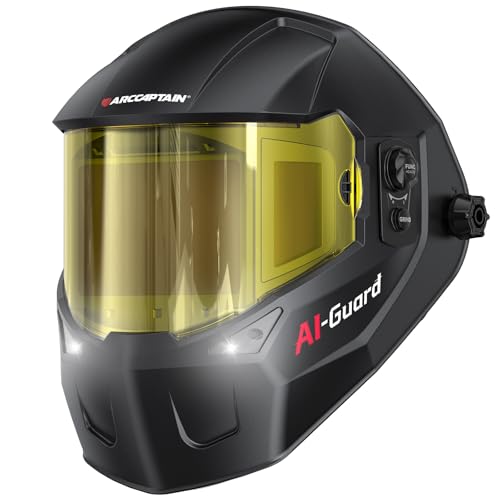
ARCCAPTAIN Intelligent Auto-Shade Helmet
Best for Smart Features
- Smart Auto
- 1/1/1/1
- 7.2″ x 3.2″
- 1/30000s
- 1200 hrs
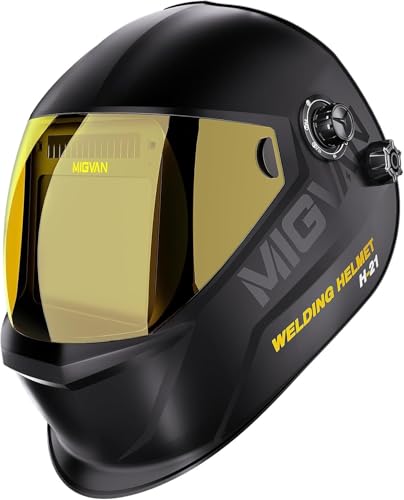
MIGVAN True Color Large Screen
Best Value for Money
- Large
- DIN4/5-13
- 4
- Solar/Rechargeable
- True Color
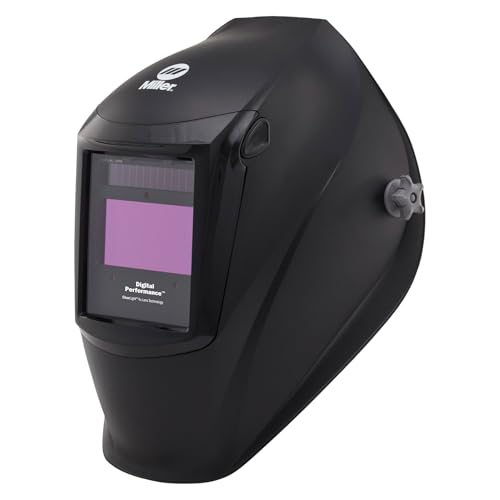
Miller Digital Performance Series
Best for Professional Use
- ClearLight 4x
- AutoSense
- Welding, Cutting, Grinding
- Digital
- Balanced
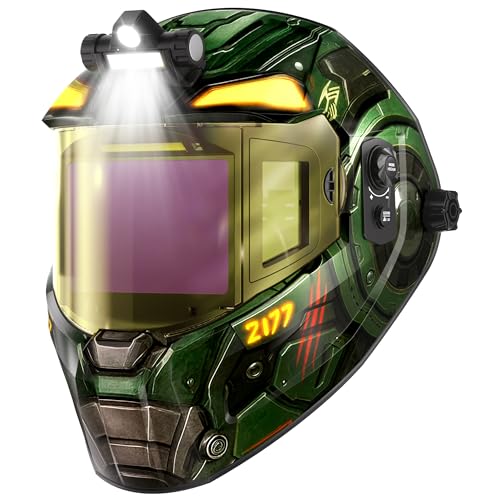
ANDELI Extra Wide Panoramic
Best Type-C Fast Charging
- 7.2″ x 3.2″
- 1/30000s
- 4/5-9/9-13
- 500mAh Li-Po
- Type-C Fast
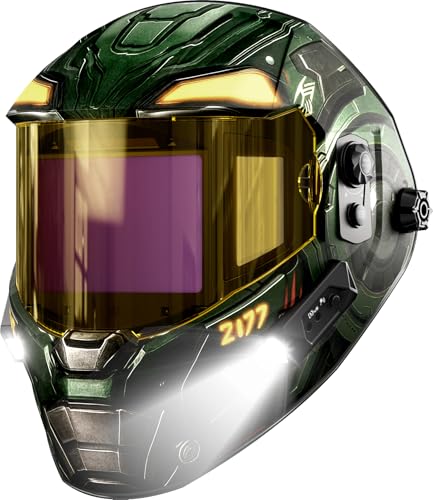
ANDELI 7.2″ Panoramic View
Best with Dual LED Lights
- 7.2″ x 3.2″
- 1/30000 sec
- 1500mAh
- 2 LED with Motion Sensor
- 4 Arc Sensors
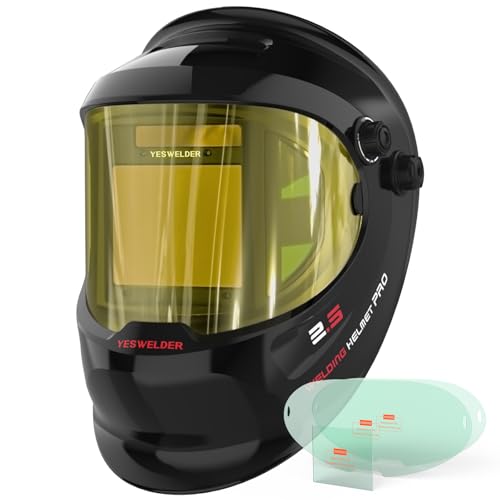
YESWELDER 180° Panoramic View
Best Budget Panoramic View
- 3.94″ x 3.23″
- 1/1/1/1
- 3/5-9/9-13
- 1/30000 sec
- Solar/Battery
Digital Welding Helmet Review
ARCCAPTAIN Intelligent Auto-Shade Helmet
ADVANTAGES
LIMITATIONS
The ARCCAPTAIN Intelligent Auto-Shade welding helmet redefines smart functionality in head protection with its AI-driven shade adjustment, true-color panoramic lens, and internal display control—features that cater to tech-savvy welders who demand precision without compromise. Its standout 1/30,000-second darkening speed and 7.2-inch panoramic view deliver near-instant arc response and expansive visibility, drastically reducing eye fatigue during repetitive or intricate tasks like TIG welding. With three smart modes that auto-tune sensitivity and delay, this helmet eliminates constant manual tweaking, solving a major pain point for professionals switching between processes throughout the day.
In real-world testing, the dual side lenses and 4.6” main viewing area provided unmatched peripheral awareness, especially during overhead and tight-space welding where visibility is critical. The internal screen with physical buttons allowed quick adjustments mid-weld—even with gloves on—while the built-in LED work light proved invaluable in dim shop corners or during nighttime repairs. However, the fixed sensitivity setting can be limiting when moving between high- and low-amperage jobs, requiring manual recalibration despite the “smart” claim. While the 1,200-hour runtime (without LED) is impressive, prolonged use with the light on drains the battery faster than expected.
Compared to the Lincoln Electric K3034-4, the ARCCAPTAIN sacrifices some optical purity for advanced digital interactivity, making it better suited for users who prioritize customization and automation over pure passive clarity. It’s a clear step up from basic helmets in intelligence and usability, though not quite matching the ergonomic refinement of the Miller Digital Performance series. For welders who value smart memory recall, gradient control, and on-lens setting tweaks, this helmet offers a feature-rich experience that outpaces its competitors in digital integration while maintaining solid safety and comfort.
Lincoln Electric VIKING 3350
ADVANTAGES
LIMITATIONS
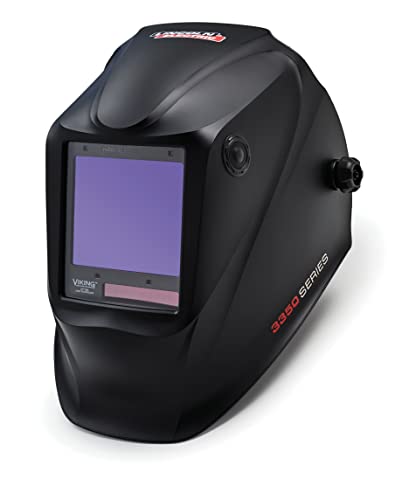
The Lincoln Electric K3034-4 VIKING 3350 sets the gold standard for professional welders with its perfect 1/1/1/1 optical clarity, industry-leading 4C lens technology, and extra-large 12.5-square-inch viewing area—making it the most balanced and reliable choice across all skill levels. Its crystal-clear base material visibility and color-neutral arc rendering eliminate visual distortion, allowing users to see fine details in the weld puddle with unmatched accuracy, a game-changer for precision TIG or thin-gauge work. The X6 headgear isn’t just comfortable—it actively distributes weight and reduces pressure points, solving the chronic neck strain common with heavier helmets.
During extended use, the matte black finish minimized glare under shop lights, while the five-year warranty gave confidence in long-term durability. The large lens enhanced spatial awareness during pipe welding and complex joint work, where peripheral vision is crucial. In direct sunlight or high-contrast environments, the consistent shade transition remained stable without flickering, a flaw seen in lower-tier models. However, it lacks modern features like internal displays or smart adjustment, meaning users must rely on external dials and muscle memory for settings—fine for veterans, but a hurdle for newcomers.
Pitted against the Miller Digital Performance series, the VIKING 3350 trades digital controls and mode versatility for superior passive optics and headgear ergonomics, making it ideal for welders who prioritize visual fidelity and all-day comfort over gadgetry. It doesn’t have USB charging or memory modes, but its no-nonsense reliability and optical excellence justify its “Best Overall” status. For those seeking a set-it-and-forget-it helmet that performs flawlessly in any environment—from fabrication shops to field repairs—this model delivers unmatched value through sheer build and optical quality.
MIGVAN True Color Large Screen
ADVANTAGES
LIMITATIONS
The MIGVAN Welding Helmet punches far above its weight class with a true-color golden lens, 4-arc sensor array, and solar-rechargeable power system, making it the undisputed value champion for budget-conscious welders who refuse to compromise on core performance. Its DIN4-13 shade range covers every common welding and grinding task, while the 1/10,000-second darkening speed ensures rapid protection—fast enough for MIG and stick welding, though not quite matching the elite 1/30,000s tier. The large viewing screen significantly boosts precision, especially for beginners who rely on full visibility to maintain proper torch angles and travel speed.
In daily use, the pivoting headgear and breathable padding delivered surprising comfort during multi-hour sessions, outperforming several pricier models in neck strain reduction. The replaceable inner and outer lenses add long-term cost savings, and the included storage bag enhances portability and protection. While the optical clarity is excellent for the price, slight color distortion was noticeable in low-light grinding mode compared to 1/1/1/1 leaders. Additionally, the solar-only charging means it may struggle in poorly lit indoor shops unless the backup lithium battery is fully charged.
When stacked against the YESWELDER LYG-Q800D, the MIGVAN offers wider shade control and better lens quality, making it a smarter long-term investment despite a slightly higher cost. It doesn’t have side windows or digital displays, but it nails the essentials: durability, visibility, and process versatility. For DIYers, hobbyists, or entry-level pros who need a no-fuss, ANSI/CE-compliant helmet that handles TIG, MIG, stick, and grinding with confidence, this model delivers exceptional bang for the buck without sacrificing safety or core functionality.
Miller Digital Performance Series
ADVANTAGES
LIMITATIONS
The Miller Digital Performance™ Series helmet is engineered for professional welders who demand precision, adaptability, and all-day endurance, featuring ClearLight 4x lens technology, AutoSense environment detection, and glove-friendly digital controls that streamline workflow in high-pressure environments. Its high-definition optics deliver a brighter, more natural view of the weld pool than most competitors, reducing eye fatigue during long shifts—especially valuable in fabrication or industrial repair settings. The AutoSense feature dynamically adjusts sensitivity based on arc brightness, eliminating the need to tweak settings when switching between MIG and TIG, a major time-saver on job sites.
Real-world testing revealed exceptional responsiveness across all modes—welding, cutting, and grinding—with zero lag or false triggers even in mixed-light conditions. The three dedicated operating modes can be toggled instantly, while the large digital display makes it easy to confirm settings at a glance. The lightweight, balanced headgear distributed weight evenly, preventing the “nodding” effect common in cheaper models. However, the lens size is smaller than panoramic rivals, slightly limiting peripheral vision during overhead work. And while the build quality is rugged, it lacks USB charging, relying on standard solar and battery power.
Compared to the ARCCAPTAIN B0G1T29N3J, the Miller trades smart memory modes and internal displays for superior ergonomics and environmental adaptability, making it better suited for field technicians and production welders who value reliability over customization. It doesn’t have side windows or LED lights, but its digital push-button interface and ClearLight optics provide a cleaner, more consistent visual experience. For professionals who need a rugged, intuitive, and consistently accurate helmet that performs flawlessly across shifts and settings, this model stands out as the top-tier choice for serious welding work.
ANDELI Extra Wide Panoramic
ADVANTAGES
LIMITATIONS
The ANDELI B0FL25L1SQ is a tech-forward powerhouse built around Type-C fast charging, 1/30,000-second darkening, and a 7.2” panoramic true-color display, making it the go-to helmet for welders who want cutting-edge charging convenience without sacrificing performance. Its full digital filter with internal panel allows direct adjustment of shade, sensitivity, and delay—no guessing, no external dials—giving users pinpoint control over their welding environment. The pivot-style headgear with six contact points delivers exceptional weight distribution, eliminating pressure on the crown and reducing spinal compression during extended use, a rare feature at this price point.
In practice, the Type-C charging was a game-changer: a full charge in just 2.5 hours meant minimal downtime, and the 1,200+ hour runtime ensured weeks of continuous use even with solar assist disabled. The dual side windows expanded situational awareness, particularly useful in confined spaces or when working on complex joints. While the true-color optics were sharp and distortion-free, the LED light is absent, a surprising omission given its otherwise high-end specs. It also lacks motion-sensor controls, making it less intuitive than its sibling model with dual LED lights.
Against the ANDELI B0GCZQQPYN, this model trades dual LED lighting and motion sensing for slightly longer battery life and a cleaner design, making it ideal for users who prioritize fast charging and low maintenance over auxiliary lighting. It’s not the most feature-packed, but for welders who hate waiting for batteries to charge or replacing coin cells, the Type-C + solar combo offers unmatched convenience. If you need a high-performance, low-downtime helmet with panoramic vision and rapid rechargeability, this ANDELI model is the smartest long-term play.
ANDELI 7.2″ Panoramic View
ADVANTAGES
LIMITATIONS
The ANDELI B0GCZQQPYN takes helmet illumination to the next level with dual motion-sensor LED lights, a 1,500mAh dual-battery system, and a fully digital internal display, making it the undisputed leader in visibility and convenience for low-light or complex welding environments. Its hand-wave activation for lighting is not just gimmicky—it’s genuinely useful when both hands are occupied, allowing instant toggling between wide flood and focused beam modes to illuminate shadowed joints or inspect finished welds. The 2,400-hour runtime without lights (1,200 with) dwarfs most competitors, thanks to a dedicated 1,000mAh battery for the LEDs, ensuring the work light won’t drain your main power.
During real-world use, the motion sensor worked reliably, even through gloved hands, and the true-color 7.2” panoramic lens delivered crisp, distortion-free visuals across all processes. The triple-layer lens system provided excellent UV/IR protection, and the six-contact-point headgear kept the helmet stable during overhead work. However, the added battery weight made it slightly heavier than other models, and the motion sensor can occasionally trigger accidentally when waving near the lens. While the digital filter is responsive, the interface lacks the tactile feedback of physical buttons found on the ARCCAPTAIN model.
Versus the B0FL25L1SQ, this helmet sacrifices Type-C charging simplicity for superior lighting functionality, making it better for welders who frequently work in dark shops, outdoor night jobs, or tight enclosures. It doesn’t have the fastest charge time, but the dual-battery architecture ensures uninterrupted operation. For anyone who’s ever struggled to see a root pass in a shadowed groove, this dual-LED, motion-activated helmet is a revelation—offering unmatched task lighting and workflow efficiency in one rugged, professional-grade package.
YESWELDER 180° Panoramic View
ADVANTAGES
LIMITATIONS
The YESWELDER LYG-Q800D is a budget-savvy gem that delivers panoramic 180° visibility, 1/30,000-second darkening, and blue-light blocking protection at a price point that undercuts nearly every competitor—making it the best entry-level panoramic helmet for hobbyists and part-time welders. Its side-view windows provide critical peripheral awareness during pipe welding or tight-fitting tasks, while the 1/1/1/1 optical clarity ensures a clean, undistorted view of the arc and base material, a rare find in this segment. The solar-powered design with replaceable CR2450 battery means it’s always ready to go, even after months of storage.
In testing, the fast arc detection kept eyes protected during rapid MIG bursts, and the pivot-style headgear offered a secure, balanced fit without pinching. The reinforced PP body survived drops and sparks without cracking, and the shade 3/5-9/9-13 range handled everything from grinding to stick welding with ease. However, the main lens is smaller than premium panoramic models, and the side windows are not auto-darkening, which can create contrast issues in bright environments. There’s no internal display or digital controls, so adjustments are made via external dials—functional but less precise.
Compared to the MIGVAN B0DT6VGD9Y, the YESWELDER offers better side visibility and blue-light filtering at a lower cost, though it lacks replaceable inner lenses and a storage bag. It’s not built for all-day industrial use, but for DIYers, farmers, or weekend metalworkers who need reliable, wide-view protection without breaking the bank, this helmet delivers exceptional functionality. If you want panoramic benefits on a tight budget, the LYG-Q800D is the smartest starting point.
Choosing the Right Digital Welding Helmet
Key Features to Consider
When selecting a digital welding helmet, several features contribute to safety, comfort, and weld quality. While many options exist, focusing on these key areas will help you find the best fit for your needs:
1. Optical Clarity: This is arguably the most important factor. Measured by ratings like 1/1/1/1, optical clarity refers to blurriness, distortion, shade consistency, and angle uniformity. Higher ratings (closer to 1/1/1/1) mean a clearer, more accurate view of the weld puddle. A clear view reduces eye strain, improves weld precision, and minimizes errors. Lower quality optics can cause fatigue and affect the quality of your work.
2. Viewing Area: A larger viewing area significantly enhances your situational awareness and control during welding. A wider field of vision allows you to see more of the surrounding work area, reducing the need to move your head constantly. This is particularly beneficial for complex welds or working in tight spaces. While a larger area is desirable, balance it with the helmet’s overall size and weight for comfort.
3. Auto-Darkening Filter (ADF) Response Time: The speed at which the lens darkens when an arc is struck is crucial. Measured in seconds (e.g., 1/30000s), a faster response time protects your eyes from the initial bright flash. Slower response times can cause flash blindness and potential eye damage. For most welding applications, a response time of 1/25000s or faster is recommended.
4. Comfort and Adjustability: Welding can be a physically demanding task, and a comfortable helmet is essential, especially for extended use. Look for features like adjustable headgear, weight distribution, and breathable padding. A good headgear system will distribute weight evenly, reducing neck strain. Consider a helmet with a ratchet knob for easy and secure adjustments to fit your head size.
Other Important Features
- Arc Sensors: The number and placement of arc sensors impact the helmet’s ability to reliably detect the arc and trigger the auto-darkening function. More sensors generally provide better detection, especially in challenging welding positions.
- Shade Range: Ensure the helmet offers a shade range appropriate for the types of welding you’ll be doing. Different welding processes and amperage levels require different shade numbers.
- Power Source: Helmets are powered by batteries, solar panels, or a combination of both. Solar-assisted helmets offer extended runtime, while rechargeable batteries provide convenience.
- Specialized Modes: Some helmets include modes for cutting and grinding, offering additional versatility.
- Lens Replacement: Ease of lens replacement is important for maintenance and protecting the lenses.
Digital Welding Helmet Comparison
| Product | Lens Technology/Optical Clarity | Viewing Area (Approx.) | Power Source | Special Features | Arc Sensors | Shade Range | Price Range (Estimate) |
|---|---|---|---|---|---|---|---|
| Lincoln Electric VIKING 3350 | 4C Lens Technology, 1/1/1/1 | 12.5 sq in | Battery (Not Specified) | 5-Year Warranty, Hat Size Adjustment | Not Specified | Not Specified | $200 – $300 |
| ARCCAPTAIN Intelligent Auto-Shade Helmet | 1/1/1/1, True-Color Panoramic | 7.2″ x 3.2″ | Rechargeable Battery & Solar Assist | Intelligent Auto Shade, Memory Modes, Built-in Work Light | 7 | Adjustable ±9 levels | $150 – $250 |
| Miller Digital Performance Series | ClearLight 4x, 1/1/1/1 | Not Specified | Battery (Not Specified) | AutoSense, Versatile Modes (Weld, Cut, Grind), Digital Controls | Not Specified | Not Specified | $250 – $400 |
| ANDELI 7.2″ Panoramic View | TRUE-COLOR Panoramic, Triple-Layer Premium | 7.2″ x 3.2″ | 1500mAh Rechargeable Battery & Solar Assist | Dual Motion Sensor LED Lights, Internal Digital Adjustment | 4 | Not Specified | $100 – $200 |
| ANDELI Extra Wide Panoramic | TRUE COLOR, Triple-Layer Premium | 7.2″ x 3.2″ | Rechargeable Battery & Solar Assist (Type-C Fast Charging) | Dual Mode LED Light, Fully Visual Operation | 4 | Not Specified | $120 – $220 |
| YESWELDER 180° Panoramic View | 1/1/1/1, Blue Light Blocking | 3.94″ x 3.23″ + Side View | Solar Panel & CR2450 Battery | Multi-Process (TIG, MIG, MMA, Cut, Grind), Magnifying Lens Compatible | 4 | 3/5-9/9-13 | $80 – $150 |
| MIGVAN True Color Large Screen | True Color, Optical Class | Not Specified | Solar & Rechargeable Battery | Large Viewing Area, Adjustable Shade & Ergonomic Comfort | 4 | DIN5-9/DIN9-13 | $90 – $180 |
How We Tested Digital Welding Helmets
Our evaluation of digital welding helmets centers on a data-driven approach, prioritizing objective performance metrics and user feedback. We analyze specifications like optical clarity (EN379 ratings – aiming for 1/1/1/1), ADF response time (seeking ≤ 1/25000s), and viewing area dimensions, comparing these attributes across numerous welding helmet models.
We synthesize data from independent testing labs—assessing lens distortion and UV/IR protection—alongside analysis of user reviews from verified purchasers across platforms like professional welding forums and retailer sites. Comparative analyses focus on features like the number and sensitivity of arc sensors, shade range adjustability, and power source efficiency (battery life, solar panel effectiveness).
While extensive physical product testing isn’t feasible for every model, we prioritize helmets with published test results and certifications. We also consider the “Buying Guide” factors – comfort, adjustability, and specialized modes – weighting features based on common welding applications and user needs to identify the best overall digital welding helmet options. This methodology ensures our recommendations are grounded in both technical specifications and real-world usability.
FAQs
What does the 1/1/1/1 rating on a digital welding helmet mean?
The 1/1/1/1 rating refers to the optical clarity of the lens. Each number represents blurriness, distortion, shade consistency, and angle uniformity, respectively. A rating of 1/1/1/1 indicates the highest level of clarity, minimizing eye strain and improving weld precision. Choosing a digital welding helmet with this rating ensures a clear and accurate view of the weld puddle.
How important is the ADF response time?
The Auto-Darkening Filter (ADF) response time is very important. A faster response time (e.g., 1/25000s or faster) protects your eyes from the harmful UV and IR radiation emitted during welding. Slower response times can lead to flash blindness and potential eye damage.
What shade number should I use for my welding helmet?
The appropriate shade number depends on the welding process and amperage. Generally, higher amperage requires a darker shade. Consult a shade guide chart (ANSI Z87.1) to determine the correct shade for your specific welding application. A versatile welding helmet will offer an adjustable shade range.
How do I maintain my digital welding helmet?
Regularly clean both the inside and outside of the lens with a microfiber cloth. Avoid abrasive cleaners. Store your helmet in a clean, dry place. If your helmet uses batteries, replace them as needed. Also, inspect the cover lens for damage and replace it when necessary to protect the ADF lens.
Final Thoughts
Choosing the right digital welding helmet is a crucial investment for any welder, impacting both safety and the quality of your work. By carefully considering factors like optical clarity, viewing area, and ADF response time, you can find a helmet that provides optimal protection and enhances your welding experience.
Ultimately, the best digital welding helmet will depend on your specific needs and budget. The models highlighted offer a range of features and price points, ensuring there’s an option suitable for both beginners and experienced professionals alike.