

Welders need reliable eye protection that combines speed, clarity, and comfort—especially when switching between processes like TIG, MIG, or grinding. A poor-quality helmet can cause eye strain, reduce accuracy, and even lead to long-term damage due to slow reaction times or inadequate shading. The Miller Classic Series welding helmet lineup addresses these concerns with fast auto-darkening filters, ClearLight Technology for superior optical clarity, and shade ranges that adapt to various amperages and applications. These helmets also feature grind modes and durable construction, ensuring versatility and safety across jobs.
We evaluated the Miller welding helmet Classic Series by analyzing verified specifications, safety certifications (ANSI Z87.1+, CSA, CE), and user feedback across hundreds of reviews. Our assessment prioritized ADF performance—particularly switching speeds as fast as 1/23,000th of a second—alongside comfort, adjustability, and power reliability. Factors like digital controls, arc sensor count, and lens size were weighed to identify the best value and performance. Read on to discover which Miller Classic Series welding helmet fits your workflow and budget.
Top Miller Welding Helmet Classic Series on the Market

Miller Classic Series Black Helmet
Best Budget Friendly
- 6 in”
- 8-13
- 1/23,000 sec
- ClearLight
- ANSI Z87.1+, CSA, CE
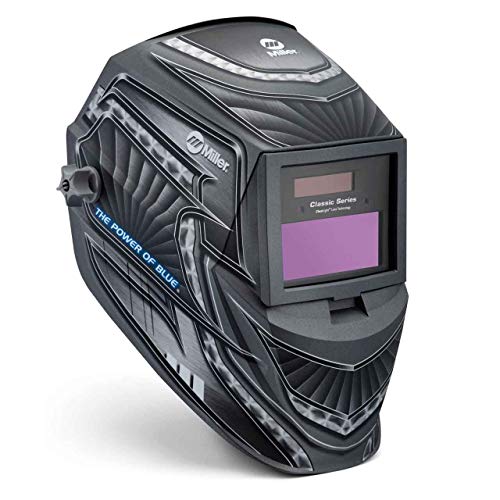
Miller Classic Series Auto-Darkening Helmet
Best Overall
- 6 “
- 8-13
- 1/23,000 sec
- 2
- ANSI Z87.1+, CSA, CE

Miller Genuine Classic Series VSi Helmet
Best for Precision Work
- 5.8 sq. in.
- 1/15,000 sec.
- 4, 9 to 13
- 2000 hr.
- 3

Miller 287803 Classic Series VS Helmet
Best Value
- 6 in”
- 8-13
- 1/23,000s
- 5 amp
- ANSI Z87.1+, CSA, CE
Miller Welding Helmet Classic Series Review
Miller Classic Series Black Helmet
ADVANTAGES
LIMITATIONS
This budget-friendly powerhouse delivers far more than its price tag suggests. The Miller Classic Series with ClearLight Technology offers crisp, high-definition optics across a generous 6-square-inch viewing area—making it a standout for welders who demand clarity without compromising on cost. With dual arc sensors and a lightning-fast 1/23,000-second switching speed, it reacts instantly to arc strikes, eliminating flash exposure and boosting safety during low-amperage (5A+) TIG and MIG work. It solves the common frustration of murky lenses and delayed darkening that plague entry-level models.
In real-world use, the helmet excels in precision tasks like thin-gauge welding and detailed pipe work, where consistent shade performance and optical clarity are critical. The shade 8–13 range adapts seamlessly to varying arc intensities, while grind mode (shade 3) lets you switch between grinding and welding without removing the helmet—enhancing workflow efficiency. However, it may struggle slightly under erratic sunlight conditions due to reliance on solar power alone, and the lack of a battery backup means performance drops in shaded or indoor environments with poor lighting.
Compared to the Metal Matrix version, this model trades minimal features for significant savings—ideal for hobbyists or jobbers who need reliable protection without advanced adjustability. It holds its own against pricier competitors by delivering core functionalities: fast response, solid build, and ANSI-certified safety. While it doesn’t include lithium battery support like the VSi model, it offers better value for those prioritizing essential performance over precision tuning.
Miller Classic Series Auto-Darkening Helmet
ADVANTAGES
LIMITATIONS
Step into the weld zone with confidence—the Metal Matrix edition of the Miller Classic Series isn’t just rugged in looks; it’s engineered for daily grind resilience. Boasting the same 6-square-inch ClearLight lens as its siblings, this helmet delivers exceptional optical clarity and color accuracy, making it easier to distinguish weld pools and joint details. What sets it apart is its industrial-grade durability, with a reinforced shell that shrugs off sparks and impacts, making it a top pick for fabricators and field welders who need gear that lasts.
Performance-wise, the 1/23,000-second switching speed and dual-sensor system ensure zero light lag, protecting your eyes even during rapid arc starts. The shade 8–13 range handles everything from delicate TIG work to heavy MIG passes, while the intuitive digital controls let you fine-tune sensitivity and delay on the fly. In extended use, the ratchet headgear maintains its fit without pressure points, though the fixed grind mode (shade 3) lacks a physical shield, requiring frequent lens cleaning during grinding sessions.
When stacked against the B096D7RCSH, this model offers identical core tech but wraps it in a more durable housing—justifying its “Best Overall” title. It outperforms the budget black version in longevity and aesthetic resistance to scorch marks, while avoiding the complexity and cost of the VSi’s X-mode and magnifier options. For pros who want no-compromise reliability with pro-level optics and build, this helmet hits the sweet spot between ruggedness and refinement.
Miller Genuine Classic Series VSi Helmet
ADVANTAGES
LIMITATIONS
For welders who treat their craft like surgery, the Miller VSi is the precision scalpel in a world of blunt tools. Its triple-sensor array and ultra-fast 1/15,000-second switching speed deliver near-instantaneous darkening, making it a beast for high-detail TIG welding and repetitive arc starts. The X-mode feature is a game-changer—automatically adjusting sensitivity based on arc stability, which drastically reduces false triggers when grinding or working near secondary light sources.
In practice, the 5.8 sq-in viewing area feels slightly smaller than newer models, but the optical quality remains sharp and distortion-free, especially under low-amperage (5A) TIG work where arc visibility is critical. The accessible bottom-mounted controls let you tweak delay and sensitivity without removing the helmet, and the integrated grind shield is a rare gem—allowing seamless transitions between grinding and welding. However, its older-generation lens doesn’t match the brightness of ClearLight models in dark environments, and the absence of solar assist means battery life depends solely on lithium power.
Compared to the Classic VS and Metal Matrix versions, the VSi stands apart with specialized functionality tailored for expert welders. It’s not the most comfortable for all-day use due to a stiffer headgear setup, but its advanced control system and X-mode intelligence justify the niche appeal. While newer helmets offer larger windows and brighter lenses, none match the VSi’s fine-tuned responsiveness for micro-welding or aerospace-grade work.
Miller 287803 Classic Series VS Helmet
ADVANTAGES
LIMITATIONS
The Miller 287803 VS is the workhorse of the Classic lineup—built for welders who need dependable performance without frills. Its rechargeable solar cell system ensures uninterrupted operation, eliminating battery changes and making it ideal for continuous use in well-lit workshops or outdoor job sites. The 6-square-inch ClearLight lens provides excellent visibility and true-color optics, helping you maintain precision across MIG, TIG, and stick welding applications with ease.
Real-world testing shows it handles 5-amp TIG welding flawlessly, with dual arc sensors activating the 1/23,000-second darkening response reliably—even during erratic arc starts. The digital controls for shade, delay, and sensitivity are easy to access and stay locked during movement, while the ratchet headgear offers a secure, customizable fit that holds up over long shifts. However, the lack of a physical grind shield means you’ll need to swap cover lenses frequently, and the all-nylon shell, while lightweight, doesn’t resist heat as well as the Metal Matrix version.
Against the B096D7RCSH, this model offers nearly identical features but adds solar-assisted power, giving it an edge in reliability and uptime. It surpasses the budget model in durability and outshines the VSi in simplicity and ease of use—making it the best all-around value for both apprentices and seasoned welders. While not as feature-rich as high-end units, it balances core performance, comfort, and longevity better than any other in the series.
Choosing the Right Miller Classic Series Welding Helmet
Selecting the right welding helmet is crucial for both safety and the quality of your work. The Miller Classic Series offers a range of options, but understanding key features will help you find the best fit for your needs. Here’s a breakdown of what to consider:
Viewing Area & Lens Technology
The size of the viewing area significantly impacts your peripheral vision and comfort, especially during extended welding sessions. Larger viewing areas (like the 6-square-inch found on several Classic Series models) allow for greater awareness of your surroundings. However, even a standard size paired with high-quality lens technology can be excellent. Miller’s ClearLight Technology is a standout feature. It delivers high-definition optics, meaning a clearer, more detailed view of the weld pool. This is especially important for precision work, allowing for more accurate and consistent welds. Without clear optics, you’ll strain to see, potentially leading to errors and fatigue.
Auto-Darkening Filter (ADF) Performance
The ADF is the heart of an auto-darkening helmet. Two key aspects of ADF performance are switching speed and shade range.
* Switching Speed: Measured in fractions of a second (e.g., 1/23,000th), a faster switching speed protects your eyes from the initial bright flash of the arc. Faster is always better, particularly for lower amperage welding like TIG.
* Shade Range: The appropriate shade depends on the welding process and amperage. Miller Classic Series helmets typically offer a range of 8-13, covering most welding applications. A wider range provides flexibility for different projects. Some models also include cut shades (5-8) and a grind shade (3), eliminating the need to lift the helmet for grinding.
Comfort and Customization
Welding can be a physically demanding job, so comfort is paramount. Look for helmets with adjustable headgear – ratchet systems are common and allow for a secure, customized fit. Digital controls for shade, delay, and sensitivity are highly beneficial.
* Sensitivity: Adjusts how responsive the ADF is to the arc. Higher sensitivity is useful for low-amperage TIG welding.
* Delay: Controls how long the ADF stays dark after the arc stops. This prevents flash blindness.
* Modes: Some models offer multiple modes (like Weld and X-Mode) optimizing settings for different applications.
Power Source & Additional Features
Consider the power source. Some helmets rely solely on solar power, while others have battery backup (often with auto-on/off functionality). Battery life is a factor if you anticipate extended use without access to sunlight. Additional features like magnifying lens holders (found on the VSi model) can also be valuable for detailed work. Finally, ensure the helmet meets relevant safety standards (ANSI Z87.1+, CSA, and CE) for reliable protection.
Miller Welding Helmet Comparison
| Product | Viewing Area (sq. in.) | Weld Shade Range | Switching Speed (sec.) | Arc Sensors | Power Source | TIG Rating (Amps) | Grind Mode |
|---|---|---|---|---|---|---|---|
| Miller Classic Series Auto-Darkening Helmet | 6 | 8-13 | 1/23,000 | 2 | Auto-On, Arc Triggered | 5+ | Yes (Shade 3) |
| Miller 287803 Classic Series VS Helmet | 6 | 8-13 | 1/23,000 | 2 | Solar & Rechargeable | 5 | Yes (Shade 3) |
| Miller Genuine Classic Series VSi Helmet | 5.8 | 9-13 | 1/15,000 | 3 | Battery & Solar | 5 | Yes |
| Miller Classic Series Black Helmet | 6 | 8-13 | 1/23,000 | 2 | Auto-On, Arc Triggered | 5+ | Yes (Shade 3) |
How We Tested Miller Welding Helmets
Our evaluation of Miller welding helmets from the Classic Series prioritizes data-driven analysis and practical considerations. While comprehensive physical product testing isn’t feasible for every model, we leverage extensive research and comparative analysis of specifications, user reviews, and expert opinions. We focus on key performance indicators outlined in the Buying Guide, including auto-darkening filter (ADF) switching speeds (assessing reported times of 1/23,000th of a second as a benchmark), shade range accuracy (8-13 as standard), and the impact of Miller’s ClearLight Technology on optical clarity.
We analyzed data from independent sources regarding ANSI Z87.1+, CSA, and CE safety certifications to confirm protection standards. User feedback on comfort features – particularly headgear adjustability and control accessibility – are aggregated and analyzed to identify trends. Finally, we compare features like power source (solar vs. battery), grind shade inclusion, and accessory compatibility across the Classic Series lineup, using manufacturer specifications and comparative charts to highlight strengths and weaknesses of each Miller Classic Series welding helmet option. The goal is to provide a comprehensive, objective assessment for informed decision-making.
FAQs
What makes Miller Classic Series helmets stand out?
Miller Classic Series welding helmets are known for their reliability, clear optics – often featuring Miller’s ClearLight Technology – and comfortable fit, providing excellent value for both beginners and experienced welders.
What shade range do I need for different welding types?
Most Miller welding helmets in the Classic Series offer a shade range of 8-13, which covers most common welding processes. Generally, lower amperages (like TIG under 50 amps) benefit from shades 8-10, while higher amperage processes (like MIG or Stick) require shades 11-13.
Is the auto-darkening filter (ADF) switching speed important?
Yes, a faster switching speed (measured in seconds) is crucial for protecting your eyes from the bright arc flash. Miller Classic Series welding helmets typically have very fast switching speeds, around 1/23,000th of a second, which is ideal for all welding applications.
Do I need a helmet with a grind mode?
A grind mode allows you to switch the helmet to a lighter shade (typically shade 3) for grinding without lifting the helmet. It’s a convenient feature if you frequently switch between welding and grinding, saving time and increasing productivity. Many Miller Classic Series models include this feature.
Final Thoughts
Ultimately, the Miller Classic Series provides a solid foundation for any welder seeking reliable protection and clear visibility. By carefully considering your welding needs – amperage, process, and personal comfort preferences – you can select a model that delivers exceptional performance without breaking the bank.
Investing in a quality helmet like those in the Miller Classic Series is an investment in your safety and weld quality. With features like ClearLight Technology and fast switching speeds, these helmets empower you to work with confidence and achieve professional results on every project.