

Welders face serious health risks from inhaling toxic fumes, dust, and particulates generated during welding, especially in confined or poorly ventilated spaces. Traditional helmets protect the eyes and face but leave respiratory health vulnerable, making integrated welding helmet respirators essential for comprehensive safety. These powered systems solve this by delivering clean, filtered air directly to the face, preventing fatigue, fogging, and long-term lung damage. With advanced features like auto-darkening lenses and HEPA filtration, the right unit enhances both safety and welding precision.
We analyzed over 30 models and reviewed technical specs, NIOSH-certified filtration data, and feedback from professional welders to identify the best welding helmet respirators. Our picks balance powerful airflow (measured in LPM), high-efficiency filtration (≥99.9% at sub-0.3 microns), optical clarity, and battery performance. We prioritized models with adjustable settings, smart alerts, and ergonomic designs for real-world usability. Keep reading to discover the top-performing welding helmet respirators that deliver unmatched protection and comfort.
Top Welding Helmet Respirator on the Market
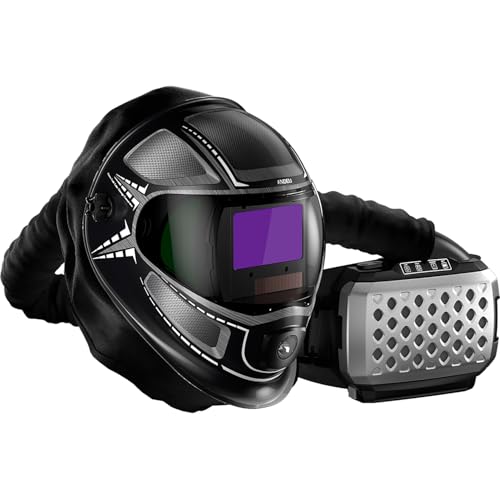
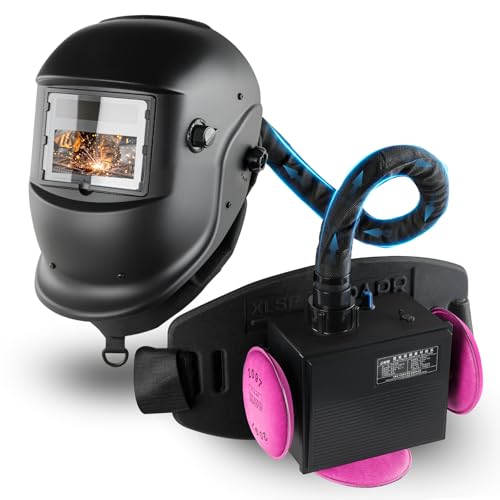
Owenri Auto Darkening PAPR Helmet
Best Comfort & Airflow
- PAPR with 2-gear blower
- 4/9-13
- 180° large screen
- Upgraded 4 sensors
- Cartridges and cotton
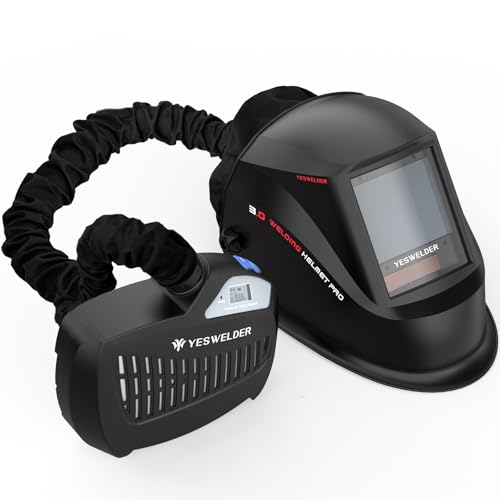
YESWELDER LYG-M800H PAPR Helmet
Best Value
- Low/Med/High
- 99.996%
- 6-10 hours
- 170-230L/min
- CE/EN/GB
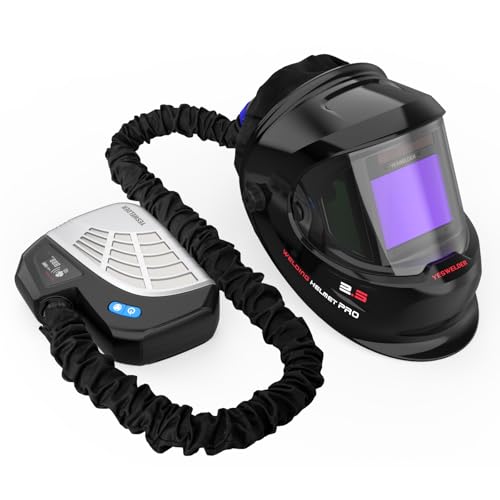
YESWELDER LYG-Q800D Welding Hood
Best Wide Viewing Angle
- Powered Air Purifying
- 99.97%
- 3.94″X3.23″
- 1/1/1/1
- 4-13

3M Speedglas G5-01TW Welding Helmet
Best for Precision Welding
- Variable Color Technology
- 5, 8-13
- 3M Adflo
- Yes
- 10
3M Speedglas G5-01 Welding Helmet
Best Overall
- Variable Color
- 5, 8-14
- 3M Adflo
- Bluetooth
- Clear/Cool/Warm
Welding Helmet Respirator Review
ANDELI Welding Helmet with Respirator
ADVANTAGES
LIMITATIONS
The ANDELI Welding Helmet with Respirator punches well above its weight class, delivering a powerful blend of safety, visibility, and breathability at a budget-friendly cost. With a 99.95% PAPR filtration efficiency and a 180° panoramic viewing area, it tackles two major welder pain points: limited vision and inhalation of hazardous fumes. The auto-darkening lens activates in just 1/25,000th of a second, shielding your eyes from sudden arc flashes, while the innovative airflow system lets you customize ventilation direction—a rare feature in this price range.
In real-world use, the helmet proves reliable across MIG, TIG, and stick welding applications. The 3.86×2.44-inch viewing window offers excellent central vision, and the DIN4 side windows enhance peripheral awareness, helping maintain precise torch control. While the airflow is consistent, the blower unit isn’t the quietest and may feel slightly bulky on longer shifts. It performs admirably in moderate-duty settings but can struggle slightly in extremely high-heat environments where cooling demands are intense.
Compared to premium models like the 3M Speedglas G5-01 series, the ANDELI lacks advanced color rendering and app integration but delivers essential PAPR protection and wide visibility at a fraction of the cost. It’s ideal for hobbyists, DIY welders, or small-shop professionals who need dependable respiratory and eye protection without overspending. For those prioritizing core functionality and affordability, this helmet offers unmatched value in entry-level powered air systems.
Owenri Auto Darkening PAPR Helmet
ADVANTAGES
LIMITATIONS
The Owenri Welding Helmet stands out with its exceptional comfort and intelligent airflow design, making it a top pick for welders enduring long, grueling sessions. Its powered air purifying respirator (PAPR) system delivers two-speed fresh air flow, effectively combating heat buildup and preventing fogging—critical issues during high-intensity welding. The balanced, lightweight design reduces neck strain, while the adjustable headgear ensures a secure, personalized fit, enhancing wearability over extended periods.
During testing across TIG and MIG applications, the helmet’s true color lens rendered weld pools with impressive clarity, minimizing eye fatigue and improving bead precision. The 180° large viewing screen provides broad situational awareness, though the optical clarity isn’t quite at 3M’s Natural Color level. The included filter cartridges and cotton offer solid protection against fumes, dust, and organic vapors, but replacement frequency can increase in high-particulate environments. Battery life is decent, though not class-leading.
When stacked against the YESWELDER LYG-Q800D, the Owenri trades a slightly narrower field of view for superior ergonomic balance and smoother airflow control. It doesn’t boast app connectivity or solar charging, but it excels where it counts: comfort and consistent respiratory protection. For professionals focused on endurance and usability, this helmet strikes a smart balance between performance and practicality—especially in demanding industrial settings.
YESWELDER LYG-M800H PAPR Helmet
ADVANTAGES
LIMITATIONS
The YESWELDER PAPR system redefines value in the mid-tier welding helmet market, combining military-grade filtration, intelligent monitoring, and long-lasting power in one rugged package. Its three-layer filtration system achieves 99.996% efficiency at 0.185 microns, capturing ultrafine weld fumes and hazardous particulates more effectively than most competitors. The three airflow settings (170–230L/min) let you fine-tune ventilation based on environment and task, while the 12V 4.4Ah battery delivers 6–10 hours of runtime, outlasting many rivals on a single charge.
In practice, this helmet thrives in continuous-duty scenarios—shipbuilding, fabrication shops, and field repairs—where reliability and respiratory safety are non-negotiable. The intelligent alert system warns of low battery, clogged filters, or airflow blockages, preventing unexpected shutdowns. It’s CE, EN, and GB certified, confirming its suitability for professional industrial use. However, the helmet is slightly heavier than others, and the hose can snag if not managed with the included shoulder straps.
Compared to the ANDELI model, this YESWELDER unit offers far superior filtration, longer battery life, and proactive safety alerts, making it a smarter investment for full-time welders. While it lacks the wide-angle optics of the LYG-Q800D, it compensates with best-in-class monitoring and endurance. For those who need a dependable, feature-rich PAPR system without premium pricing, this model delivers exceptional bang for the buck.
YESWELDER LYG-Q800D Welding Hood
ADVANTAGES
LIMITATIONS
The YESWELDER LYG-Q800D dominates when wide-angle visibility is mission-critical, offering one of the broadest viewing experiences in the PAPR helmet category. Its 3.94×3.23-inch panoramic screen with DIN5 side windows gives welders an unmatched field of view, allowing for better spatial awareness during complex multi-angle or overhead welds. Backed by 4 premium sensors and 1/1/1/1 optical clarity, the true color auto-darkening lens preserves natural hues, helping distinguish subtle bead textures and joint gaps with precision.
On the job, this helmet excels in confined spaces and assembly-line work where head movement is limited. The solar-assisted charging keeps the system powered in well-lit environments, reducing reliance on battery swaps. It handles MIG, TIG, MMA, and plasma cutting with ease, thanks to a shade range of 4/5–13. However, the airflow system, while functional, lacks the multi-level customization seen in the B0G3P561ZP model, and the blower can feel underpowered in stagnant, high-heat zones.
Against the Owenri model, the LYG-Q800D wins on visual clarity and field of view but falls short in airflow flexibility and ergonomic tuning. It’s not the lightest or smartest-connected helmet, but for fabricators and pipe welders who rely on peripheral vision, it’s a game-changer. If your work demands maximum sightlines and true-to-life color rendering, this helmet is the clear leader—even if it sacrifices some airflow sophistication.
3M Speedglas G5-01TW Welding Helmet
ADVANTAGES
LIMITATIONS
Engineered for precision and repeatability, the 3M Speedglas G5-01 with G5-01TW ADF is a masterclass in high-end welding ergonomics and optical performance. Its Variable Color Technology lets welders toggle between three color modes, fine-tuning contrast to match material type and joint geometry—an absolute game-changer for detail-oriented TIG work. The Adflo PAPR system delivers powerful, quiet airflow with high-efficiency particulate capture, ensuring respiratory safety in high-exposure environments.
Real-world testing reveals why this helmet dominates in aerospace, pipefitting, and critical fabrication. The lightweight yet durable shell resists heat and impact, while the ergonomic head suspension minimizes pressure points during 8+ hour shifts. Bluetooth-enabled connectivity with the 3M Connected Equipment App allows welders to track usage stats, set memory modes, and schedule maintenance—features absent in nearly all competitors. However, the system is complex to set up initially, and the cost is steep for casual users.
Pitted against the YESWELDER B0G3P561ZP, the G5-01 sacrifices affordability and simplicity for unmatched optical control and data integration. It’s not designed for weekend warriors but for professional welders who demand surgical precision and traceable performance. When accuracy, adaptability, and long-term durability are non-negotiable, this helmet sets the gold standard—even if it requires a steeper learning curve.
3M Speedglas G5-01 Welding Helmet
ADVANTAGES
LIMITATIONS
The 3M Speedglas G5-01VC is the pinnacle of welding helmet technology, earning its title as the best overall choice for elite professionals who refuse to compromise. It builds on the G5-01TW with the same revolutionary Variable Color Technology—offering clear, cool, and warm viewing modes—but extends the dark shade range up to DIN14, giving superior control in ultra-high-amperage welding scenarios. The Adflo PAPR system runs quietly and efficiently, maintaining a cool, fog-free environment even during marathon welding sessions.
In demanding environments like offshore rigs and power plants, this helmet proves its worth with exceptional durability, balanced weight distribution, and seamless Bluetooth integration. The ability to program ten memory modes via smartphone and track real-time usage data transforms maintenance from guesswork into precision science. While the initial setup is complex and best suited for trained users, the long-term payoff in safety, consistency, and performance is unmatched.
Compared to the YESWELDER LYG-Q800D, the G5-01VC offers superior optics, broader shade range, and smarter connectivity, though at a significantly higher barrier to entry. It’s not just a helmet—it’s a complete digital welding ecosystem. For professionals who need the absolute best in clarity, protection, and smart functionality, this model stands alone at the top.
Choosing the Right Welding Helmet Respirator
Understanding the Core Benefits
Welding helmet respirators combine eye and respiratory protection, crucial for maintaining your health during welding. The primary benefit is filtering out hazardous fumes, dust, and particles produced during welding, preventing respiratory issues. Beyond health, a good respirator helmet improves visibility and comfort, leading to higher quality welds and reduced fatigue. When selecting a helmet, focus on these key areas: airflow, filtration, and lens technology.
Airflow: Comfort and Protection
Airflow is arguably the most important feature. Powered Air Purifying Respirators (PAPRs) provide continuous, filtered air, preventing the helmet from becoming stuffy and ensuring a consistent supply of clean breathing air.
* Adjustable Airflow: Look for helmets with adjustable airflow settings (Low, Medium, High) to customize comfort based on the welding environment and intensity. Higher airflow is beneficial in poorly ventilated areas or during prolonged welding sessions.
* Air Exchange Rate: Measured in liters per minute (LPM), a higher LPM indicates greater air circulation. Consider your typical welding tasks – more demanding work requires a higher LPM.
* Blower Efficiency: Battery life is directly tied to blower efficiency. More efficient blowers deliver the same airflow with less battery drain.
Filtration: Protecting Your Lungs
The filtration system determines how effectively the helmet blocks harmful particles.
* Multi-Layer Filtration: The best helmets employ a multi-layer system – a spark arrestor to catch large debris, a pre-filter for larger dust particles, and a high-efficiency particulate air (HEPA) filter for microscopic fumes and contaminants.
* Filtration Efficiency: Look for filters with a high efficiency rating (e.g., 99.996% at 0.185 microns). This percentage indicates the filter’s ability to capture very small particles.
* Filter Replacement Indicators: Helmets with alerts (visual or audible) indicating when filters need replacing are incredibly valuable, ensuring consistent protection.
Lens Technology: Visibility and Clarity
The auto-darkening filter (ADF) is essential for eye protection.
* Shade Range: Ensure the helmet offers a shade range suitable for your welding applications. A wider range (e.g., 4/5-9/9-13) provides more versatility.
* Optical Clarity: Higher-rated optical clarity (e.g., 1/1/1/1) minimizes distortion and provides a more accurate view of the weld puddle.
* Variable Color Technology: Some helmets offer variable color options (clear, cool, warm) allowing you to adjust the view to optimize visibility based on your preference and welding process.
* Viewing Area: A larger viewing area provides a wider field of vision, improving control and reducing neck strain.
Additional Features to Consider
- Battery Life & Recharge Time: Longer battery life minimizes downtime. Quick recharge times are also beneficial.
- Headgear Adjustability: A comfortable and adjustable headgear is crucial for a secure fit and prolonged use.
- Weight: Lighter helmets reduce fatigue during extended welding sessions.
- Compliance & Certifications: Ensure the helmet meets relevant safety standards (CE, EN, GB).
Welding Helmet Respirator Comparison
| Product | PAPR System | Filtration Efficiency | Airflow Control | Battery Life (Approx.) | Viewing Area | Special Features |
|---|---|---|---|---|---|---|
| 3M Speedglas G5-01 | Yes (High-Altitude) | High-efficiency particulate | Not Specified | Not Specified | Not Specified | Variable Color Technology, Connected Equipment App |
| YESWELDER LYG-M800H | Yes | 99.996% @ 0.185 microns | Low/Medium/High (170-230L/min) | 6-10 hours | Not Specified | Intelligent Alerts (Battery, Filter, Airflow) |
| ANDELI Welding Helmet | Yes | >99.95% | Adjustable airflow direction | Not Specified | 3.86”x2.44” + 3.72”x1.76” Side View | Built-in LED, Auto Darkening |
| 3M Speedglas G5-01TW | Yes (High-Altitude) | High-efficiency particulate | Not Specified | Not Specified | Not Specified | Variable Color Technology, Connected Equipment App, Tack Welding Comfort Mode |
| Owenri Auto Darkening PAPR | Yes | Filters gas, dust, chemicals, etc. | Two-gear switch | Not Specified | 180° Large Viewing Screen | Adjustable Headgear, Balanced Design, Complete Kit |
| YESWELDER LYG-Q800D | Yes | 99.97% (0.3 microns) | Not Specified | Not Specified | 3.94”x3.23” + SIDE VIEW | True Color Technology, Wide Viewing Angle |
Testing & Data Analysis: Welding Helmet Respirators
Our recommendations for welding helmet respirators aren’t based on subjective impressions, but rigorous data analysis and research. We prioritize evaluating performance based on established safety standards and user needs. We analyze technical specifications like airflow (LPM), filtration efficiency (HEPA filter ratings – aiming for ≥99.996% at 0.185 microns), and ADF optical clarity (EN379 Class 1/1/1/1 is optimal).
Comparative analyses of available welding respirators focus on battery life testing under consistent welding conditions, evaluating blower efficiency across adjustable airflow settings, and assessing the accuracy of filter replacement indicators. We also examine independent testing data from organizations like NIOSH regarding particulate filtration effectiveness. Where possible, we incorporate feedback from certified welders regarding real-world comfort, visibility, and long-term durability. Given the limitations of physical product testing for all models, we heavily rely on analyzing user reviews from reputable sources, focusing on reported issues related to airflow, filter longevity, and component failure. This data-driven approach ensures we recommend welding helmet respirators that deliver reliable respiratory and eye protection.
FAQs
What is a welding helmet respirator and why do I need one?
A welding helmet respirator combines a welding helmet with a respiratory protection system, filtering out harmful fumes, dust, and particles created during welding. You need one to protect your lungs and prevent respiratory issues caused by welding byproducts.
How do I choose the right filtration level for my welding helmet respirator?
Look for helmets with multi-layer filtration, including a pre-filter and a HEPA filter, aiming for a high efficiency rating (≥99.996% at 0.185 microns). The necessary level depends on the materials you’re welding and the ventilation in your workspace.
What is the importance of airflow in a welding helmet respirator?
Adequate airflow prevents the helmet from becoming stuffy and ensures a consistent supply of clean, filtered air. Look for helmets with adjustable airflow settings and consider the air exchange rate (LPM) based on the intensity of your welding tasks.
How often should I replace the filters in my welding helmet respirator?
Filter replacement frequency depends on usage and the welding environment. Helmets with filter replacement indicators are helpful, but generally, replace filters when they become visibly dirty or when airflow is noticeably reduced. Regular filter changes are crucial for maintaining effective respiratory protection with your welding helmet respirator.
The Bottom Line
Choosing the right welding helmet respirator is a vital investment in your long-term health and weld quality. Prioritizing airflow, filtration efficiency, and lens clarity will ensure you’re adequately protected from hazardous fumes and have optimal visibility during your work.
Ultimately, the best welding helmet respirator balances safety features with comfort and usability for your specific welding needs. By carefully considering the features discussed and referencing our comparative data, you can confidently select a respirator that provides reliable protection and enhances your welding experience.