
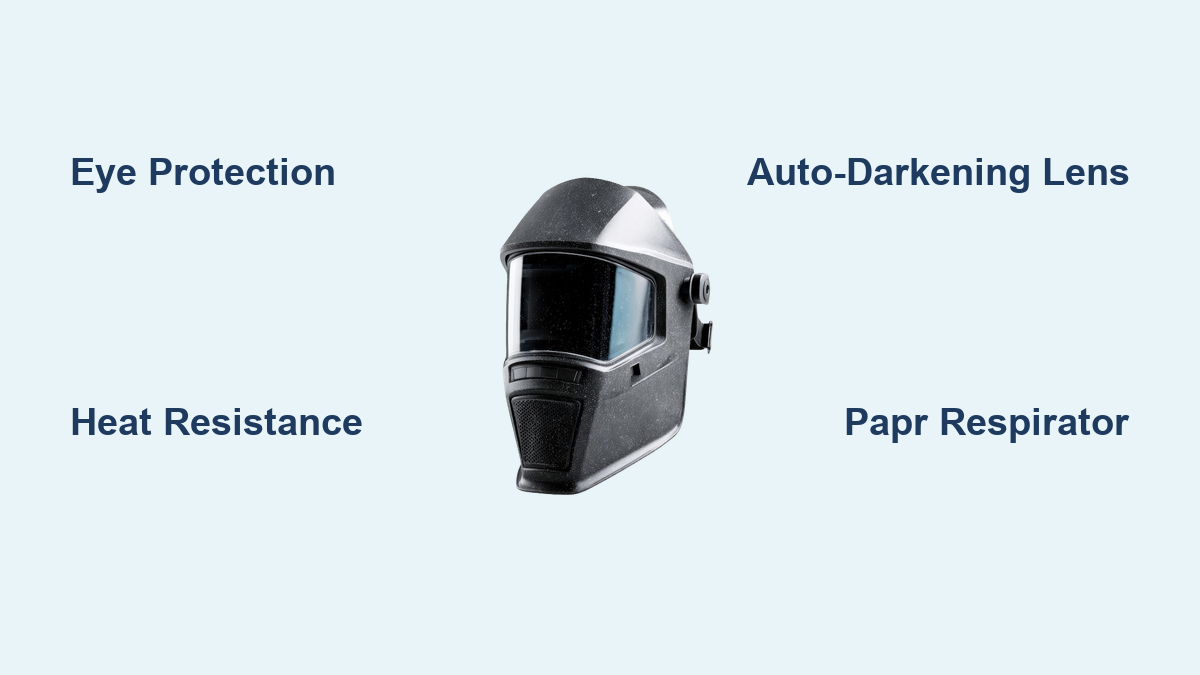
If you’ve ever struck an arc, you know the intense flash and heat that erupt from the weld point—so bright it can burn your eyes in seconds. Without protection, that light causes photokeratitis, a painful condition like sunburn on your corneas. A welding hood is your essential shield against this and other hazards. It’s not just a helmet; it’s a specialized piece of personal protective equipment (PPE) designed to protect your eyes, face, neck, and, in advanced models, lungs.
Used across MIG, TIG, stick, and flux-cored welding, a welding hood blocks ultraviolet (UV) and infrared (IR) radiation, sparks, molten spatter, flying debris, and toxic fumes. While often called a welding helmet, a welding hood typically refers to models with passive lenses or manual flip-up designs, whereas helmets usually feature auto-darkening technology. But regardless of terminology, its mission is the same: keep you safe without sacrificing visibility or comfort.
In this guide, you’ll learn exactly what a welding hood does, the different types available, how lens technology works, and how to build a high-performance setup—without overspending.
Core Protection Functions
A welding hood does far more than block bright light. It’s engineered to protect you from multiple dangers at once.
Eye and Face Defense
The welding arc emits UV and IR radiation at levels far beyond what human eyes can tolerate. Even brief exposure can cause arc eye, a painful condition that feels like sand in your eyes. A welding hood prevents this by using a shaded lens, typically rated between Shade 10 and 13, depending on the welding process and amperage.
It also acts as a physical barrier against hot metal spatter and flying debris, especially during grinding or chipping. The front of the hood is made from heat-resistant thermoplastics, fiberglass composites, or treated leather, all designed to withstand direct spark contact and resist warping.
Heat and Impact Resistance
Welding arcs exceed 10,000°F, and droplets of molten metal can strike unpredictably. A quality hood resists both direct heat exposure and radiant heat buildup, preventing cracks or deformation over time.
Most hoods meet ANSI Z87.1 standards, which test for:
– High-velocity and high-mass impact resistance
– UV/IR filtration
– Optical clarity
This means the hood won’t shatter if struck and maintains clear vision under stress—critical for safety and precision.
Respiratory Protection (PAPR Models)
Not all hoods protect your lungs—but PAPR (Powered Air-Purifying Respirator) models do. These fully enclose the head and connect to a battery-powered blower that pulls air through HEPA or P100 filters, delivering clean, positive-pressure airflow.
PAPR hoods are essential when welding:
– Galvanized steel (zinc fumes)
– Stainless steel (hexavalent chromium)
– Coated or painted metals (manganese oxide)
In confined spaces or long shifts, they significantly reduce inhalation risks—making them a must-have in industrial and hazardous environments.
Types of Welding Hoods
Different jobs demand different protection. Here are the five main types of welding hoods.
Pipeliner Hoods
Built for tough field conditions, pipeliner hoods are the go-to for outdoor and high-heat welding. Traditionally made with leather exteriors and an eggshell-white finish, they reflect heat and resist burns.
Key features:
– Flip-up lens mechanism
– Durable, customizable design
– Often chopped (top and bottom trimmed) to reduce weight and improve balance
✅ Custom leather hoods can still meet ANSI Z87.1 if labeled—check for certification.
⚠️ Some employers ban modified gear—always verify site safety rules.
Slim-Fit Hoods
Designed for comfort during long shifts, slim-fit hoods have a low-profile shape that reduces neck strain. Their flat-sitting flip-up mechanism allows quick inspection without lifting the entire hood.
Benefits include:
– Lightweight construction
– Balanced weight distribution
– Ergonomic molds for extended wear
Popular among professionals, these hoods improve precision and reduce fatigue.
Pancake Hoods
Named for their large circular front, pancake hoods use balsa wood—a soft, lightweight material that molds to your face over time.
Advantages:
– Open sides for better hearing
– Great for team communication
– Customizable fit after “break-in”
But balsa wood has drawbacks:
– Degrades with moisture and heat
– Not suitable for grinding
– Requires frequent replacement
Modern upgrades include ski-goggle-style backs and slim-fit adapters, offering better durability and function.
Pocket Hoods
Need to weld in a tight corner or overhead pipe? Pocket hoods are your compact solution. Made from foldable, spark-resistant leather, they fit where full-sized hoods can’t.
Key traits:
– Small, foldable design
– Flip-up adapter for quick checks
– Ideal for mobile welders and tight-space repairs
Limitation: The flip-up mechanism may lack clearance in confined areas, making it hard to use.
PAPR Hoods
For maximum protection, PAPR hoods combine eye and respiratory safety. They enclose the head completely and connect to a blower unit (worn on belt or backpack) that delivers filtered air.
Use when:
– Welding in confined spaces
– Handling high-fume materials
– Working 8+ hour shifts
Trade-offs:
– Heavier and top-heavy
– Requires battery and filter maintenance
– Higher initial cost
✅ Essential for compliance in industrial or hazardous environments.
Lens Technology: Your Vision’s Lifeline
The lens is the most critical part of any welding hood. It determines safety, clarity, and efficiency.
Passive Lenses
Fixed-shade lenses don’t change darkness. You must lift the hood to inspect your work.
Common shades:
– Shade 10: Light welding and grinding
– Shade 12–13: Heavy-duty MIG/stick welding
Pros:
– No batteries or electronics
– Durable and low-cost
Cons:
– Risk of premature lifting (eye exposure)
– Slower workflow
Lens Color Options
- Levi Blue: Enhances red/green contrast—great for inspecting weld beads
- Blood Orange: High contrast but reduces visibility
- Black Dalia / AO Classic: Balanced clarity—top choice for reliability
Auto-Darkening Lenses
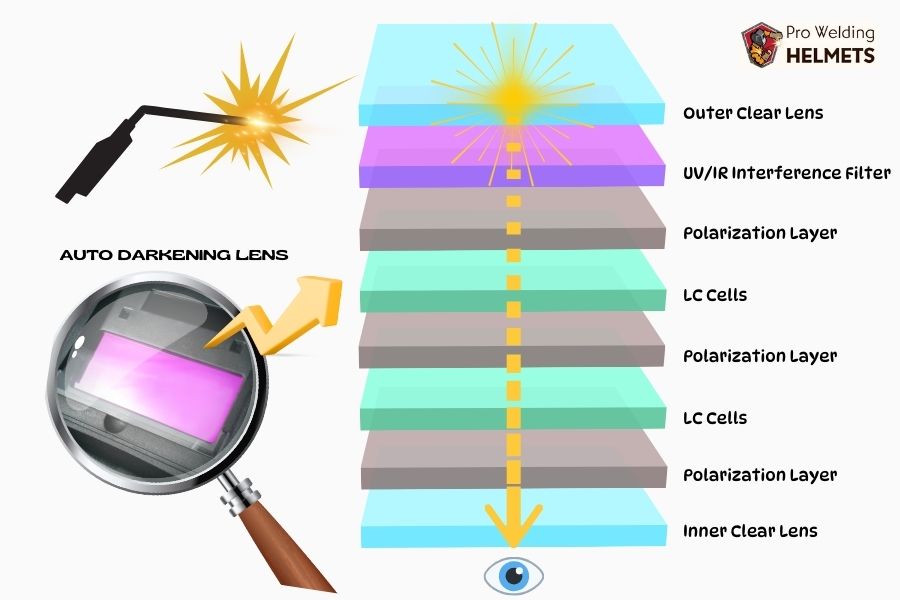
These lenses darken instantly when an arc is struck—typically in 1/20,000th of a second (0.05 ms).
How they work:
– Default state: Light shade (3–5) for clear pre-weld view
– Arc detection: Sensors trigger darkening to preset shade (9–13)
Key features to compare:
Circuitry Quality
- Basic: Prone to failure in dust/humidity
- Industrial-grade: Encapsulated in resin—rinsable, durable, long-lasting
Sensor Placement
- More sensors = better arc detection in complex lighting
- Side and front sensors improve reliability
Battery Type
- Solar-assisted: Charges from ambient light
- Lithium: Resists heat, lasts longer than alkaline
💡 A $400 lens isn’t just more expensive—it’s more reliable, faster, and safer than a $30 model.
Advanced Lens Features
- Sensitivity control: Adjust how easily the lens triggers
- Delay setting: Keeps lens dark briefly after arc stops
- Grind mode: Switches to lighter shade without removing hood
- Multi-process mode: Auto-senses TIG, MIG, stick, plasma
- Top-mounted LED: Illuminates weld zone without glare
❗ In high-production or tight-space welding, a cheap lens may fail when you need it most.
Headgear: Comfort Meets Safety
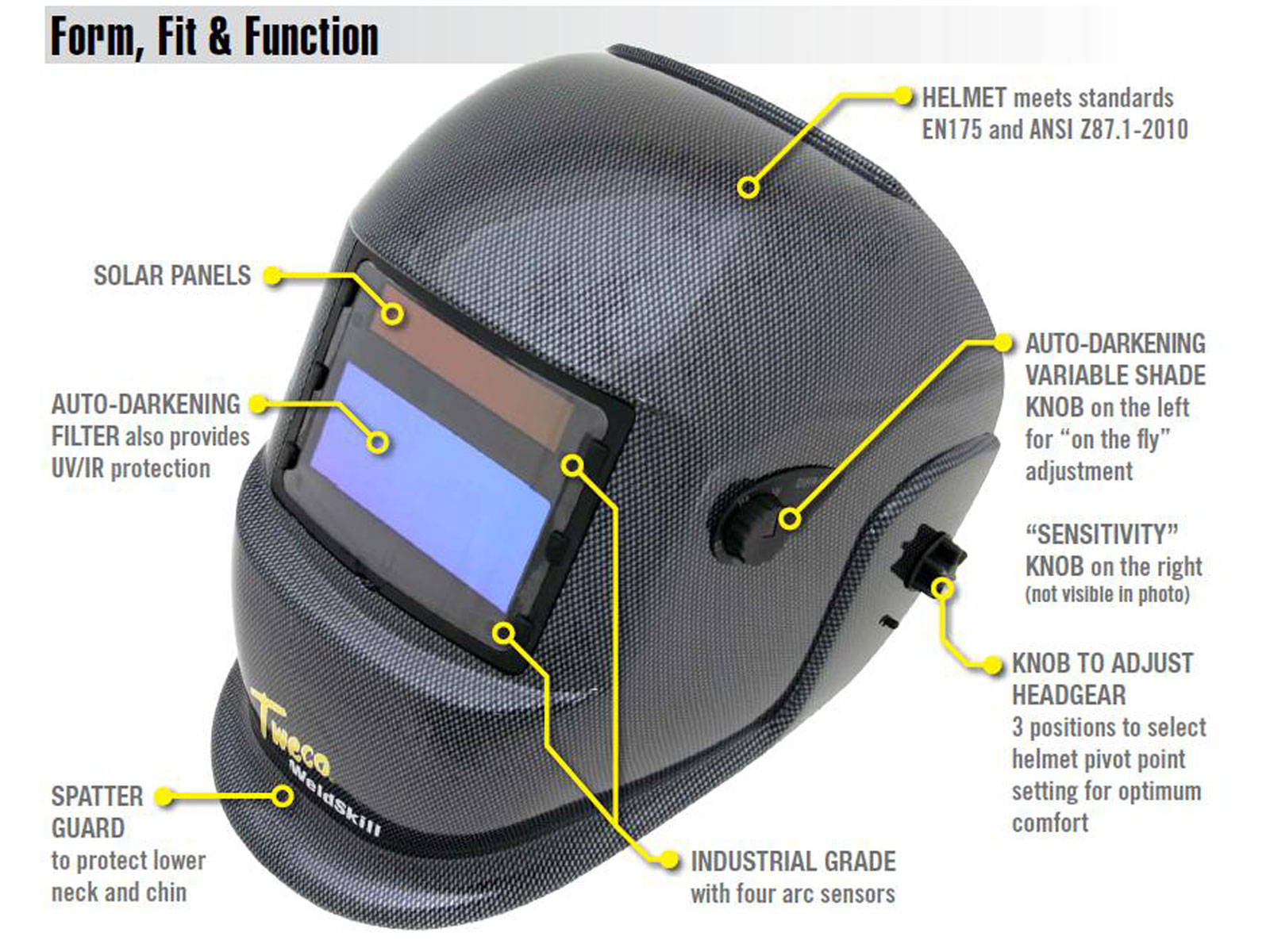
Even the best lens won’t help if the hood slips, pinches, or breaks. Headgear determines fit, stability, and long-term wearability.
Common Budget Headgear Flaws
- Elastic straps: Stretch and degrade under heat/UV
- Plastic ratchets: Strip or crack under pressure
- Single-point adjustment: Limits fit customization
These flaws lead to:
– Poor balance
– Neck strain
– Frequent readjustment
Upgraded Headgear Solutions
- Aluminum fasteners: Don’t strip, hold tension
- Multi-point adjustment: Front/back, top/bottom, side pressure tuning
- Internal micro-adjustments: Fine-tune without removing hood
- Solid metal ratchets: Withstand heavy use and heat
✅ If your headgear feels flimsy—replace it. It’s the foundation of comfort and safety.
Key Features That Improve Performance
Beyond protection, modern hoods offer features that boost efficiency and comfort.
Flip-Up Mechanism
Allows quick work inspection without removing the hood. Reduces neck strain and speeds up workflow—especially in multi-pass welding.
Available on:
– Pipeliner hoods (after upgrade)
– Slim-fit and pancake models
– Pocket hoods (select models)
Ventilation Options
Some hoods include:
– Passive vents: Let heat escape
– Active cooling fans: Reduce sweat and fog in hot environments
Improves comfort during long-duration welding.
Bluetooth Connectivity
High-end models offer:
– Memory for user settings (shade, delay)
– Real-time arc tracking
– App-based adjustments
Useful for precision welding and training environments.
Viewing Area Size
Larger lenses = better peripheral vision and spatial awareness.
Look for:
– Wide-view windows
– Low-profile borders
– Top-mounted design (avoids interference with head movement)
Avoid hoods with narrow sightlines—especially for overhead or confined work.
Price vs. Value: What’s Worth It?
You don’t need to spend $500 to stay safe—but knowing where to invest matters.
| Type | Price | Key Features |
|---|---|---|
| Budget Hoods | $20–$100 | Fixed shade, basic headgear, no flip-up |
| Mid-Range Hoods | $100–$300 | Auto-darkening lens, flip-up, better headgear |
| High-End Custom | $300–$500+ | Metal hardware, industrial lens, full customization |
🔥 Smart Strategy: Buy a $20–$30 hood, then upgrade the lens and headgear. This delivers 90% of pro performance at half the cost.
Custom hoods from makers like Outlaw Leather (Texas) offer:
– ANSI Z87.1 compliance
– Precision molding
– Chop, flip-up, and leather upgrades
Safety Standards and Compliance
Never assume a hood is safe—verify certification.
Key Standards
- ANSI Z87.1 (USA): Covers impact, UV/IR protection, optical clarity
- OSHA: Requires proper PPE—non-compliance risks fines
- CSA Z94.3 (Canada): Industrial head protection standard
- EN 379 (EU): Auto-darkening filter performance
✅ Check labels inside the hood or on the lens cartridge. No label? No protection.
Final Recommendations
A welding hood is more than gear—it’s a safety system that protects your vision, skin, and lungs. Whether you’re a DIY hobbyist or professional welder, choosing the right hood affects your health, productivity, and compliance.
✅ Minimum Setup: Budget hood + auto-darkening lens + metal headgear
🔥 Pro Setup: Custom slim-fit or pipeliner + industrial lens + PAPR (if needed)
Your eyes don’t regenerate. Your lungs don’t filter metal fumes. Invest in protection that works—before the arc strikes.