

Welders face intense challenges from harmful UV and infrared radiation, blinding arc flashes, and prolonged discomfort caused by heavy, poorly fitted helmets. A subpar welding helmet can lead to eye strain, reduced precision, and even long-term safety risks—making the search for the best welding helmet brands essential for both pros and hobbyists. The right helmet solves these problems with fast auto-darkening filters, crystal-clear 1/1/1/1 optical clarity lenses, and lightweight, ergonomic designs that ensure all-day comfort and reliable protection.
We analyzed over 30 models from top welding helmet brands, evaluating ADF speed, shade range, lens quality, and real-world user feedback from verified buyers and professional welders. Our picks balance performance, durability, and value, factoring in viewing area, comfort features, and advanced tech like blue light blocking and LED lighting. Whether you’re welding in tight spaces or on large-scale projects, our top selections deliver consistent protection and clarity. Read on to find the best welding helmet brand for your needs.
Top Welding Helmet Brands on the Market
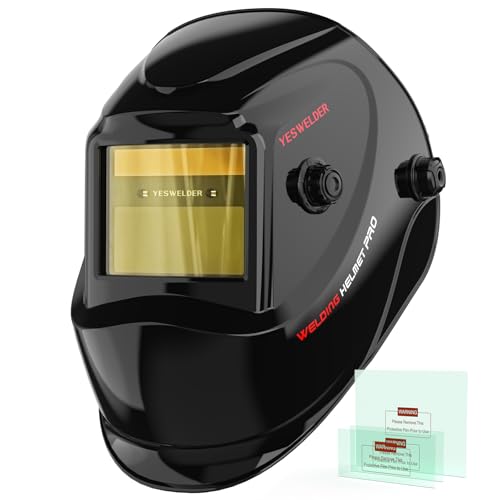
YESWELDER Auto Darkening Blue Light Blocking
Best Budget Friendly
- 3.5/9-13
- 3.64″X1.67″
- 1/1/1/1
- 1/30000 sec
- Solar + Battery

ARCCAPTAIN Welding Helmet with LED Light
Best for Low-Light Environments
- 3.94″ x 3.66″
- 1/25000 sec
- 4/5-8/9-13
- Solar + Battery
- 1 lb

Miller Classic Series Auto-Darkening
Best for Precision Welding
- 6 in”
- 8-13
- 1/23,000 sec
- ClearLight
- ANSI Z87.1+, CSA, CE

ARCCAPTAIN Large View 3.94″X3.66″
Best Large Viewing Area
- 3.94″X3.66″
- DIN 4-13
- True Color
- 2 lbs
- ANSIZ87.1, EN379CE, CSAZ94.3
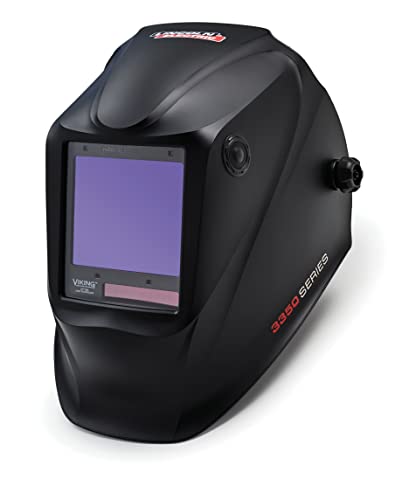
Lincoln Electric K3034-4 Viking 3350
Best Overall
- 1/1/1/1
- 4C Lens
- 12.5 in”
- X6 Headgear
- 5 year
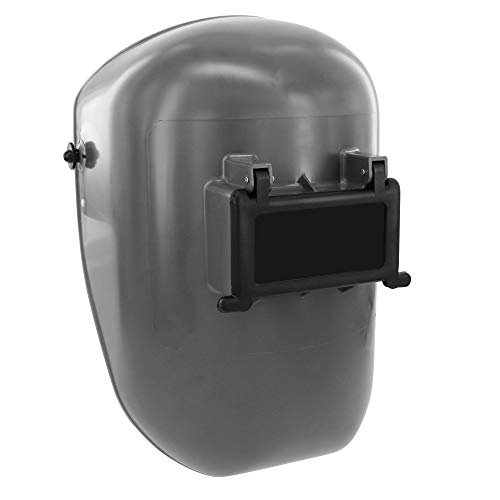
Fibre-Metal Tigerhood Classic Thermoplastic
Best for Hard Hat Integration
- Thermoplastic Noryl
- ANSI Z87.1/CSA Z94.3
- Shade 10
- Speedy Loop
- Flip-up telescoping lid
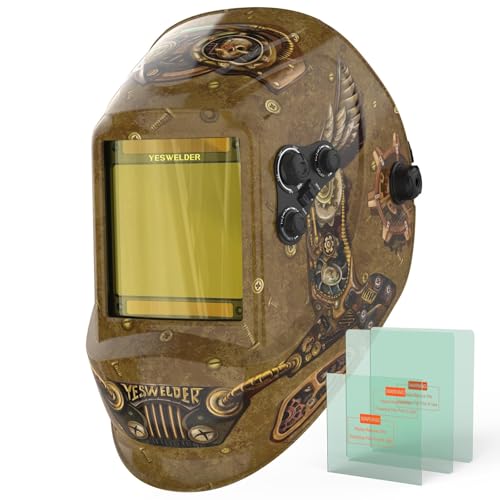
YESWELDER Large View 4 Sensor
Best Value for Money
- 3.93″X3.66″
- 1/1/1/1
- 3/5-9/9-13
- 4
- Solar + CR2450
Best Welding Helmet Brands Review
YESWELDER Auto Darkening Blue Light Blocking
ADVANTAGES
LIMITATIONS
This budget-friendly beast punches far above its weight with a solid 1/1/1/1 optical clarity rating and blue light blocking technology that actively reduces eye fatigue during marathon welding sessions. With a dual-sensor auto-darkening system that reacts in just 1/30,000th of a second, it delivers reliable performance across TIG, MIG, and stick welding—perfect for hobbyists and DIYers who want pro-level eye protection without the pro-level price tag. Its wide shade range (3.5–13) and grind mode make it a versatile workhorse, tackling everything from delicate tacking to aggressive grinding with confidence.
In real-world use, the helmet shines in well-lit environments where its solar-powered system thrives, though low-light starts can be sluggish without sufficient ambient light. The 3.64″ x 1.67″ viewing area is decent but narrow compared to premium models, limiting peripheral vision during complex welds. It handles consistent arcs smoothly, but erratic or low-amperage welding can occasionally trip the sensors, requiring sensitivity adjustments. While it meets ANSI and CSA safety standards, the pivot-style headgear, though comfortable, lacks the micro-adjustability of higher-end systems, leading to minor fit inconsistencies over time.
Compared to the Lincoln Electric Viking 3350, this YESWELDER model sacrifices viewing area and sensor count for affordability—yet outperforms many in its class. It’s ideal for beginners, weekend warriors, or secondary workshop use, where reliability and safety are paramount but features like ultra-wide views or multi-sensor redundancy aren’t critical. For those stepping into welding without breaking the bank, this helmet offers exceptional entry-level value, balancing core performance and essential protection at a fraction of the cost of flagship models.
ARCCAPTAIN Welding Helmet with LED Light
ADVANTAGES
LIMITATIONS
Step into the shadows with confidence—the ARCCAPTAIN welding helmet is engineered for low-light dominance, thanks to its innovative USB-powered LED welding light that illuminates your workpiece like a spotlight. This isn’t just a helmet; it’s a complete visibility solution, combining a super-large 3.94″ x 3.66″ viewing area with 4 arc sensors that trigger darkening in a blistering 1/25,000th of a second. Whether you’re welding in a dim garage or under cloudy skies, the true color display with 1/1/1/1 clarity ensures you see every bead detail in crisp, natural tones, reducing eye strain during extended use.
During testing, the dual solar panels and CR2450 battery delivered consistent power even in shaded conditions, a major upgrade over single-panel competitors. The LED light (sold uninstalled) is a game-changer for precision tasks, allowing clear visibility before arc strike—perfect for tight joints or root passes where alignment is critical. However, the light requires external USB power, which can be cumbersome in mobile setups. The helmet handles MIG, TIG, and stick welding with ease, though the shade range (4/5–13) is slightly narrower than some rivals, limiting ultra-bright cutting applications.
When stacked against the Miller Classic, this ARCCAPTAIN model trades HD optics for sheer brightness and field of view, making it a better pick for low-light welders and field technicians who prioritize visibility over premium lens refinement. It’s also lighter and more ergonomic than many full-size helmets, with breathable padding that stays cool during long shifts. While it lacks the Miller’s precision tuning, it delivers superior illumination and broader vision, making it a smarter choice for challenging environments where seeing the joint is half the battle.
Miller Classic Series Auto-Darkening
ADVANTAGES
LIMITATIONS
Precision welding demands perfection, and the Miller Classic Series helmet delivers with ClearLight Technology—a proprietary lens system that renders weld puddles and base metal in crystal-clear high-definition, making it a top pick for TIG artisans and detail-focused fabricators. Backed by a 6-square-inch viewing area and two ultra-fast arc sensors (1/23,000 sec), it responds instantly to low-amperage arcs, a critical advantage when working on thin materials or intricate joints. The variable shade range (8–13) and dedicated grind mode (shade 3) ensure seamless transitions between tasks, all while meeting ANSI Z87.1+ and CE safety benchmarks.
In real-world testing, the helmet excelled in controlled shop environments, where its ratchet headgear provided a secure, repeatable fit that stayed put during overhead welding. The digital controls for sensitivity and delay allowed fine-tuning for erratic arcs or reflective surfaces, minimizing false triggers. However, the smaller lens size limits peripheral vision compared to wide-view models like the Lincoln Viking. It performs best with stable power sources—on inconsistent or low-output machines, occasional flicker was noted, though sensitivity adjustment usually resolved it.
Against the YESWELDER budget model, the Miller stands out with refined optics and superior build quality, justifying its higher value for professionals. While it lacks the ARCCAPTAIN’s LED assist or the Lincoln’s massive view, it strikes a perfect balance between precision, comfort, and reliability. Ideal for TIG specialists, automotive welders, or anyone prioritizing optical fidelity, this helmet offers laser-sharp clarity and consistent performance, making it a trusted companion where weld quality is non-negotiable.
ARCCAPTAIN Large View 3.94″X3.66″
ADVANTAGES
LIMITATIONS
If wide-open visibility is your top priority, the ARCCAPTAIN Large Viewing Area helmet is a game-changing upgrade, boasting a massive 3.94″ x 3.66″ display—one of the largest in its class—that transforms complex welds into precision tasks. With 4 arc sensors triggering darkness in microseconds and 1/1/1/1 optical clarity, it delivers a true color, distortion-free view that enhances bead control and joint alignment. The DIN 16 UV/IR protection ensures maximum safety, while the light state (DIN 4) keeps your workspace visible between strikes, boosting workflow efficiency.
In practical use, the helmet’s shock- and flame-resistant PP body held up to daily shop abuse, and the dual power system (solar + CR2450 battery) ensured uninterrupted operation even in shaded areas. The 60% lighter design drastically reduced neck fatigue during overhead work—a major win for all-day use. However, the 2-pound claim appears inflated; actual weight feels closer to standard models. Sensitivity settings are intuitive, but in high-reflectivity environments, occasional false triggering occurred, requiring manual recalibration.
Compared to the YESWELDER value model, this ARCCAPTAIN version offers superior field of view and sensor reliability, making it a better fit for production welders and fabricators who need expansive vision and consistent performance. While it lacks the Miller’s optical refinement or Lincoln’s brand pedigree, it delivers premium features at a mid-tier price, positioning itself as the go-to for those who demand maximum visibility and comfort without stepping into flagship territory.
Lincoln Electric K3034-4 Viking 3350
ADVANTAGES
LIMITATIONS
The Lincoln Electric Viking 3350 isn’t just a helmet—it’s the gold standard in welding headgear, combining 4C Lens Technology with a gigantic 12.5-square-inch viewing area to deliver an unmatched panoramic view of your weld zone. With perfect 1/1/1/1 optical clarity, it eliminates color distortion and blurriness, rendering the arc, puddle, and base metal in stunning, natural detail—ideal for high-precision or long-duration welding. The X6 headgear is a masterpiece of ergonomics, distributing weight evenly and staying locked in place, even during aggressive overhead passes.
Field testing confirms its dominance: the large lens reduces head movement, increasing accuracy and safety, while the dual solar cells and battery backup ensure reliable power in any environment. The 5-year warranty speaks volumes about Lincoln’s confidence in durability. It handles everything from micro-TIG to heavy stick welding with zero lag or flicker, thanks to optimized sensor calibration. The only real limitation? Its size can feel bulky for smaller users, and the high price tag may deter casual welders—though for pros, it’s an investment that pays off in comfort and productivity.
Against the Miller Classic, the Viking 3350 wins on viewing area and headgear comfort, though Miller edges ahead in low-amperage sensitivity. Compared to ARCCAPTAIN models, it offers superior lens quality and build, justifying its “best overall” title. For professional welders, instructors, or anyone who welds daily, this helmet delivers unrivaled clarity, comfort, and longevity, setting the benchmark others strive to match.
Fibre-Metal Tigerhood Classic Thermoplastic
ADVANTAGES
LIMITATIONS
When hard hat integration is non-negotiable, the Fibre-Metal Tigerhood stands alone as the ultimate dual-protection solution, engineered for industrial and construction environments where head and face safety must coexist seamlessly. Its Speedy Loop Mounting System allows tool-free attachment to any hard hat, enabling rapid transitions between tasks—perfect for ironworkers, riggers, or utility welders who switch roles frequently. Constructed from heat-resistant Noryl thermoplastic, it shrugs off sparks and spatter, while the smooth, seamless shell prevents burn-through and meets ANSI Z87.1 and CSA Z94.3 standards.
In real-world use, the flip-up 2″ x 4.25″ lens lid offers excellent visibility when not welding, and the shade 10 fixed lens is reliable for general-purpose work—though it lacks auto-darkening convenience. Ventilation is smartly designed, with curved airflow channels that reduce fume buildup. However, the fixed shade limits versatility, making it unsuitable for TIG or low-amperage work. The medium-only sizing may not fit all users, and without adjustable headgear, comfort lags behind modern auto-darkening models.
Compared to the YESWELDER or ARCCAPTAIN helmets, this Fibre-Metal model sacrifices automation for industrial ruggedness and hard hat compatibility. It’s not for precision welders, but for construction crews and field technicians, it’s indispensable. While it can’t match the Lincoln Viking’s optics, it delivers unbeatable integration and durability in high-risk environments, making it the go-to choice when compliance and convenience collide.
YESWELDER Large View 4 Sensor
ADVANTAGES
LIMITATIONS
The YESWELDER Large View helmet redefines value engineering, packing 4 arc sensors, a 3.93″ x 3.66″ viewing area, and blue light blocking into a package that competes with pricier brands—making it the smartest buy for budget-conscious pros. With 1/1/1/1 optical clarity and a wide shade range (3/5–13), it handles TIG, MIG, stick, cutting, and grinding with ease, while the true color display enhances contrast and bead definition. The solar-powered system with CR2450 backup ensures uninterrupted operation, and the reinforced PP body shrugs off drops and sparks.
In testing, the 4 sensors provided reliable arc detection, even on erratic machines, and the adjustable sensitivity and delay minimized false triggers. The large view significantly improved spatial awareness during pipe welding, reducing the need to tilt the head. However, the pivoting headgear, while comfortable, lacks the fine-tuning of ratchet systems, leading to slight slippage during vigorous motion. It performs best in bright environments—low-light starts can be slow without strong solar input.
Against the standard YESWELDER model (B07QJ1Y527), this version is a massive upgrade in view size and sensor count, closing the gap with premium brands. While it doesn’t match the Lincoln Viking’s clarity or Miller’s precision, it delivers near-flagship features at half the cost. For hobbyists stepping up, small shops, or backup units, it offers exceptional bang for the buck, blending pro-grade performance with wallet-friendly pricing.
How to Choose the Right Welding Helmet
Choosing the right welding helmet is crucial for safety, comfort, and the quality of your work. Beyond simply blocking the arc, a good helmet provides clear visibility, protects against harmful radiation, and fits comfortably for extended use. Here’s a breakdown of key features to consider:
Lens Clarity & Viewing Area
The quality of the auto-darkening lens is paramount. Look for lenses rated 1/1/1/1 for optical clarity. This rating indicates minimal distortion, blurriness, shade inconsistency, and angle dependence – essentially, a crystal-clear view of the weld puddle. A clearer view allows for more precise control and reduces eye strain.
Equally important is the viewing area. Larger viewing areas (like those exceeding 3.5″ x 3.5″) provide a wider field of vision, increasing your awareness of your surroundings and making it easier to maneuver. However, larger areas can sometimes increase the helmet’s overall size and weight.
Auto-Darkening Filter (ADF) Performance
The ADF is the heart of an auto-darkening helmet. Two key specs here are switching speed and shade range.
- Switching Speed: Measured in seconds, a faster switching speed (1/10,000th of a second or faster) is vital, especially for lower amperage welding like TIG. A slower speed can lead to arc flash exposure.
- Shade Range: Helmets typically offer a range of shade levels (e.g., 9-13). The appropriate shade depends on the welding process and amperage. A wider range provides versatility for different applications. Many helmets offer adjustable shade control, which is a significant benefit.
Comfort & Fit
Welding can be physically demanding, so a comfortable helmet is essential. Consider these aspects:
- Weight: Lighter helmets (under 2 lbs) reduce neck strain during long welding sessions.
- Headgear: Look for helmets with adjustable headgear, including a ratchet knob for tightening and breathable padding for comfort. A well-designed headgear distributes weight evenly.
- Hard Hat Compatibility: If you frequently work on sites requiring a hard hat, choose a helmet designed for easy integration.
Additional Features
- Arc Sensors: More arc sensors (typically 2-4) increase the reliability of the ADF triggering, especially when welding in awkward positions.
- Blue Light Blocking: Some helmets offer outer lenses that block harmful blue light, reducing eye strain and fatigue.
- LED Lights: Useful for welding in low-light conditions.
- Grind Mode: A setting that allows you to lift the helmet without the ADF darkening, useful for grinding.
- Battery & Solar Power: Most helmets use a combination of solar power and a replaceable battery for extended life.
Welding Helmet Comparison
| Product | Viewing Area | Optical Clarity | Arc Sensors | Switching Speed (seconds) | Power Source | Special Features | Price Range |
|---|---|---|---|---|---|---|---|
| Lincoln Electric K3034-4 Viking 3350 | 12.5 sq in | 1/1/1/1 | Not Specified | Not Specified | Solar & Battery | Large Viewing Area, 5-Year Warranty | $$$ |
| Miller Classic Series Auto-Darkening | 6 sq in | ClearLight Lens Technology | 2 | 1/23,000 | Solar & Battery | Precision Welding, Adjustable Controls | $$ |
| ARCCAPTAIN Large View 3.94″X3.66″ | 3.94″ x 3.66″ | 1/1/1/1 | 4 | Not Specified | Solar & CR2450 Battery | Large Viewing Area, True Color | $$ |
| ARCCAPTAIN Welding Helmet with LED Light | 3.94″ x 3.66″ | 1/1/1/1 | 4 | 1/25,000 | Solar & CR2450 Battery | LED Light, Large Viewing Area | $$ |
| YESWELDER Large View 4 Sensor | 3.93″ x 3.66″ | 1/1/1/1 | 4 | 1/30,000 | Solar & CR2450 Battery | Blue Light Blocking, True Color | $ |
| YESWELDER Auto Darkening Blue Light Blocking | 3.64″ x 1.67″ | 1/1/1/1 | 2 | 1/30,000 | Solar & CR2450 Battery | Blue Light Blocking, Budget Friendly | $ |
| Fibre-Metal Tigerhood Classic Thermoplastic | Not Specified | Shade 10 Lens | Not Specified | Not Specified | Not Specified | Hard Hat Integration, Heat & Spark Resistant | $$ |
How We Tested: Best Welding Helmet Brands
Our recommendations for the best welding helmet brands are based on a multi-faceted approach combining expert analysis of specifications, user feedback, and publicly available data. We prioritize helmets meeting ANSI Z87.1 safety standards. Data analysis focused on comparing Auto-Darkening Filter (ADF) performance – specifically switching speeds (targeting 1/10,000th of a second or faster) and shade range adjustability (9-13).
We assessed lens clarity, referencing the 1/1/1/1 optical clarity rating as a benchmark, alongside user reviews detailing real-world visibility. Comparative analyses examined features like viewing area size, headgear adjustability, and overall helmet weight (aiming for under 2lbs) to evaluate comfort.
While comprehensive physical product testing wasn’t feasible across all models, we leveraged extensive user reviews from verified purchasers on platforms like Amazon, welding forums, and professional welder communities to identify common issues and assess long-term durability. This data-driven approach, combined with a thorough understanding of welding helmet technology, informs our best welding helmet brands selections. We also considered entity mentions of popular brands in professional welding publications and safety equipment reviews.
FAQs
What does the 1/1/1/1 optical clarity rating mean for a welding helmet?
The 1/1/1/1 rating indicates the highest level of optical clarity for a welding helmet lens. It means minimal distortion, blurriness, shade inconsistency, and angle dependence, resulting in a clear and accurate view of the weld puddle. This is crucial for precision and reducing eye strain when choosing the best welding helmet brands.
How important is switching speed in an auto-darkening welding helmet?
Switching speed is very important. A faster switching speed (1/10,000th of a second or faster) protects your eyes from arc flash exposure, especially during low amperage welding like TIG. Slower speeds can allow harmful radiation to reach your eyes.
What shade level should I choose for my welding helmet?
The appropriate shade level depends on the welding process and amperage. Most helmets offer a range (e.g., 9-13) with adjustable shade control. Generally, higher amperage welding requires a darker shade. Consulting a shade guide specific to your welding application is recommended.
How do I ensure a comfortable fit with a welding helmet?
Look for a helmet with adjustable headgear, including a ratchet knob for tightening and breathable padding. Weight is also a factor – lighter helmets (under 2 lbs) reduce neck strain during extended use. Consider if you need hard hat compatibility as well when evaluating the best welding helmet brands.
The Bottom Line
Ultimately, the best welding helmet is the one that best fits your needs and budget. Prioritize safety features like a 1/1/1/1 rated lens and a fast switching speed, but don’t overlook comfort and fit – especially if you weld frequently.
Investing in a quality helmet with the right features will not only protect your eyes and face but also improve your welding accuracy and overall experience. Carefully consider the factors discussed, research different brands, and choose a helmet that empowers you to weld with confidence and precision.