
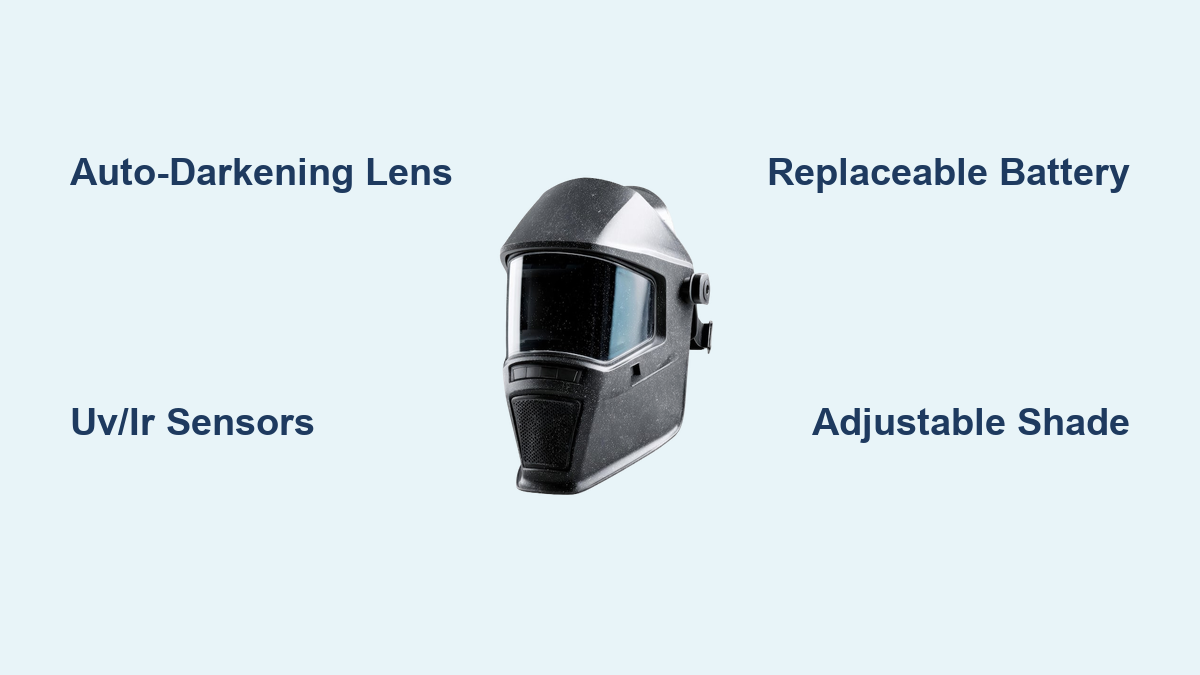
Staring into a welding arc is like looking directly into the sun—except it’s man-made, hotter than lava, and emits invisible radiation that can damage your eyes in seconds. Without protection, you risk arc eye, retinal burns, and long-term vision loss. That’s where welding helmets come in. But how do welding helmets work, especially the modern auto-darkening kind that flip from crystal clear to pitch black the instant you strike an arc?
These aren’t just shields with dark glass. Today’s auto-darkening welding helmets are high-tech safety systems packed with sensors, liquid crystal lenses, and microelectronics. They protect your eyes and face from ultraviolet (UV) and infrared (IR) radiation, blinding visible light, sparks, and molten metal—while letting you see your work clearly before and after welding. No more flipping the helmet up and down, no more guessing when to look.
In this guide, we’ll break down exactly how these smart helmets function—from the split-second detection of an arc to the science behind the darkening lens. You’ll learn what makes one helmet better than another, how to pick the right one, and why skimping on this gear could cost you your sight.
Why Welding Helmets Are Essential: The Risks You Can’t See
Preventing Arc Eye and Cumulative Vision Damage
The electric arc in welding reaches over 6,000°C—hotter than the surface of the sun. This intense heat produces a burst of UV-C radiation, the same type that causes sunburns and corneal damage. Even a two-second exposure can trigger photokeratitis, or arc eye, a painful condition that feels like sand in your eyes and can cause temporary blindness.
Auto-darkening helmets block 100% of UV and IR radiation at all times, even when the lens appears clear. This is required by ANSI Z87.1+ standards, ensuring your eyes are protected from the moment you put the helmet on—not just when the arc starts.
Beyond Light: Full-Face Protection
While radiation is the biggest invisible threat, welding helmets also guard against:
– Sparks and spatter that can burn skin or ignite clothing
– Heat radiation that heats up your face
– Flying debris from grinding or chipping
Without a helmet, you’re not just risking discomfort—you’re risking permanent, irreversible eye damage. Vision protection isn’t optional; it’s built into every quality helmet.
Inside the Helmet: The Technology Behind Auto-Darkening

UV/IR Sensors: The First Line of Detection
Auto-darkening helmets use 2 to 4 UV/IR sensors mounted around the lens housing. These sensors don’t just detect brightness—they’re tuned to the unique spectral signature of a welding arc, filtering out false triggers from sunlight or grinding sparks.
- Two-sensor models: Basic coverage, may miss arcs at odd angles
- Four-sensor models: 360° detection, reliable even when welding overhead or in tight spaces
Top-tier helmets respond in 1/20,000th of a second (0.05 ms)—faster than a human blink (~150 ms). This speed is critical: eye damage begins before you can react.
Auto-Darkening Filter (ADF): Liquid Crystal Magic
The heart of the helmet is the auto-darkening filter (ADF), a multi-layered lens powered by liquid crystal display (LCD) technology.
How It Transitions from Clear to Dark:
- Clear state: Liquid crystals are randomly aligned, letting light pass through (shade 3–5).
- Arc detected: Sensors signal the control unit to apply voltage.
- Dark state: Voltage aligns the crystals, blocking visible light (shade 9–13).
This change happens in 0.1 to 0.5 milliseconds, depending on the model. Unlike old passive helmets, the transition is seamless and automatic—no more timing your head tilt.
Multi-Layer Lens Design: Safety You Can Trust
A single ADF lens contains up to seven layers, each with a critical job:
| Layer | Function |
|---|---|
| Outer polycarbonate | Resists scratches, impact, and spatter |
| Fixed UV/IR filter | Blocks harmful radiation at all times |
| Polarizing filter | Reduces glare and improves contrast |
| Liquid crystal layer | Controls variable darkness |
| Inner protective layer | Shields against internal damage |
Even if the battery dies, the UV/IR filters remain active, so your eyes stay protected—just without the shade.
Power Systems: How Helmets Stay On
Battery + Solar Assist: The Smart Combo
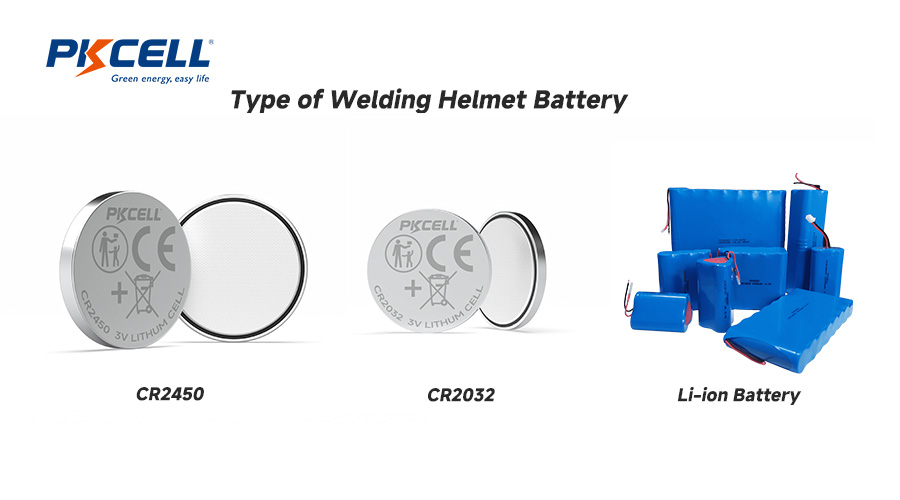
Auto-darkening helmets need power to run sensors and darken the lens. Most use a hybrid system combining battery and solar cells.
Battery Types:
- Replaceable (CR2032/CR2050): Found in premium models; lasts 5–10 years
- Non-replaceable (soldered): Budget models; helmet dies when battery depletes
What Solar Panels Actually Do:
- ❌ Do NOT charge the battery (lithium coin cells are non-rechargeable)
- ✅ Supplement power during welding, reducing battery drain
- ✅ Extend lifespan, especially in sunny environments
Pro Tip: Choose helmets with replaceable batteries and solar assist—they last longer and are more reliable.
Battery Life and Storage Tips
- Typical lifespan: 5–6 years under regular use
- Infrequent use? Battery may degrade from circuit leakage—remove it during long-term storage
- Low-battery warning: Some models flash or stay dark; others fail silently
The Auto-Darkening Process: Step by Step
1. Pre-Weld: Clear Mode for Precision Setup
Before striking the arc, the lens stays light and transparent (shade 3–5). You can see your work clearly, position the electrode, and check alignment—no more flipping the helmet up and down.
UV/IR protection is already active, so your eyes are safe even in clear mode.
2. Arc Ignition: Sensors Trigger in Microseconds
The moment the arc starts, UV and IR radiation surge. Sensors detect this within microseconds, sending a signal to the electronic control unit (ECU).
High-end models use dual-spectrum detection (UV + visible light) to avoid false triggers from bright sunlight or grinding sparks.
3. Lens Darkens: Liquid Crystals Align Instantly
The ECU applies voltage to the LCD layer. Liquid crystals shift from random to aligned, scattering visible light and creating a dark filter.
- Transition time: 0.1–0.5 ms
- Final shade: Adjustable (typically 9–13)
- Optical density: Up to 3.9 (blocks 99.99% of visible light)
Now you can see the weld pool and arc clearly, while harmful radiation is blocked.
4. Post-Weld: Automatic Clearing for Fast Inspection
When the arc stops, sensors detect the drop in light. The ECU cuts power, crystals return to random alignment, and the lens clears in 100–200 milliseconds.
This lets you inspect your weld immediately—no need to lift the helmet.
Shade Numbers: What They Mean and How to Choose
Understanding Shade and Light Transmission
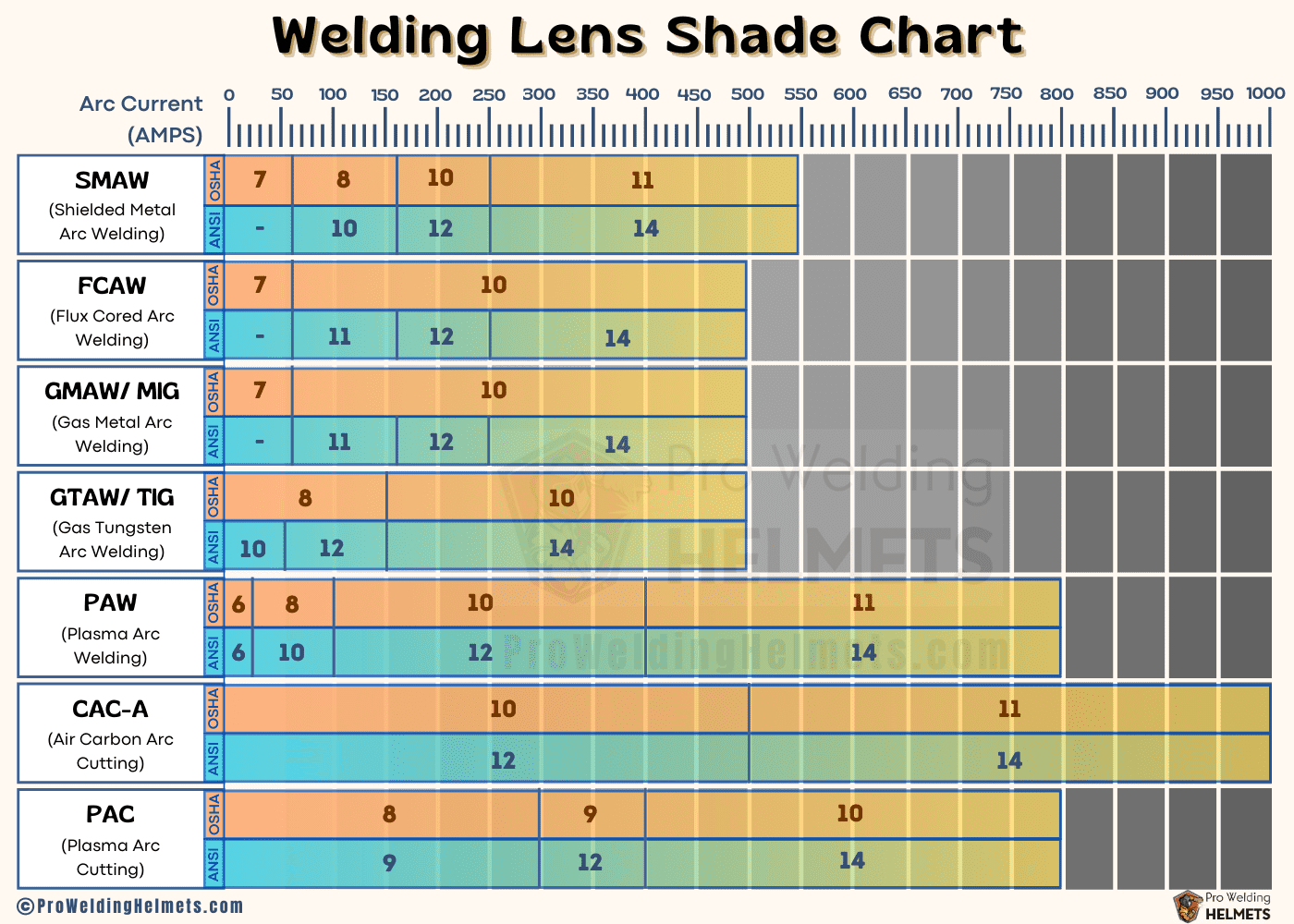
Shade number measures how dark the lens gets, based on luminous transmittance (TL)—the amount of visible light that passes through.
Shade Formula (ANSI Z87.1):
[
S = \frac{7}{3} \log_{10} \left( \frac{1}{T_L} \right) + 1
]
Higher shade = darker lens = less light transmission.
Recommended Shade Levels
| Shade | Transmittance | Best For |
|---|---|---|
| 5 | 3.1% | Grinding, low-amp TIG |
| 8 | 0.4% | Thin metal MIG |
| 10 | 0.1% | General MIG/TIG |
| 12 | 0.016% | Stick welding (1/8″ rod) |
| 13 | 0.012% | Heavy-duty welding, plasma cutting |
OSHA Rule: Start with a shade too dark to see, then lighten until you can see the weld—but never drop below minimum safe shade.
User Controls: Customize for Your Weld
Adjustable Shade Level
Set darkness from shade 5 to 13:
– Low (5–8): TIG on thin materials
– Medium (9–10): MIG welding
– High (11–13): Stick or high-amperage jobs
Sensitivity Control
Adjusts how easily sensors trigger:
– Too high: May activate during grinding
– Too low: Might miss weak arcs
– Best setting: Mid-range for most applications
Delay Control
Sets how long the lens stays dark after welding stops:
– Short delay: Clears fast—good for tack welding
– Long delay: Stays dark longer—reduces flicker during pulsing arcs
Grinding Mode
Switch to grinding mode to keep the lens permanently clear, even in bright conditions. Lets you grind without removing the helmet—safer and faster.
Helmet Types: Power and Longevity Compared
| Type | Power Source | Battery Replaceable? | Lifespan | Best For |
|---|---|---|---|---|
| 1. Solar + Replaceable | Solar + CR2032 | Yes | 5–10+ years | Pros, frequent use |
| 2. Battery-Only Replaceable | CR2032 only | Yes | 3–5 years | Indoor, low light |
| 3. Solar + Non-Replaceable | Solar + soldered | No | 3–7 years | Budget, occasional |
| 4. Battery-Only Non-Replaceable | Soldered battery | No | 2–5 years | Lowest cost, risky |
Bottom Line: Invest in replaceable batteries and solar assist—you’ll get years more life and avoid sudden failure.
Viewing Area and Comfort: Don’t Ignore the Fit
Larger Windows Improve Performance
- Standard: ~2.5″ x 4.5″ (11.25 in²)
- Premium: Up to 4.5″ x 4.5″ (20.25 in²)
Larger viewing areas offer:
– Better peripheral vision
– Easier positioning in tight joints
– Reduced eye strain
Some models add side windows for even more visibility.
Headgear: Comfort Matters
A heavy or ill-fitting helmet causes neck strain. Look for:
– Adjustable ratchet or dial system
– Padded brow and crown
– Lightweight thermoplastic shell
Expert Note: “The headgear is what you shop for. The lens is what you live with.”
Budget vs. Premium Helmets: What You’re Paying For
| Feature | Budget Helmets | Premium Helmets |
|---|---|---|
| Response Time | 1/10,000 sec | 1/20,000–1/25,000 sec |
| Sensors | 2 | 4 |
| Shade Range | Fixed (9–13) | Adjustable (5–13) |
| Controls | Internal | External |
| Battery | Often non-replaceable | Replaceable |
| Viewing Area | Small | Large |
| Solar Assist | Sometimes | Standard |
Premium helmets offer HD-like clarity, faster response, and better durability—worth it for daily use.
Safety Checks and Maintenance
Test Before Every Use
- Trigger the arc manually or use a test button (if available)
- Ensure lens darkens instantly
- If it fails: Stop using it—check battery, sensors, or replace
Maintenance Tips
- Clean lens with soft cloth and approved cleaner only
- Avoid alcohol or ammonia—can damage coatings
- Store in cool, dry place—heat kills batteries
- Inspect for cracks or delamination—replace damaged lenses
Warning: A compromised lens may look fine but offer no protection.
Common Myths Debunked
| Myth | Truth |
|---|---|
| “Solar panels charge the battery” | ❌ Solar cells assist during welding, but do not charge non-rechargeable batteries |
| “Auto-darkening is just for convenience” | ❌ It prevents arc exposure during helmet flip, enhancing safety |
| “All ADF lenses are the same” | ❌ Vary by clarity, response time, sensor count, and pixel density |
| “You can weld without a helmet if careful” | ❌ UV damage is invisible and cumulative—protection is mandatory |
Final Takeaways: How Welding Helmets Work
Auto-darkening welding helmets are smart safety systems, not just pieces of plastic. They use UV/IR sensors, liquid crystal lenses, and electronic controls to switch from clear to dark in under a millisecond, protecting your eyes before you even blink.
Key facts:
– Lenses always block UV/IR, even when clear
– Solar panels assist, but don’t charge the battery
– Replaceable batteries extend life to 10+ years
– Four sensors ensure reliable detection
– Shade, sensitivity, and delay are adjustable
– Large viewing areas reduce fatigue
With proper care, a high-quality helmet can last a decade or more—making it one of the best investments you can make for safety, comfort, and productivity.
Your vision is irreplaceable. Choose a helmet that protects it—every single weld.