
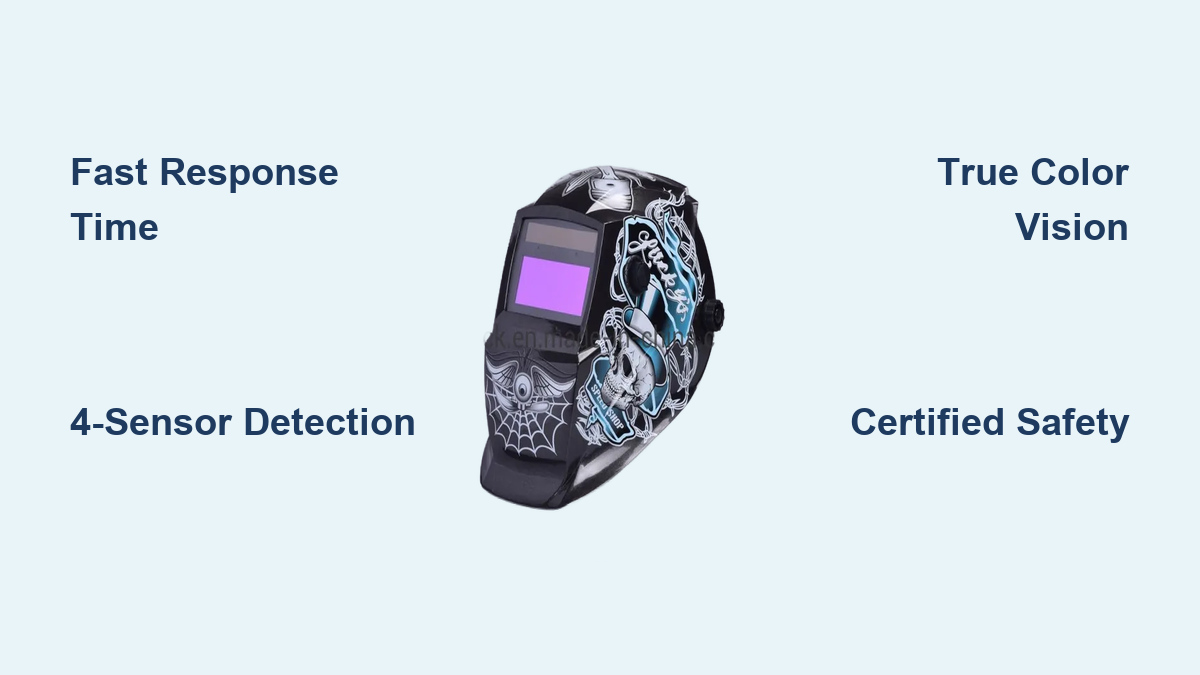
Welding without flipping your helmet up and down between strikes isn’t just convenient—it’s safer, faster, and easier on your eyes. The secret? Auto darkening welding helmet filters. These intelligent lenses shift from a light, clear state to a protective dark shade in less than a millisecond the moment an arc ignites, shielding you from blinding glare, UV radiation, and infrared heat. Whether you’re a weekend hobbyist or a full-time pro, upgrading to an auto darkening filter (ADF) can dramatically improve your workflow, reduce eye strain, and enhance weld precision. With options ranging from $10 solar panels to $230 premium units featuring true color vision and multi-sensor tracking, choosing the right one matters. This guide breaks down the technology, specs, top models, and smart upgrade paths so you can make a confident, informed decision—every time you strike an arc.
How Auto Darkening Filters Protect You in Real Time
Lightning-Fast Arc Detection Saves Your Eyes
When the welding arc flashes, it emits intense UV and IR radiation that can damage your eyes in milliseconds. A high-quality auto darkening filter reacts in as little as 0.04 milliseconds—faster than the human blink reflex. Tiny photosensors positioned around the lens perimeter detect the sudden surge of UV and infrared light, signaling the control circuit to activate the liquid crystal cell. This near-instant response ensures your eyes are shielded before harmful exposure occurs, eliminating “flash burn” and reducing long-term vision fatigue.
Seamless Light-to-Dark Transition for Smoother Welding
In standby mode, the lens stays in a shade 2.5 to 5, giving you excellent visibility for positioning, tacking, and setup. The moment the arc starts, the lens darkens to your preset working shade—typically shade 8 to 13, depending on amperage and material. After welding stops, the lens remains dark for a user-adjustable delay time (0.1–2.0 seconds) before returning to light mode. This prevents flickering during pulsed welding or brief pauses, keeping your view stable and your focus sharp.
Built-In Fail-Safe Mode for Uninterrupted Safety
Even if the battery dies or solar cells are shaded, a certified ADF doesn’t leave you unprotected. Quality filters default to a fixed shade 5–6 when power is lost, thanks to dual polarization layers that maintain a safe intermediate tint. This passive safety feature ensures you’re never exposed to harmful radiation, even in the event of electronic failure—making certified ADFs far safer than passive or uncertified alternatives.
Inside the Lens: Core Components That Make It Work
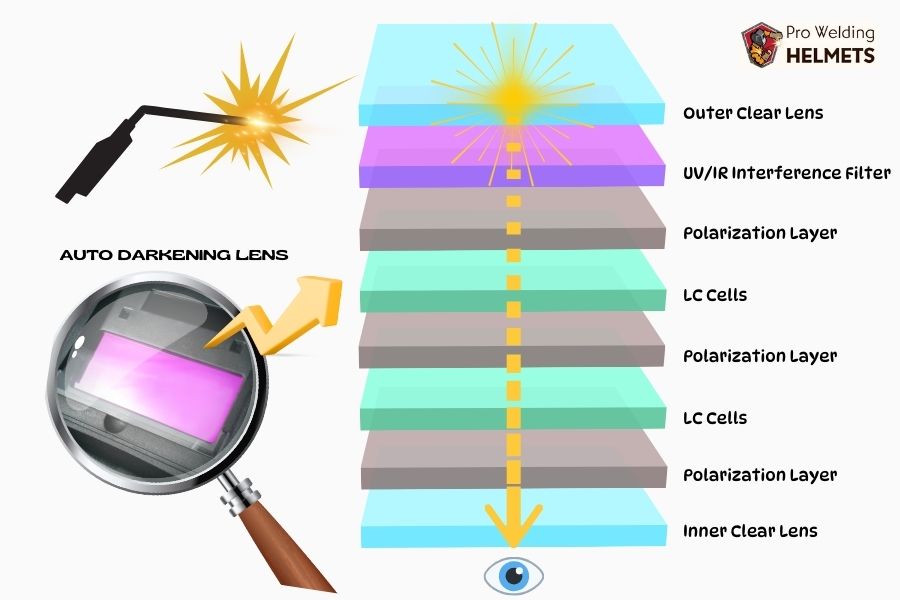
UV/IR Interference Filter – Always-On Protection
Even when powered off, a multi-layered metallic coating—often made of silver and aluminum oxide—blocks 99.9997% of UV and 99.9% of IR radiation. This permanent barrier protects both your eyes and the internal electronics from heat damage. It’s why high-end filters like the 3M Speedglas have a distinctive purple or gold reflective finish: those aren’t just for looks—they’re functional radiation shields.
Liquid Crystal Cells (LCC) – The Smart Core
At the heart of every ADF is the liquid crystal cell. When powered, the crystals twist light by 90 degrees, allowing it to pass through polarized filters (light state). When the arc triggers, electricity un-twists the crystals, blocking light and darkening the lens. This electro-optical process enables the rapid, smooth transition that defines modern auto darkening performance.
Dual Polarization System – Clarity with Safety
Two polarizing filters are set at right angles. In the default state, they block all light. When voltage is applied, the liquid crystals rotate the light’s polarization, allowing it to pass through both layers. If power fails, the polarization returns to the crossed position, defaulting to a safe shade—ensuring protection even without batteries.
Multi-Sensor Detection – Reliable Activation from Any Angle
Budget models use 2 sensors, which may miss arcs if welding overhead or at odd angles. Premium filters feature 4 sensors placed evenly around the lens, ensuring activation regardless of position. For pipe welders, out-of-position work, or tight spaces, 4-sensor systems are essential for consistent, reliable performance.
Solar + Battery Power – Never Lose Power
Most ADFs run primarily on solar energy harvested from the arc itself. A backup lithium (CR2450) or AAA battery ensures the lens works in low-light conditions or during low-amperage TIG welding, where arc brightness is minimal. This dual-power design guarantees uninterrupted operation in any environment.
What Specs Actually Matter When Choosing a Filter?
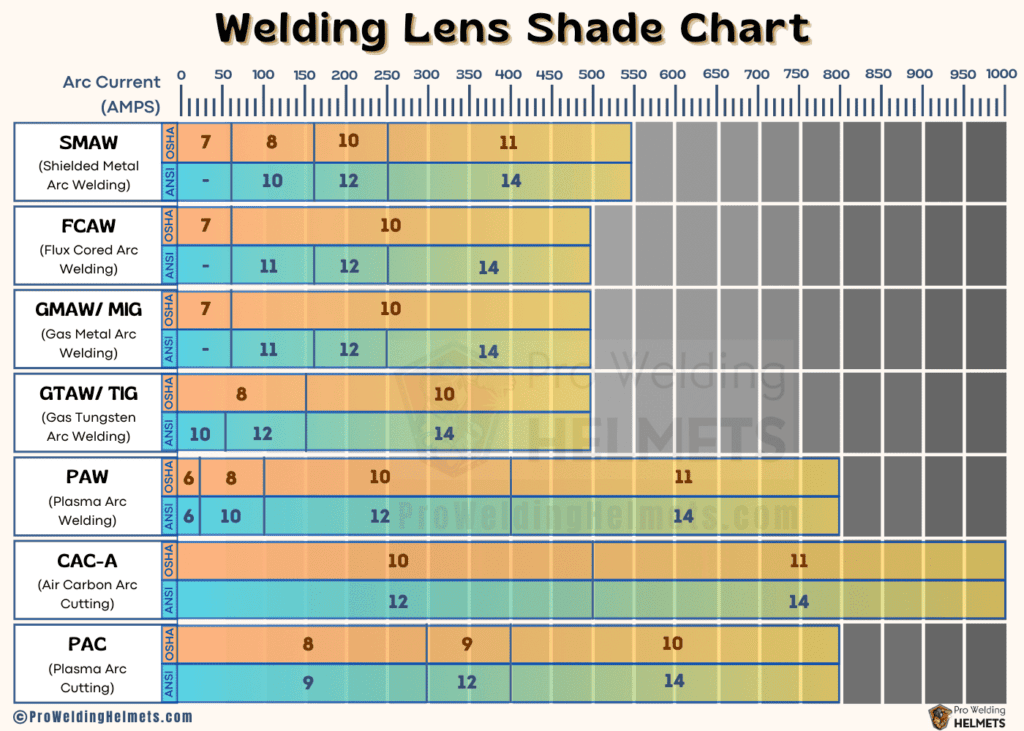
Shade Range: Variable vs Fixed – Know the Difference
| Type | Light Shade | Dark Shade | Best For |
|---|---|---|---|
| Fixed | N/A | Shade 10 | Basic MIG/stick use |
| Variable | 3–5 | 8–13 | All-around versatility |
| Multi-Mode | 3/5/8–14 | Custom settings | Pros needing flexibility |
While shade 10 works for most applications, variable shade filters let you fine-tune darkness based on amperage and material. Lower amperage TIG? Drop to shade 8. High-current stick welding? Bump up to shade 13. This flexibility improves visibility and weld quality.
Response & Delay Time – Speed and Stability
- Response time: 0.04–0.1 ms (faster = less flash exposure)
- Delay time: Adjustable 0.1–2.0 sec (prevents flicker during pulsing)
Shorter delay improves visibility between welds; longer delay prevents the lens from clearing too soon during intermittent work.
Viewing Area – Bigger Is Better
- Standard: 2″ x 4.25″ (91 x 36 mm) – fits most helmets
- Wide View: Up to 5.91″ x 2.99″ – reduces neck strain
- Large Format: 4″ x 5″ – premium helmets only
Larger viewing areas improve precision and comfort during long sessions, especially for overhead or detailed work.
Sensor Count – 2 vs 4: When to Upgrade
- 2 sensors: Budget-friendly, works well for flat-position welding
- 4 sensors: Industrial-grade reliability, essential for overhead, vertical, or pipe welding
If you weld in multiple positions, don’t skimp on sensors—reliability is critical.
Advanced Features That Make a Real Difference
Smart Shade Technology – Automatic Darkness Adjustment
Top-tier filters like the 3M Speedglas G5 and ArcOne WD30 use smart algorithms to auto-adjust shade based on arc intensity. Whether you’re running 20A TIG or 200A stick, the lens adapts instantly—no manual tweaking required. This is a game-changer for welders switching between processes.
Tack Mode – See Better During Alignment
Tack mode holds a lighter dark shade (7–9) during short tacks, improving visibility for alignment. Ideal for thin metals and tight joints where precision matters.
Shade Lock – Stay Protected During Grinding
Manually lock the lens in dark mode when grinding, chipping, or cleaning. This turns your welding helmet into a dual-purpose shield, preventing accidental clearing and enhancing safety.
True Color & Natural Vision – See the Puddle Like Never Before
Standard ADFs often tint the view green or blue, distorting color perception. True color technology (e.g., 3M NC, TRQWH) restores reds and blues, giving a more natural view of the weld puddle. This improves bead control, reduces eye fatigue, and helps spot defects faster.
Lens Coatings – Function Meets Style
- Gold-coated: Reflects heat; ideal for high-temp environments
- Blue/gray tint: Enhances puddle contrast
- Red front with green view: Boosts depth perception
- Uncoated (true color): Maximum clarity, minimal distortion
Choose based on your welding environment and visual preference.
Top Auto Darkening Filters by Use Case
Best Budget Drop-In Filters
WeldingCity® DIN-3 to DIN-11 ($22.99)
- Solar + lithium power
- 2 sensors, shade 3–11
- Fits standard 2″x4.25″ helmets
Perfect for hobbyists wanting reliable auto-darkening without overspending.
Unbranded Solar Panels ($9.99–$17.25)
- Fixed shade 10
- No adjustability
- Great for testing or temporary use
Affordable entry point—just verify compatibility first.
Best Mid-Range Upgrades
Tefuawe 2×4.25 True Color ($53.99–$93.00)
- Shade 5–13, 2A TIG capable
- True color view, solar + battery
- Includes extra cover lenses
Excellent balance of price, performance, and clarity.
The Heir 1.0 by Ridge Products ($79.99–$110)
- Blue front, true color view
- Shade 5–13, 4-sensor option
- Stylish and functional
Ideal for serious DIYers and weekend warriors.
Premium Professional Choices
3M Speedglas ADF 100V & G5 Series ($229–$230)
- Natural Color (NC) option
- 4 sensors, HD clarity, smart shade
- Curved lens for wide view
The gold standard for industrial and production welding.
ArcOne S450-10 (4″x5″ Large View) ($113.53)
- Massive viewing area
- Shade 10, solar + battery
- Durable build
Ideal for long shifts where neck comfort and visibility are critical.
The King 2.0 by Ridge Products ($150)
- Gold coating, 20A TIG rated
- Shade 5–13, 0.33″ thick
- Built for high-heat, high-use environments
A rugged choice for demanding conditions.
How to Install a Drop-In ADF – 5-Minute Upgrade
Check Compatibility First
Verify:
– Lens size (most common: 2″x4.25″)
– Housing depth (thicker filters like 0.33″ need deeper shells)
– Power type (solar-only vs. battery-supported)
Measure your current lens or consult your helmet manual.
Step-by-Step Installation
- Open helmet shell and remove outer and inner passive lenses.
- Insert ADF with sensors facing outward (usually marked).
- Align tabs with the frame—do not force.
- Secure with retaining clips.
- Test with a flashlight or actual arc.
Most installations take under 5 minutes with no tools.
Common Fit Issues
- Too thick? Some ADFs won’t fit shallow helmets.
- Wrong shape? Pancake, pipeliner, and sugar scoop styles vary.
- Sensor blocked? Ensure no foam or plastic covers sensor windows.
When in doubt, contact the seller with your helmet model.
Keep Your Filter Working Longer – Maintenance Tips
- Clean lenses with a microfiber cloth only—avoid alcohol or ammonia.
- Replace outer cover lenses every few weeks with heavy use (packs of 10 from $11.60).
- Check battery every 6–12 months—replace if lens fails in dim light.
- Store in a case—avoid heat, impacts, and face-down placement.
Proper care extends lifespan to 5–10 years.
Safety First: Always Choose Certified Filters
Look for:
– ANSI Z87.1 (U.S.)
– EN 379 (Europe)
– CSA Z94.3 (Canada)
Certified filters block 100% of UVA, UVB, and IR—even when unpowered. Never risk uncertified or counterfeit units—they may look the same but lack critical protection layers.
Final Verdict: Is an Auto Darkening Filter Worth It?
Absolutely. Whether you’re upgrading an old helmet or building a new setup, an ADF delivers clearer vision, faster response, and superior safety. Focus on shade range, sensor count, viewing area, and certification. For DIYers, a $30–$60 true color filter is a smart upgrade. Pros should invest in 4-sensor, HD, shade-lock models. With the right auto darkening filter, you’ll weld safer, see better, and work smarter—every single time.