
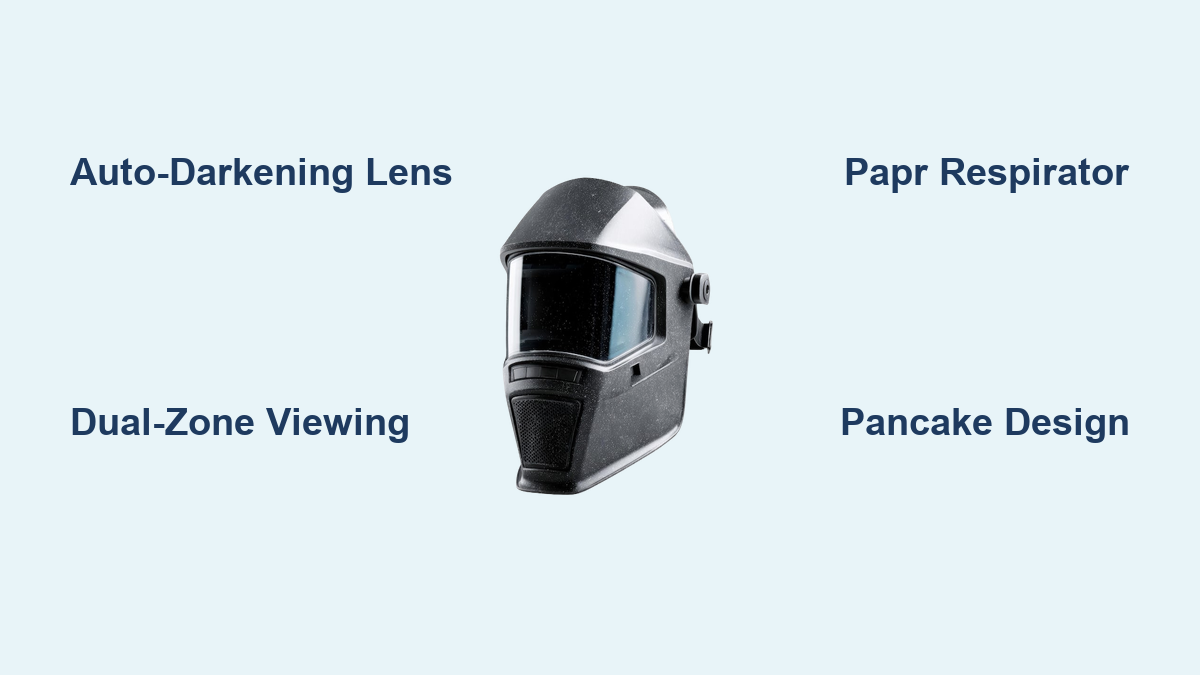
Every welder knows the intense flash of an electric arc — a burst of light so bright it can burn retinas in seconds. Without proper protection, sparks fly, UV radiation penetrates, and metal spatter stings the skin. That’s where a welding helmet steps in: not just gear, but a shield between you and serious injury. Among the most critical personal protective equipment (PPE), welding helmets come in different types, each designed for specific tasks, environments, and skill levels. Whether you’re a beginner tackling weekend projects or a professional in heavy industry, choosing the right helmet impacts your safety, precision, and comfort.
The core difference among welding helmets lies in lens technology and structural design. Some rely on fixed, always-dark lenses; others use smart auto-darkening systems that react in milliseconds. Beyond that, form follows function — from ultra-light pancake models for outdoor pipeline work to full-face respirator-integrated units for fume-heavy factories. This guide breaks down every major type of welding helmet, explains how they work, and helps you pick the best one based on your needs. You’ll learn about passive vs. auto-darkening lenses, flip-up designs, dual-zone visibility, and advanced models with fans or air filtration — all grounded in ANSI, OSHA, and CSA safety standards.
Let’s dive into the different types of welding helmets that protect professionals and hobbyists alike.
Passive (Fixed Shade) Welding Helmets
The simplest and most traditional type, passive welding helmets are still widely used — especially by beginners and occasional welders.
Always-Dark Lens Design
Passive helmets feature a fixed-shade filter lens, typically set at shade 10, though some range from shade 10 to 13. The lens stays permanently dark, offering no change in tint whether the arc is on or off. This means you must manually lift the helmet to set up your work, then lower it before striking the arc.
Because they lack electronics, sensors, or batteries, these helmets are mechanically simple and durable. They comply with ANSI Z87.1 standards when certified, ensuring protection from UV/IR radiation and impact.
Who Should Use Passive Helmets?
- Beginners learning MIG or stick welding
- DIYers doing infrequent repairs
- Industrial maintenance crews performing repetitive, single-process jobs
They’re often seen in vocational schools and home garages due to their low cost and ease of use.
Pros and Cons
| Pros | Cons |
|---|---|
| ✔️ Low cost ($20–$60) | ❌ Must lift helmet to see clearly |
| ✔️ No batteries or charging | ❌ Risk of misalignment when repositioning |
| ✔️ Lightweight and durable | ❌ Eye strain from switching light/dark |
| ✔️ Fewer parts to fail | ❌ Face exposed to sparks during setup |
While functional, the need to constantly flip the helmet up and down slows workflow and increases safety risks. For this reason, most welders upgrade to auto-darkening models as soon as they move beyond basic tasks.
Auto-Darkening Welding Helmets (ADH)
The industry standard for professionals, auto-darkening helmets offer superior safety, speed, and precision.
How Auto-Darkening Lenses Work
These helmets use an LCD or electrochromic lens that switches instantly from a light state (shade 3–5) to a dark state (shade 9–13) when the welding arc ignites. Sensors detect UV and IR radiation, triggering the lens to darken in as little as 1/20,000th of a second — fast enough to prevent eye damage.
When the arc stops, the lens returns to its lighter state, allowing continuous visibility without lifting the helmet.
Power comes from:
– Solar cells (primary source)
– Replaceable or rechargeable batteries (backup)
– Hybrid solar + battery systems (most reliable)
Key Adjustable Features
Modern ADHs let you fine-tune performance:
- Shade adjustment: Set darkness level (e.g., shade 10 for MIG, shade 12 for stick)
- Sensitivity control: Adjusts how easily the sensor triggers (helpful in bright or reflective environments)
- Delay control: Determines how long the lens stays dark after welding (0.1–2 seconds)
High-end models like the Miller Digital Elite or Lincoln Electric Viking 3350 offer X62/X80/X100 lens platforms with wider viewing areas and faster response times.
Optical Clarity: What Is DIN Rating?
Not all lenses are equal. The DIN standard rates optical quality across four categories:
| DIN Level | Clarity Description |
|---|---|
| DIN 1 | Best clarity — minimal distortion |
| DIN 2 | Moderate clarity |
| DIN 3 | Noticeable distortion, not ideal for precision |
Top-tier helmets achieve DIN 1/1/1/1, meaning perfect scores in shade uniformity, optical clarity, UV/IR blocking, and image stability.
Why Professionals Prefer ADH
- ✅ No more lifting — start welding instantly
- ✅ Better alignment — see your joint before striking
- ✅ Reduced neck strain — no constant up-and-down motion
- ✅ Multi-process ready — switch between TIG, MIG, and stick with settings
With prices ranging from $80 to $600+, there’s an ADH for every budget. Entry-level models like the Jackson Safety W17 deliver solid performance, while premium units justify cost with durability, clarity, and comfort.
Dual-Zone Auto-Darkening Helmets
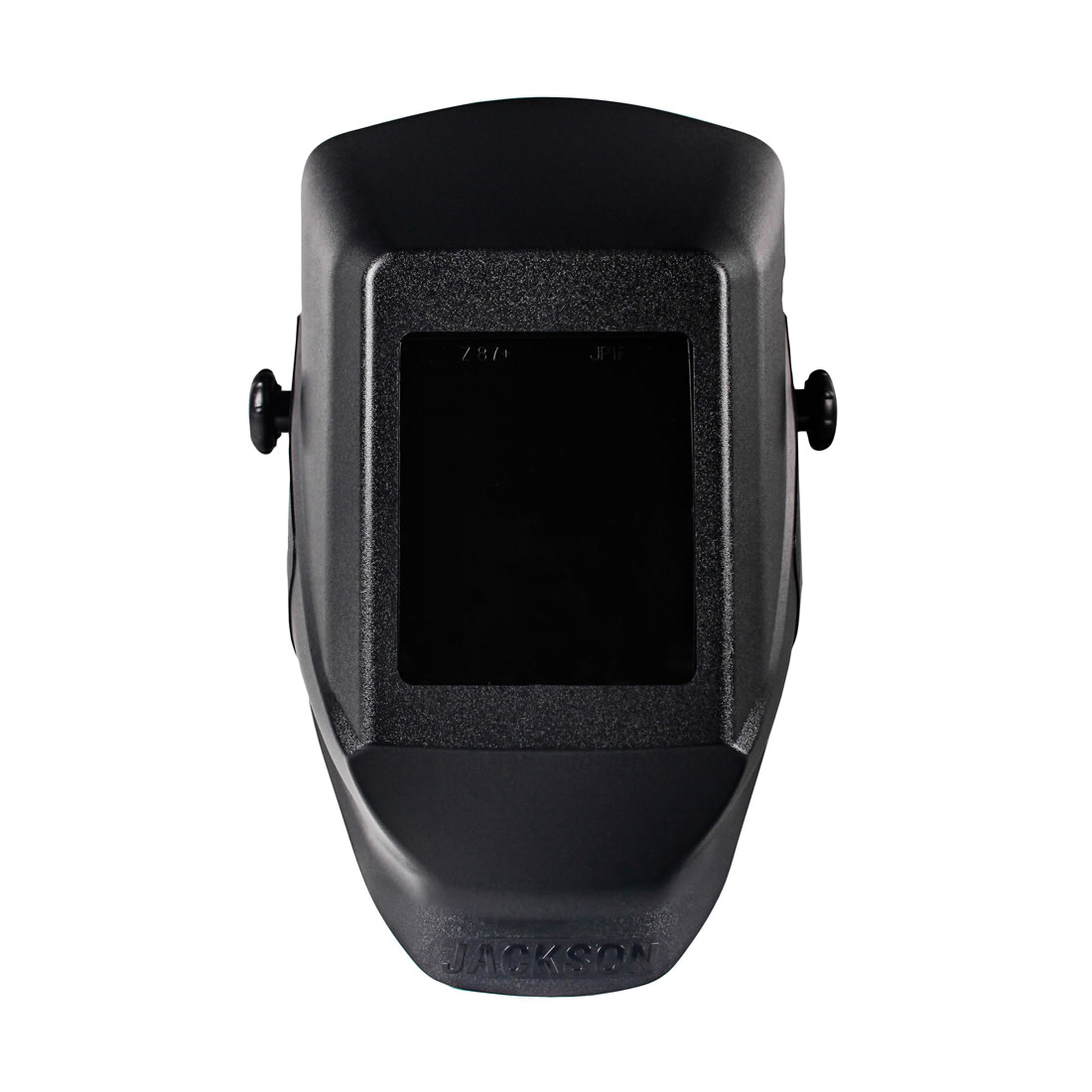
A step above standard ADHs, dual-zone helmets enhance situational awareness during complex welding jobs.
See Your Work and Your Workspace
Dual-zone helmets split the lens into two areas:
– Central zone: Darkens during welding (shade 9–13)
– Peripheral zone: Remains lighter or transparent, letting you see tools, gauges, or assistants without removing the helmet
This design is particularly useful in confined spaces, pipe welding, or any job requiring constant awareness of surroundings.
Found in Premium Models
Only high-end helmets offer true dual-zone functionality, such as:
– Jackson X80
– Miller Elite Series
– Lincoln Electric Viking 3350
These often include wider viewing areas (up to 4 x 2 inches) and DIN 1-rated optics.
Trade-Offs to Consider
- 🔺 Higher cost — adds $100–$200 over standard ADH
- 🔺 Increased weight — due to advanced lens tech
- 🔺 Limited availability — not all brands offer this feature
But for precision welders, the improved visibility and reduced head movement make dual-zone helmets worth the investment.
Flip-Up Welding Helmets
For jobs with frequent fit-up checks, flip-up helmets provide unmatched convenience.
Hands-Free Viewing Without Removing Helmet
These helmets have a hinged front shield that flips upward, exposing the face while keeping the main body in place. Often paired with auto-darkening lenses, they allow quick transitions between welding and inspection.
Common in:
– MIG welding
– Fabrication shops
– Repair and maintenance work
Two Main Designs
- Top-flip: Shield lifts from the forehead (most common)
- Front-flip: Entire panel slides or detaches (rare)
Some models integrate magnifying lenses or LED task lights for detailed work.
Benefits and Drawbacks
| Pros | Cons |
|---|---|
| ✔️ Hands-free viewing | ❌ Face exposed to sparks when open |
| ✔️ Faster workflow | ❌ Hinges wear out over time |
| ✔️ Great for repetitive tasks | ❌ Risk of accidental opening during welding |
Best suited for shop environments where overhead hazards are minimal.
Pancake Welding Helmets
Lightweight and built for the field, pancake helmets dominate outdoor welding operations.
Designed for Heat and Mobility
Named for their flat, circular shape, pancake helmets are:
– Ultra-lightweight (under 14 oz)
– Ventilated for airflow
– Worn on a cap or headband
Common among pipeline welders working in desert heat or elevated positions.
Ideal for Field Work
- 🌞 Excellent heat dissipation
- 🛠️ Durable fiberglass or composite build
- 🧭 Minimalist design reduces fatigue
But they offer less face coverage and no respirator compatibility. Some models aren’t ANSI Z87.1 compliant — always check certification.
Not for Everyone
While great in hot, open environments, pancake helmets lack the protection needed indoors or in high-debris zones. They’re a specialist tool, not a universal solution.
Full-Face Auto-Darkening Helmets
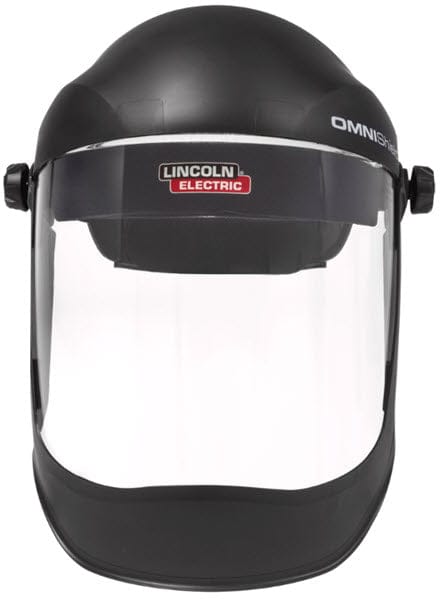
When maximum protection is non-negotiable, full-face helmets deliver.
Complete Head and Face Coverage
Extending below the jawline, these helmets:
– Shield the entire face and neck
– Resist sparks, heat, and impact
– Offer up to 100° field of view
Used in:
– Shipbuilding
– Structural steel
– Plasma cutting and gouging
Built for Industrial Use
- ✅ ANSI Z87.1 + Z89.1 certified (eye and head protection)
- ✅ Compatible with hearing protection and respirators
- ✅ Integrated fans or PAPR systems available
Weighing 2–3 lbs, they’re heavier but distribute weight evenly for long shifts.
Worth the Weight
Despite bulk, their durability and safety make them standard in heavy industry. Look for models with ratchet suspension and replaceable padding for lasting comfort.
Respirator-Integrated Welding Helmets

In fume-prone environments, breathing clean air is as important as eye protection.
Powered Air-Purifying Respirators (PAPR)
These helmets combine auto-darkening technology with a blower unit that pulls air through filters, delivering purified air to your face.
Filters capture:
– Metal fumes (P100)
– Ozone and nitrogen oxides (gas cartridges)
– Combination hazards (P100 + vapor)
Certified to NIOSH standards with APF ratings of 25 to 1000, depending on model.
Required for Hazardous Materials
Essential when welding:
– Stainless steel
– Galvanized metal
– In confined spaces
OSHA mandates respiratory protection under 29 CFR 1910.134 in these conditions.
Top Models
- 3M Speedglas 9100 Series
- Honeywell Miller Mag Series with Air Mate
- Jackson Safety FR Series
Battery life ranges from 8–12 hours, and filters require regular replacement.
Cost vs. Safety
Priced $500–$1,200+, they’re a major investment — but necessary for health in high-risk settings.
Helmet-Mounted Fans (Non-Respiratory)
A simpler, affordable way to beat the heat.
Stay Cool Without Air Filtration
These helmets include a small fan that circulates air inside, reducing sweat and fogging. Unlike PAPR, they do not filter air — just move it.
Ideal for:
– Hot environments
– Long-duration welding
– Preventing lens fog
Easy Upgrade
Many fans are retrofittable, costing $50–$150. They run on replaceable batteries and add minimal weight.
Limitations
- ❌ No fume protection
- ❌ Can be noisy
- ❌ Requires charging
Best for welders who need cooling but don’t face toxic fumes.
Grinding and Welding Combo Helmets
For fabricators switching between tasks, combo helmets save time and improve safety.
Switch Between Modes Instantly
These helmets offer:
– Welding mode (shade 9–13)
– Grinding mode (shade 5–8)
– Impact-resistant outer lens
No need to remove your helmet when switching from welding to grinding — just toggle the mode.
Built Tough
- Meets ANSI Z87.1+ for high-impact protection
- Features wide shade range and durable lens housing
Popular in:
– Auto shops
– Metal art studios
– General fabrication
A Smart Investment
While heavier and pricier ($150–$400), they eliminate PPE transitions and reduce exposure to debris.
How to Choose the Right Helmet
Not all welders need the same helmet. Here’s how to match type to your role.
For Beginners
Start with an auto-darkening helmet (shade 9–13, response time ≤1/20,000 sec, DIN ≤3). Avoid passive helmets — they slow learning and increase risk.
Recommended: Jackson Safety W17 or Lincoln Viking 3350 (basic)
For Hobbyists
Choose based on frequency:
– Occasional use: Passive helmet
– Frequent projects: Entry-level ADH or flip-up model
Consider a grinding/welding combo if doing mixed work.
For Professionals
Invest in:
– Dual-zone ADH
– Full-face coverage
– Integrated fan or respirator (if fumes present)
Brands like Miller, Lincoln, 3M, and Jackson lead in performance and reliability.
For Pipeline and Field Work
Prioritize lightweight design and ventilation:
– Pancake helmet
– Lightweight ADH with solar power
Ensure ANSI compliance even in minimalist designs.
For Confined Spaces or Fume Zones
You must use a respirator-integrated helmet (PAPR) meeting OSHA 1910.134 and NIOSH standards.
No exceptions — your lungs depend on it.
Maintenance Tips for Long Life
A helmet is only as good as its upkeep.
Lens Care
- Replace outer protective lens every 1–3 months
- Clean inner lens with microfiber cloth only
- Never use solvents or abrasive cleaners
Battery Management
- Solar models last 5–10 years
- Replace AA or lithium batteries every 2–5 years
- Store in dry, room-temperature conditions
Headgear and Suspension
- Use ratchet systems over pin-lock for durability
- Replace padding when worn
- Check for cracks or impact damage
Most warranties cover 2–3 years on electronics, up to 5 years on premium models.
Final Recommendations by Need
| Your Need | Best Helmet Type |
|---|---|
| Budget option | Passive (Fixed Shade #10) |
| Best overall | Auto-Darkening (Adjustable Shade 9–13, Fast Response) |
| Precision work | Dual-Zone Auto-Darkening |
| Mixed welding/grinding | Grinding/Welding Combo Helmet |
| Outdoor/field use | Pancake Helmet |
| Fume-heavy environment | Respirator-Integrated (PAPR) Helmet |
| Heat and sweat control | Helmet with Fan or Ventilation |
| Maximum protection | Full-Face Helmet with Chin Guard |
Safety Standards You Must Know
Always verify compliance labels inside the helmet. Look for:
- Z87+ — ANSI impact and UV protection
- CSA Z94.3 — Canadian standard
- EN 175 — European certification
- NIOSH — Required for respirator models
OSHA requires head and face protection in hazardous environments under 29 CFR 1910.135. Never use a helmet without proper certification.
The right welding helmet isn’t just about comfort — it’s about preventing injury, boosting productivity, and working safely for years. From the simplicity of passive models to the sophistication of PAPR systems, understanding the different types of welding helmets ensures you make a choice that fits your craft, your environment, and your safety standards.