
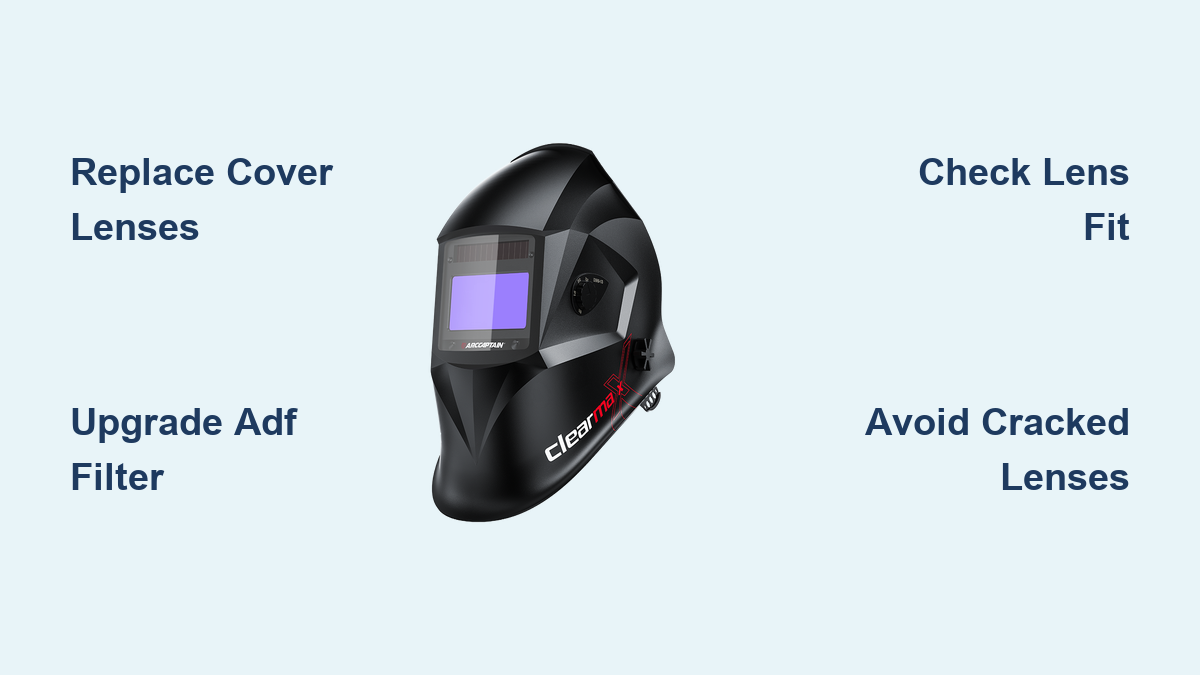
If your welding helmet suddenly feels like it’s playing tricks on your eyes—flickering, darkening too slowly, or making the weld puddle look distorted—it’s probably not your vision. The real culprit? A failing replacement lens for welding helmet. Whether you’re a weekend DIYer or a full-time pro, degraded lenses compromise safety, clarity, and comfort. Thousands of welders replace their lenses every year not just to restore performance, but to meet strict ANSI Z87.1 safety standards that protect against harmful UV and IR radiation. The good news: replacing a lens is fast, affordable, and often costs less than a tank of gas. This guide breaks down everything you need to know—from identifying worn-out cover lenses to upgrading your auto-darkening filter (ADF) for crystal-clear TIG work. You’ll learn how to match lenses to your helmet model, spot early signs of failure, and choose between budget-friendly generics and OEM-grade precision—all without overspending.
Identify and Replace Worn Cover Lenses Fast
Clear cover lenses are the first line of defense for your helmet’s optical system—and the most frequently replaced part.
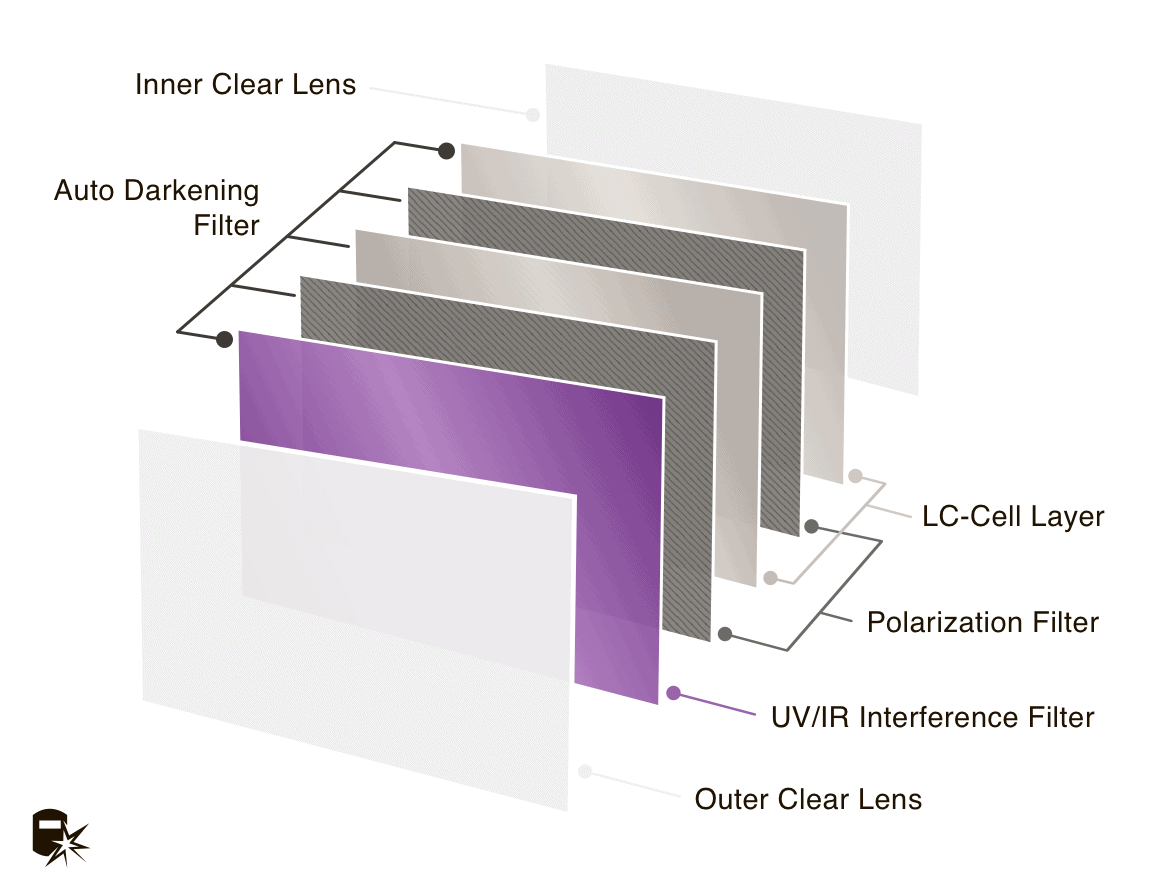
Outer vs. Inner Cover Lens: Know the Difference
Your helmet uses two clear polycarbonate shields: the outer cover lens takes the brunt of spatter, UV exposure, and heat, while the inner cover lens protects the ADF from internal contaminants like sweat and dust. Both degrade over time, but the outer lens usually fails first. Once it’s scratched or pitted, visibility drops and eye strain increases—especially during long welds.
Signs It’s Time to Replace:
- Scratches or cloudiness that scatter light
- Burn holes from molten spatter
- Yellowing or hazing due to UV degradation
- Persistent fogging even after cleaning
Most professionals replace both lenses every 3–6 months with daily use. Waiting too long risks damaging the much more expensive ADF underneath.
Universal vs. Brand-Specific Cover Lenses
While 2″ x 4.25″ universal lenses fit many budget helmets, high-end models require exact replacements.
- Lincoln Viking 3350: Needs KP2898-1 (4.5″ x 5.25″) outer and KP5244-1 (3.73″ x 3.53″) inner
- Viking 1740/1840: Uses KP3043-1 outer and KP3044-1 inner
- DEWALT DXMF21011: Requires branded DXMF21FPL front lens (2mm thick, polycarbonate)
Buying in bulk saves money—20-pack 4.5″ x 5.25″ lenses cost as little as $9.99. Amazon sellers like YESWELDER offer kits with 5 outer + 2 inner lenses for $12.99, ideal for frequent users.
Upgrade Your Auto-Darkening Filter for Better Performance
The ADF is the brain of your helmet. Upgrading it can transform your welding experience—especially for TIG or precision work.
Match ADF Size to Your Helmet Exactly
Auto-darkening filters come in standard dimensions, but not all fit every model.
- 4.33″ x 3.54″ (110mm x 90mm)
- 4.49″ x 5.24″ (114mm x 133mm)
- 7.2″ x 3.2″ panoramic
Measure your current filter or check the manual. A misfit ADF won’t seat properly and may leave dangerous gaps in protection.
Key ADF Features That Matter Most
Not all electronic lenses perform the same. Prioritize these specs:
- Shade Range: Adjustable Shade 4/5 to 13 covers MIG, TIG, Stick, and grinding.
- Response Time: As fast as 1/25,000 second—critical for TIG starts.
- Reset Time: Should return to light state in ≤1/10,000 second to prevent eye fatigue.
- Sensors: 4-sensor models activate reliably from any angle; 2-sensor versions may miss side arcs.
- Optical Clarity: Look for DIN 1/1/1/1 rating—minimal distortion and true color view.
- Power Source: Solar (most common), battery (CR2032), or rechargeable (USB-C).
High-end models like the Ridge Products The Heir Single 2.0 ($150) offer 20A TIG-rated performance with zero flashing—perfect for fine work.
OEM vs. Aftermarket ADFs: Which Is Right for You?
You don’t have to pay $400 for a Miller or 3M OEM filter. Aftermarket options deliver excellent performance at a fraction of the cost.
| Feature | OEM (Miller, Lincoln) | Aftermarket (TRQWH, Core Series) |
|---|---|---|
| Price | $200–$460 | $15–$50 |
| Fit | Guaranteed | May need slight trimming |
| Warranty | Extended | Limited or none |
| User Rating | High | Often 4.5+ stars on Amazon |
The TRQWH 4.49×5.24in ADF ($30.99) offers 4-sensor activation, Shade 4/5–13, and DIN 1/1/1/1 clarity—ideal for multi-process welding.
Install Passive Filter Plates Correctly for Traditional Helmets
If you’re using a flip-front or “sugar scoop” helmet, passive glass filters are your go-to.
Choose the Right Shade for Your Work
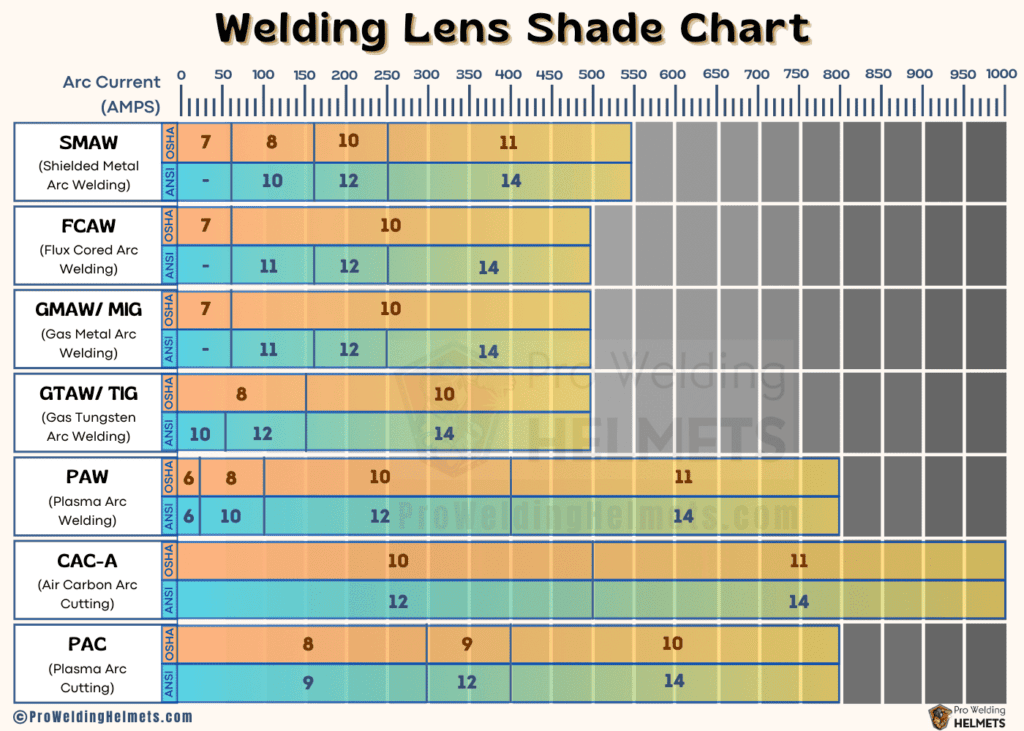
Fixed-shade filters typically come in Shade 10 or 11:
- Shade 10: Best for MIG and stick welding up to 200 amps
- Shade 11: For higher-amperage applications
- Gold-coated lenses: Reduce heat transfer and enhance puddle visibility
The Best Welds Shade 10 Glass Filter Plate costs just $1.59—great for stockpiling spares.
Avoid Cheap Plastic Substitutes
Stick to glass or optical-grade polycarbonate filters. Cheap plastic may not block 99.9% of UV/IR radiation required by ANSI standards. Most passive filters are 2″ x 4.25″ or 2″ x 4.5″, so confirm size before buying.
Boost Precision with Magnifying Lenses
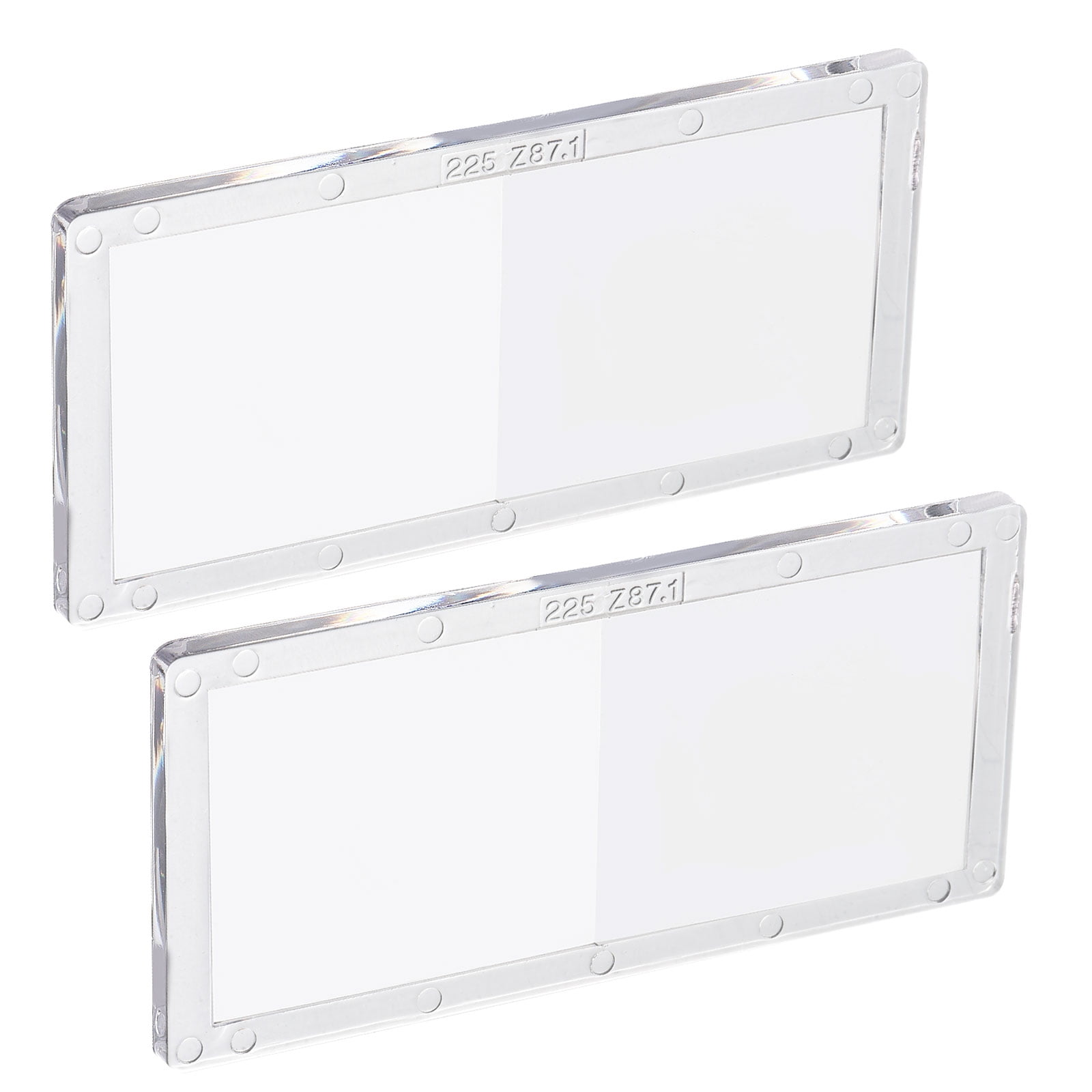
Small welds, tight joints, and intricate repairs demand better close-up vision. That’s where magnifiers come in.
Pick the Right Diopter Strength
Magnification is measured in diopters:
- +1.0 to +1.5: Mild correction, general use
- +2.0 to +2.5: Ideal for TIG welding
- +3.0: Maximum boost—use only when needed
Higher diopters reduce field of view, so don’t overdo it.
Install Cheater Lenses Without Blocking Vision
Most magnifiers slide behind the inner cover lens or clip in place.
Pro Tips:
- Clean the ADF surface before inserting
- Align the lens to avoid obstructing peripheral vision
- Replace both magnifier and cover lens if either is scratched
The YESWELDER 2.5 Diopter Lens (3.54″ x 4.25″) costs $16.19 and fits most standard helmets.
Match Lens to Helmet Model: Avoid Costly Mistakes

Using the wrong lens risks poor fit, reduced protection, and vision gaps.
Lincoln Viking Series: Lenses Are Not Interchangeable
- Viking 3350: KP2898-1 (outer), KP5244-1 (inner)
- Viking 1740/1840: KP3043-1 (outer), KP3044-1 (inner)
- Viking 2450: KP2931-1 (inner only)
A 5-pack of KP2931-1 costs $21.35 and has a 4.9-star Amazon rating—proof of reliability.
DEWALT, ESAB, and Budget Brands
- DEWALT DXMF21011: Only use DXMF21FPL front lens ($22.98)
- ESAB Sentinel A50: Uses 0700000802 (clear) or 0700000803 (amber) front cover
- YESWELDER/KTS-H: Multi-lens kits offer best value—$12.99 for 5 outer + 2 inner
Amber lenses improve contrast in low-light conditions but are not for general welding.
Diagnose Lens Failure Before It Damages Your Eyes
Knowing the symptoms of lens failure can prevent serious eye injury.
Watch for ADF Warning Signs
- Flickering or flashing during welding
- Slow darkening or delayed reset
- Dead spots in the viewing area
- No response to arc ignition
Try replacing the CR2032 battery first. If problems persist, the ADF is likely damaged.
Replace Cover Lenses Proactively
Even minor scratches scatter light and cause eye strain. Replace both outer and inner covers together—one damaged lens compromises the entire system.
Never Use a Cracked Passive Filter
A hairline crack in a fixed-shade lens can let through dangerous UV/IR radiation. Replace immediately—even if the helmet “seems fine.”
Buy From Trusted Retailers to Ensure Quality
Where you buy matters.
Amazon: Best for Variety and Reviews
- Largest selection of generic and compatible lenses
- High-rated kits like YESWELDER LYG-M800H (4.6 stars, 855 reviews)
- Fast shipping and easy returns
Search “[your model] + replacement lens” for best results.
Bad Ass Welding Products: OEM Lincoln Parts
- Specializes in Lincoln Electric OEM components
- Carries rare part numbers like KP3043-1
- Family-owned with strong customer support
Ideal for pros who need exact replacements.
Welder Supply & Linde: For Miller and 3M
- Sell Miller Digital Elite, Speedglas, and Optrel OEM lenses
- High prices ($200+) but guaranteed fit
- Best for critical industrial applications
A replacement lens for welding helmet isn’t just a convenience—it’s a safety essential. Cover lenses should be swapped every few months; ADFs last 3–7 years with care. Whether you choose OEM precision or budget-friendly generics, always match the size, shade, and type to your helmet model. Upgrading to a 4-sensor ADF with DIN 1/1/1/1 clarity improves comfort and control. And don’t overlook magnifiers for detailed work. With the right lens, your helmet performs like new—protecting your eyes, enhancing visibility, and keeping you productive on the job.